
The selection of a drum shell material constitutes a foundational decision in the sonic architecture of a percussionist's artistic voice. An examination of the three predominant material categories for drum shells—wood, metal, and acrylic—reveals distinct causal relationships between physical properties and acoustic outcomes. This analysis explores how characteristics such as density, grain structure, and molecular composition directly influence the timbre, resonance, attack, and decay of the resulting musical instrument. By dissecting the unique contributions of common wood species, various metals, and the specific qualities of cast or seamed acrylic, a comprehensive framework emerges for understanding their performance in both studio and live environments. The objective is to equip the musician with a nuanced perspective, moving beyond subjective preference to an informed rationale for choosing drum shells. This choice should align with their specific artistic intentions and functional requirements in 2026, recognizing the drum shell as the core of their percussive identity.
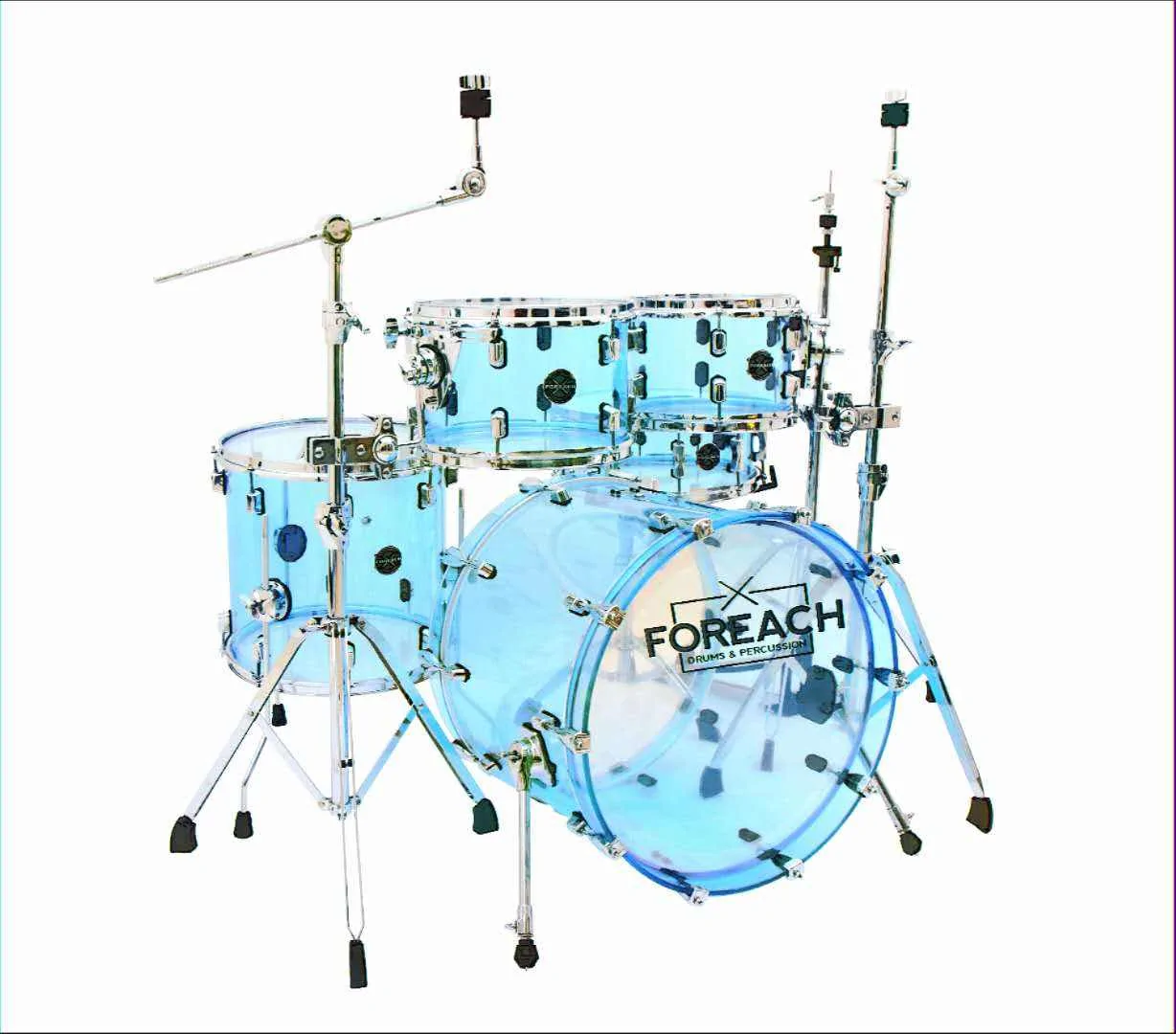
To embark upon the selection of a drum kit is to engage in an act of profound self-definition as a musician. The cymbals may shimmer and the hardware may gleam, but the very soul of the drum set—the origin of its voice—resides within the shells. The choice of material for these cylindrical forms is not a mere afterthought or a matter of aesthetic preference; it is the primary determinant of the instrument's tonal character, its dynamic potential, and its response to your touch. Each strike of a stick initiates a complex series of vibrations, and the material of the shell acts as the primary filter and amplifier for that energy. It dictates which frequencies are absorbed, which are reflected, and which are allowed to blossom into the audible sound we perceive as tone. Understanding this relationship is the first step toward crafting a sound that is authentically yours. A well-chosen musical instrument becomes an extension of your own expression.
When a drumhead is struck, it vibrates, transferring energy through the bearing edge into the drum shell itself. The shell then begins to resonate at its own natural frequencies, coloring the sound produced by the head. The physical properties of the shell material govern this process. A material's density, stiffness, and internal damping all play a significant role. For instance, a denser, stiffer material like cast acrylic or certain metals will reflect energy more quickly and efficiently, resulting in a sound with a sharp, immediate attack and a brighter tonal character (Dale, 2026). The energy is not absorbed as much within the material itself, allowing for greater volume and projection.
Conversely, a less dense material with a more complex internal structure, like wood, tends to absorb some of the higher frequencies, resulting in a warmer, more rounded tone. The grain structure of wood creates a natural, albeit subtle, form of internal damping that smooths out some of the harsh upper-partials, yielding a sound often described as more "musical" or "organic." The journey of the sound wave within the shell is a physical event, and by choosing a material, you are in effect choosing the environment in which that event will unfold. Think of it as choosing the architectural design of a concert hall; the same orchestra will sound vastly different in a hall made of stone versus one lined with wood. The same principle applies to your drum shells.
| Shell Material | Primary Sonic Character | Attack | Sustain | Common Genres | Visual Appeal |
|---|---|---|---|---|---|
| Wood | Warm, Resonant, Balanced | Rounded to Sharp | Medium to Long | Jazz, Rock, Pop, Folk, Funk | Natural Grains, Lacquers, Wraps |
| Acrylic | Punchy, Focused, Bright | Sharp, Aggressive | Long, Clear | Rock, Pop, Funk, Metal, EDM | Transparent, Colorful, High-Impact |
| Metal | Cutting, Loud, Bright | Very Sharp, Piercing | Long, Ringing | Metal, Rock, Punk, Marching | Polished, Brushed, Patinated |
The story of the modern drum set is a story of material science. For much of the 20th century, wood was the undisputed king. Craftsmen, particularly in the United States, perfected the art of creating thin, laminated wood drum shells from woods like maple, birch, and mahogany. These ply shells, formed by gluing thin veneers together in molds, offered a combination of strength, stability, and tonal warmth that defined the sound of jazz, blues, and early rock and roll (easygoglobal.com, 2025). The focus was on resonance and creating a musical instrument that could blend within an ensemble.
The landscape shifted dramatically in the late 1960s and early 1970s. As rock music grew louder and stage shows became more spectacular, drummers sought more volume, projection, and visual impact. This demand led to the rise of the acrylic drum set. Pioneered by companies like Ludwig with their Vistalite series, these see-through drums offered a completely new sonic and aesthetic palette. Their loud, punchy sound and futuristic look made them an instant hit with rock icons like John Bonham of Led Zeppelin. Simultaneously, manufacturers of snare drums were experimenting with various metals like brass, steel, and aluminum to create instruments that could cut through the densest walls of amplified sound. This era of innovation established the three pillars of shell materials—wood, acrylic, and metal—that continue to define the choices available to drummers today.
It is a common misconception to attribute a drum's entire sound to its shell material alone. The shell is the foundation, but its voice is articulated through its interaction with two other components: the drumheads and the bearing edges. The bearing edge is the top edge of the drum shell where it makes contact with the drumhead. The shape and sharpness of this edge have a profound impact on the drum's sound.
Imagine two different scenarios. A sharp, 45-degree bearing edge creates a very fine point of contact with the head. This minimal contact allows the head to vibrate as freely as possible, transferring a high amount of energy into the shell. The result is maximum sustain, increased overtones, and a brighter, more lively sound. This is common on modern drum shells designed for projection. Now, consider a fully rounded "vintage" bearing edge. This creates a much wider area of contact between the head and the shell. This increased contact dampens the head's vibration slightly, controlling overtones and shortening the sustain. The result is a warmer, fatter, and more focused sound with a stronger fundamental pitch, reminiscent of drums from the 1950s and 60s.
The type of drumhead chosen further shapes the sound. A thin, single-ply head will resonate freely and produce a bright, open tone, while a thick, two-ply head will offer a fatter, deeper sound with a more pronounced attack and less sustain. A coated head will mellow the sound compared to a clear one. The magic happens when you combine these elements. A maple wood drum set with sharp bearing edges and single-ply clear heads will sound vastly different from the exact same set fitted with rounded edges and two-ply coated heads. The shell provides the inherent character, but the bearing edges and heads are the controls you use to fine-tune that character. Understanding this trinity is what separates a good drummer from a great one with a signature sound.
For generations, wood has been the material most intimately associated with the craft of drum making. It offers a tonal complexity and warmth that many players find deeply satisfying. Unlike synthetic materials, each piece of wood is unique, with its own grain pattern, density, and resonant properties. This inherent variability, while challenging for manufacturers, is also the source of wood's sonic charm. A wood drum set feels alive, breathing with each note and responding to the nuances of a player's touch with a rich, organic voice. The process of making these drum shells is an art form in itself, involving the careful selection of veneers, lamination with specialized glues, and precise molding to create a perfectly round and stable cylinder (gear4music.com, 2025). This craftsmanship is audible in the final product.
If there were a single "go-to" wood for drum construction, it would be maple. For decades, North American Maple has been prized for its exceptional balance across the entire frequency spectrum. It delivers a smooth, warm low-end, a present but not overpowering mid-range, and clear, sweet highs. This even-handed tonal response makes maple drum shells incredibly versatile, capable of sounding at home in virtually any musical setting, from a quiet jazz trio to a powerful rock arena.
The sound of maple is often described as "all-purpose" or "classic." It has a long, even sustain that allows notes to sing, making it an excellent choice for players who value resonance and a full-bodied tone. Its ability to project without sounding harsh makes it a favorite for both studio recording and live performance. When you hear a classic, well-rounded drum sound on a record, there is a very high probability you are hearing maple drum shells. This balanced character also makes it a fantastic canvas for different head and tuning combinations. You can easily coax a deep, boomy sound or a tight, articulate sound from the same maple wood drum set, simply by changing heads and adjusting tension. Its adaptability is its greatest strength.
Where maple is known for its balanced warmth, birch is celebrated for its focused punch and natural equalization. Birch is a harder, denser wood than maple, which affects how it vibrates. It tends to accentuate the high and low frequencies while slightly scooping the mid-range. This sonic signature creates a sound that is powerful, clear, and articulate. The attack is sharp and definitive, and the decay is quicker than that of maple, resulting in a "tighter" sound with fewer lingering overtones.
This naturally "pre-EQ'd" quality has made birch a long-standing favorite among recording engineers. The boosted lows provide weight and power, while the crisp highs allow the drums to cut through a dense mix without needing extensive processing. Drummers in genres like rock, funk, and fusion are often drawn to birch for its clarity and projection. In a live setting, the focused sound of a birch musical instrument can be easier for a sound engineer to manage, as it requires less equalization to sit properly in the mix. If your playing style involves fast, intricate patterns, the articulate nature of birch can help ensure that every note is heard with precision.
| Tonewood | Density/Hardness | Tonal Character | Low Frequencies | Mid Frequencies | High Frequencies | Sustain |
|---|---|---|---|---|---|---|
| Maple | Medium | Warm, Balanced, All-Purpose | Full, Warm | Present, Even | Clear, Sweet | Long |
| Birch | High | Punchy, Focused, "Pre-EQ'd" | Boosted, Powerful | Scooped, Reduced | Boosted, Crisp | Medium |
| Mahogany | Low | Deep, Dark, "Vintage" | Very Warm, Booming | Rich, Mellow | Rolled-Off, Soft | Short to Medium |
| Poplar | Low-Medium | Soft, Warm, Mellow | Warm | Full | Smooth | Medium |
| Oak | Very High | Loud, Bright, Aggressive | Solid, Powerful | Strong, Present | Bright, Cutting | Long |
While maple and birch dominate the modern market, other woods offer unique and compelling voices. African Mahogany is perhaps the most famous of these, renowned for its "vintage" tone. As a softer wood, mahogany produces a sound with a pronounced low-end warmth and a much softer high-frequency response compared to maple or birch. The mids are rich and full, creating a deep, punchy, and somewhat dark tonality that is emblematic of many classic recordings from the 1950s through the 1970s. For drummers seeking that classic, fat drum sound, a mahogany wood drum set is an excellent choice.
Beyond mahogany, a world of other tonewoods exists. Poplar, often used in more affordable kits, offers a soft, warm tone similar to mahogany but with less projection. At the other end of the spectrum, woods like oak and bubinga are extremely hard and dense, producing very loud, bright, and aggressive tones with a powerful attack. Custom drum makers often experiment with hybrid shells, combining plies of different woods—for example, an inner ply of mahogany for warmth and outer plies of maple for projection—to create a "best of both worlds" scenario. Exploring these different wood drum shells can be a rewarding journey for any drummer looking to find a truly personal sound.
The type of wood is only part of the story; how the shell is constructed plays an equally vital role. The thickness of the shell is a primary factor. As a general rule, thinner shells resonate more freely, producing a lower fundamental pitch and a warmer, more vibrant tone. They are often favored for their "woody" character and sensitivity. Thicker shells, conversely, are more rigid. They resonate less and at a higher pitch, resulting in a sound with more projection, volume, and a brighter attack. A thick shell acts more like a megaphone, projecting the sound of the head with less of its own coloration.
The number of plies used to construct the shell is related to its thickness. A 6-ply shell will generally be thinner and more resonant than a 10-ply shell of the same wood. Finally, many vintage and vintage-style drums feature reinforcement rings. These are extra rings of wood glued to the inside of the shell at the top and bottom bearing edges. Their purpose is to add strength and rigidity to a thin shell, allowing it to be tensioned without warping. Sonically, these rings help to focus the sound and control overtones, often resulting in a shorter sustain and a more centered pitch. A thin maple shell with reinforcement rings will have a different character than a thicker maple shell without them, demonstrating the intricate dance of variables that goes into crafting the final voice of a wooden musical instrument.
Emerging from the nexus of musical ambition and material science, the acrylic drum set represents a bold departure from wood's organic tradition. These transparent or colored shells are not merely a visual statement; they are a distinct sonic tool engineered for specific outcomes. An acrylic drum shell offers a sound characterized by intense focus, powerful projection, and a clean, uncluttered tonal profile (Hayes, 2026). Unlike wood, which absorbs and warms the sound through its grain, acrylic's dense, uniform structure reflects vibrational energy with startling efficiency. This results in a musical instrument with an aggressive attack, heightened volume, and a bright, cutting voice that can slice through the most saturated sonic landscapes. For drummers in high-energy genres like rock, pop, and funk, the acrylic drum set provides an undeniable sonic advantage.
The defining characteristic of an acrylic drum set is its sound: loud, punchy, and direct. When you strike an acrylic drum, the initial impact—the attack—is incredibly sharp and pronounced. There is very little of the softened, rounded quality you might find in a wood shell. This is because the rigid, non-porous surface of the acrylic reflects the sound waves from the head almost instantaneously, with minimal energy loss (thedrumninja.com, 2025). The result is a sound that feels immediate and powerful, jumping out at the listener.
This efficient energy transfer also leads to exceptional projection and volume. Acrylic drums are naturally loud. They move a lot of air and are capable of producing significant volume without excessive physical effort from the player. This makes them ideal for live performance, especially in venues where the drums are not mic'd or in musical styles that demand a commanding percussive presence. The sustain of an acrylic drum is also unique. It tends to be long and very pure, with a strong fundamental pitch and fewer complex overtones compared to wood. This "clean" sustain contributes to the focused nature of the sound, making each note distinct and clear. However, this same quality can be perceived by some as "cold" or lacking the complex warmth of wood, making it a matter of taste and musical application.
Not all acrylic drum shells are created equal. The manufacturing method has a profound impact on both the sonic quality and the structural integrity of the shell. There are two primary methods: creating shells from extruded sheets and casting them in molds.
Extruded acrylic shells are made by taking a flat sheet of acrylic, heating it, bending it into a cylinder, and fusing the two ends together to create a seam. This method is less expensive but results in a shell with several potential drawbacks. The seam itself creates a point of weakness and a discontinuity in the shell's structure, which can inhibit resonance and lead to tuning inconsistencies. Furthermore, the process of extruding and bending the sheet can create internal stresses in the material, making it more prone to cracking over time, especially around drilled holes for hardware.
Cast acrylic shells, on the other hand, are considered far superior for musical instrument construction (Hayes, 2026). In this process, liquid acrylic monomer is poured into a cylindrical mold and allowed to cure slowly. This creates a seamless, one-piece shell that is denser, more rigid, and completely free of internal stresses. The resulting shell is more acoustically consistent, allowing it to resonate as a single, unified whole. This leads to a purer tone, greater sustain, and improved tuning stability. Cast acrylic is also significantly stronger and more resistant to cracking under the high tension of drumheads and hardware. When investing in an acrylic drum set, discerning whether the shells are cast or seamed is perhaps the most important question to ask, as it directly relates to the instrument's longevity and performance. Many high-end snare drums and kits will explicitly advertise their use of cast acrylic.
One cannot discuss acrylic drums without acknowledging their powerful visual appeal. The transparent quality of an acrylic drum set was revolutionary when it was introduced and continues to be a major draw for performers. Under stage lights, these kits can create a stunning visual effect, allowing the audience to see right through the drums. Manufacturers offer a wide array of options, from crystal clear to various transparent tints like amber, blue, and smoke, as well as opaque and "jelly bean" multi-colored kits.
This aesthetic is more than just a gimmick; it's a part of the performance. For a drummer in a rock band, a visually striking kit can be as much a part of the show as the music itself. The look of a classic clear acrylic drum set is iconic, immediately evoking the larger-than-life rock shows of the 1970s. For modern electronic and pop acts, the clean, futuristic look of an acrylic kit can complement the overall stage design perfectly. While the sound should always be the primary consideration, the unique and undeniable stage presence offered by an acrylic drum set is a significant factor in its enduring popularity.
Tuning an acrylic drum set can be a slightly different experience than tuning a wood kit. Due to their bright, reflective nature and long sustain, acrylic shells can be more sensitive to tuning discrepancies. An improperly tuned acrylic drum may produce dissonant overtones that are more noticeable than on a warmer wood shell. The key is to strive for even tension at all lug points to achieve a pure, clear tone. Many drummers find that using two-ply heads or heads with built-in damping rings can help control the abundant sustain and focus the sound, producing a deep, punchy tone that is highly desirable.
In terms of maintenance, acrylic drum shells are quite durable but require some specific care. Unlike wood, they are not susceptible to changes in humidity, which is a major advantage for touring musicians. However, they can be sensitive to extreme temperature changes, which can cause the material to expand or contract, potentially leading to stress fractures if the hardware is overtightened. They are also more susceptible to surface scratches than a wrapped wood drum. Cleaning should be done with a soft cloth and a cleaner specifically designed for plastics; abrasive cleaners or paper towels can cause fine scratches that will dull the finish over time. With proper care, a quality cast acrylic drum set is a robust and reliable musical instrument that will provide years of powerful performance.
In the percussive world, metal shells, particularly for snare drums, occupy a special place. They are the sonic equivalent of a sharpened blade, engineered for one primary purpose: to cut through. Where wood offers warmth and acrylic provides focused punch, metal delivers a sonic assault characterized by a piercing attack, extreme volume, and a cascade of bright, complex overtones. The inherent properties of metal—its high density and supreme rigidity—mean that very little energy from the stick impact is absorbed. Instead, it is converted directly into sound, resulting in a musical instrument of unparalleled power and presence. From the crack of a brass snare in a funk tune to the roar of a steel snare in a metal anthem, metal shells provide the aggressive voice that drives high-energy music. While full metal drum kits exist, the material's true domain is the snare drum, the centerpiece and most dynamic voice of the entire set.
When you think of a loud, ringing, and aggressive snare drum sound, you are most likely thinking of steel. Steel is one of the most common and affordable materials for metal snare drums, and it is a true workhorse. Its sound is defined by a sharp, cracking attack, an abundance of bright, glassy high-end frequencies, and a long, ringing sustain. A steel snare drum is loud—unapologetically so. It has no trouble being heard over a wall of distorted guitars or in a large, un-mic'd venue.
This aggressive character makes steel an ideal choice for rock, punk, and metal drummers who need maximum volume and cut. The bright overtones can be a lot to handle, and many drummers use dampening techniques (like moongel or O-rings) to control the 'ring' and achieve a fatter, more focused backbeat. However, when left open, that ring can be a powerful musical element in itself. Steel snare drums are also exceptionally durable and resistant to environmental changes, making them a reliable choice for touring. Their affordability also makes them an accessible entry point for drummers looking to add a metal snare drum to their arsenal.
Brass sits in a fascinating middle ground in the world of metal snare drums. While it possesses the volume and cutting power characteristic of metal, it also has a surprising degree of warmth that sets it apart from steel or aluminum. Brass is a heavier, softer alloy than steel, which gives it a lower fundamental pitch and a more complex, musical set of overtones. The sound is often described as "wet," "ringy," and "powerful." It has a full-bodied crack with a deep low-end and a musical shimmer in the high-end.
This combination of power and musicality has made brass one of the most revered materials for snare drums for over a century. The legendary Ludwig Black Beauty, a black-nickel-plated brass snare, is arguably one of the most recorded snare drums in history, prized for its ability to be both sensitive and articulate at low volumes and explosively powerful when played hard. Brass snare drums are incredibly versatile, finding a home in everything from orchestral work and jazz to funk, rock, and pop. They are often more expensive than their steel counterparts, but for many drummers, the rich, complex, and powerful tone of a quality brass snare is the ultimate sonic statement.
Beyond the common choices of steel and brass, other metals offer more nuanced voices. Aluminum is a particularly interesting material. It is much lighter and drier sounding than either steel or brass. An aluminum snare drum delivers a crisp, clean, and focused sound with a very short, controlled sustain. It has the bite of metal but without the long, ringing overtones. This makes it something of a hybrid, with the sensitivity of a wood shell and the crack of a metal one. The Ludwig Acrolite, a simple, no-frills aluminum snare, is a classic example, beloved by studio drummers for its versatile and easy-to-record sound.
Bronze, an alloy of copper and tin, offers a tone that sits somewhere between the warmth of brass and the brightness of steel. It has a lower pitch than steel but is brighter than brass, with a rich, earthy character. Bronze snare drums are known for their powerful low-end and articulate highs, making them a great choice for rock and other amplified music. Like brass, they are often on the higher end of the price spectrum. Exploring these different metal drum shells reveals a wide palette of sounds, each with a unique personality suited for different musical tasks.
As with acrylic, the construction method of a metal shell significantly influences its sound and quality. The most common method for steel and aluminum shells is to take a flat sheet of metal, roll it into a cylinder, and weld the seam. The quality of the weld is paramount; a poorly executed weld can create a weak point and disrupt the shell's resonance.
Higher-end metal shells, particularly those made of brass or bronze, are often "spun" or "drawn" from a single disc of metal, resulting in a seamless shell. This process, similar to how cymbals are made, creates a shell with perfect uniformity and no seams to interfere with vibration. These seamless shells are prized for their pure tone and superior resonance. The pinnacle of metal shell construction is the cast method. Here, molten metal is poured into a mold, creating a very thick, heavy, and extremely rigid shell. Cast snare drums (often made of bronze or bell brass) are incredibly powerful, resonant, and loud, with a very pure, bell-like tone. They are also typically very heavy and very expensive, representing the top tier of metal snare drum design. When choosing a metal musical instrument, especially a snare drum, understanding whether the shell is seamed, seamless, or cast can give you a clear indication of its quality and potential sonic performance.
The theoretical knowledge of shell materials is only valuable when applied to the practical realities of your musical life. The "best" drum shell material does not exist in a vacuum; it is always "best for…" a particular purpose, a specific environment, and a unique artist. The process of choosing is an exercise in self-awareness, requiring an honest assessment of your musical goals, your typical performance settings, and your financial realities. It involves moving from the abstract properties of maple, acrylic, or brass to the concrete question: "What sound do I need to make the music I want to make?" This final step is about connecting the science of acoustics with the art of percussion.
The demands of a controlled studio environment are vastly different from those of a chaotic live stage. In the studio, control and tonal purity are often paramount. A microphone placed inches from a drumhead will capture every nuance, every overtone, and every bit of sustain. For this reason, woods like birch, with their naturally focused and "pre-EQ'd" sound, are often a recording engineer's dream. They require less processing to sit well in a mix. Similarly, a dry aluminum snare drum or a warm, thin maple wood drum set can provide a beautiful, controllable tone that is easy to capture. The goal in the studio is often to get a clean, versatile sound that can be shaped later if needed.
Live performance, on the other hand, is often a battle for sonic space. The primary goal is projection: the ability to be heard clearly by the audience and your fellow musicians. This is where materials like acrylic and metal truly shine. The raw volume and cutting attack of an acrylic drum set or a steel snare drum can power through a wall of amplified guitars with authority. The long sustain of these materials helps notes carry in a large room. While a warm mahogany kit might sound beautiful in isolation, it could get lost and sound muddy in a loud, reverberant bar. When choosing a musical instrument for live work, consider the aural space you need to fill. Exploring a wide range of musical instruments can reveal options specifically designed for the rigors of the stage.
While any drum can be used for any genre, certain materials have become associated with specific styles due to their inherent sonic properties.
Finally, the practical matter of budget cannot be ignored. The price of a drum set is influenced by many factors, including the material, the construction method, the brand name, and the included hardware. Generally, kits using poplar or basswood shells will be the most affordable, followed by those with standard birch and maple configurations. Premium tonewoods, cast acrylic, and seamless or cast metal snare drums will occupy the higher end of the price spectrum.
When making your decision, think in terms of long-term value. An entry-level kit can be a fantastic way to start your journey, but if you are serious about drumming, investing in a higher-quality musical instrument can be more economical in the long run. A well-made set of drum shells from a reputable manufacturer can last a lifetime. You can always upgrade cymbals, hardware, and even individual high-quality drum parts over time, but the shells are the core of your investment. Consider platforms that offer hassle-free cross-border trade to access a wider variety of options from global manufacturers, potentially finding better value. Your first professional-grade kit is a significant purchase, but it is also an investment in your artistic future.
This is a common concern. High-quality cast acrylic shells are extremely durable and, in some ways, more robust than wood. They are impervious to humidity and temperature changes that can warp or damage wood shells (Dale, 2026). However, they can be more susceptible to cracking from sharp impacts or overtightening of hardware, and their surfaces can scratch more easily than a wrapped wood finish. Cheaper, seamed acrylic shells are significantly more prone to cracking and are less durable overall.
The bearing edge is the top rim of the drum shell where it makes contact with the drumhead. Its shape is a critical factor in the drum's sound. A sharp, 45-degree edge allows the head to vibrate freely, maximizing sustain and overtones for a bright, modern sound. A rounded, vintage-style edge increases head-to-shell contact, dampening overtones and shortening sustain for a warmer, fatter, more controlled sound (easygoglobal.com, 2025). The edge effectively acts as a filter for the drum's resonance.
Absolutely. While premium woods like maple and birch offer more complexity and projection, a well-made poplar shell can produce a very pleasing, warm, and full tone. Poplar was used on many classic kits from the 1960s. The final sound is a combination of the shell, bearing edges, heads, and, most importantly, tuning. With quality heads and proper tuning, an affordable poplar wood drum set can sound excellent, especially in a studio environment.
While full metal drum kits do exist, they are rare for a few reasons. Sonically, a full kit of metal shells would be extremely loud, bright, and laden with ringing overtones, which can be difficult to control and sonically overwhelming for most musical styles. Logistically, they would also be incredibly heavy and expensive to produce compared to wood or even acrylic drum shells. The snare drum, as the primary backbeat instrument, benefits most from the unique cutting power of metal.
Yes, the difference is significant. Cast acrylic is created as a single, seamless piece, making it denser, stronger, and more acoustically uniform. This results in a purer tone, better sustain, and much greater durability (Hayes, 2026). Seamed (or extruded) acrylic has a weak point at the weld and internal stresses from the manufacturing process, which can deaden resonance and make it prone to cracking over time. For a long-term investment, cast acrylic is the superior choice.
Shell thickness has a major impact. Thinner shells (e.g., 5-6mm) resonate more freely, producing a lower fundamental pitch, more body, and a warmer, more "woody" tone. Thicker shells (e.g., 8-10mm) are more rigid and resonate less. They have a higher fundamental pitch, greater attack, and more volume and projection. Think of a thin shell as having more of its own voice, while a thick shell acts more as a megaphone for the drumhead.
Both are excellent choices. Maple is often recommended for its versatility; its balanced tone works well for any genre, making it a safe and reliable option as a player discovers their style. Birch, with its naturally focused sound, can be easier to tune and get a good "punchy" sound from right away, which can be very rewarding for a new player. The decision often comes down to whether one prefers the warm, resonant quality of maple or the clear, articulate punch of birch.
The journey toward defining one's percussive voice is a deeply personal one, and the choice of a drum shell material lies at its very heart. It is a decision that extends beyond the superficialities of color or brand, touching upon the fundamental physics of sound and the emotional character of music. We have seen how the dense, organic matrix of wood gives rise to warmth and complex resonance, making it a timeless and versatile choice. We have explored the rigid, uniform nature of acrylic, a material that translates physical energy into pure, focused projection and visual drama. We have felt the unyielding power of metal, engineered to deliver a cutting, aggressive attack that commands attention.
There is no single correct answer in this pursuit. The ideal musical instrument is a reflection of the artist's intent and the context in which it will be used. The warm whisper of a mahogany shell might be perfect for an intimate jazz club, while the thunderous roar of an acrylic drum set is destined for the rock arena. The wisdom lies not in declaring one material superior to all others, but in understanding the unique language that each one speaks. By comprehending the interplay of material, construction, bearing edges, and heads, you empower yourself to move from being a passive consumer to an informed architect of your own sound. The ultimate goal is to find the set of shells that responds to your touch in a way that feels like coming home—a true extension of your own musicality.