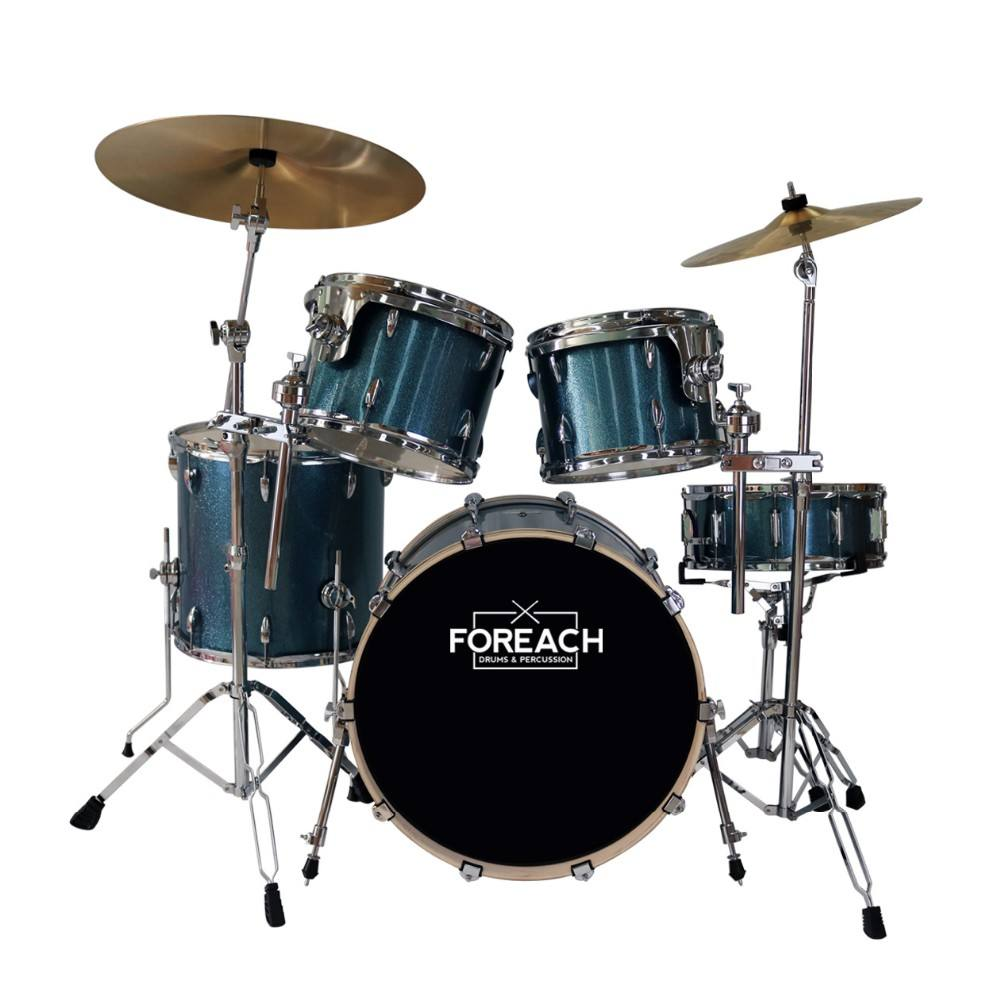
This analysis provides a comprehensive examination of the material dialectic in modern percussion, specifically contrasting wood and acrylic as primary materials for constructing musical instruments. It evaluates the fundamental differences between these two mediums through seven distinct lenses: tonal characteristics, durability, aesthetics, physical response, economic value, manufacturing processes, and genre suitability. The document synthesizes principles of acoustics, material science, and musicology to articulate how the molecular structure of a material dictates its sonic output—from the warm, complex overtones of a wood drum set to the focused, punchy projection of an acrylic drum set. It considers the practical implications for musicians, including maintenance requirements influenced by environmental factors and the long-term financial considerations of initial investment versus resale value. By exploring the historical context and modern applications of both materials, this guide offers an objective framework for musicians, producers, and enthusiasts to make an informed decision based on sonic preference, practical needs, and artistic expression in the year 2026.
The decision a musician makes when selecting an instrument is a deeply personal one, a commitment that extends beyond mere functionality into the realm of identity. For a drummer, the choice of shell material is perhaps the most defining of these commitments. It is a declaration of sonic intent. In 2026, the primary debate continues to revolve around two foundational materials: the organic, time-honored warmth of wood and the synthetic, cutting-edge clarity of acrylic. This is not simply a choice between two substances; it is a choice between two philosophies of sound. On one hand, wood connects us to a lineage of instrument making that is centuries old, evoking a sense of natural resonance and organic complexity. On the other, acrylic represents a leap into modernity, a product of industrial innovation that offers projection, consistency, and a visual audacity that wood cannot replicate.
To approach this choice is to engage with the very physics of sound production. An instrument's voice is born from vibration. When a drumstick strikes a drumhead, it initiates a complex dance of energy. This energy transfers from the head to the shell, and the material of that shell becomes the resonating chamber that shapes, colors, and projects the final sound wave that reaches our ears. A wooden shell, composed of countless organic fibers, absorbs and reflects these vibrations in a way that produces a rich tapestry of overtones. The specific species of wood—be it maple, birch, or mahogany—further refines this character, much like the terroir of a vineyard influences the taste of its wine. An acrylic shell, being a uniform, non-porous polymer, behaves quite differently. It reflects sound waves with a stark efficiency, producing a purer fundamental note with fewer complex overtones, resulting in a sound that is often described as more focused, direct, and powerful.
Understanding this distinction requires us to move beyond simplistic labels of "warm" or "bright." It demands an empathetic inquiry into the needs of the musician. What kind of musical conversation do you wish to have? Are you seeking to blend into a subtle, acoustic texture, where the nuanced voice of a wood drum set can whisper and sing? Or are you aiming to cut through a wall of amplified guitars, where the assertive punch of an acrylic kit is necessary to make your presence known? Your answer will guide you toward the material that best serves your artistic purpose. This guide is designed to illuminate the path, providing a deep and structured analysis of the seven key differences that define these remarkable musical instruments, empowering you to make a choice that resonates not just with your ears, but with your musical soul.
The most fundamental and perhaps most debated difference between wood and acrylic musical instruments lies in their voice. The material of a drum shell is not a passive container; it is an active participant in sound creation, a filter and amplifier that imbues the instrument with its core character. The sonic properties of wood and acrylic are products of their distinct physical structures, leading to two very different auditory experiences.
Wooden drum shells are celebrated for their tonal warmth and complexity. When a drum is struck, the wood vibrates along with the head. Because wood is a natural, fibrous material with inherent irregularities, it vibrates in a less uniform way than a synthetic material. This "imperfect" vibration is precisely what gives a wood drum set its desirable character. It produces a rich spectrum of overtones—subtle secondary frequencies that surround the main (fundamental) note. These overtones create a sound that we perceive as full, warm, and musically complex.
Different woods have their own sonic signatures:
The construction of the wood shell, particularly the number of plies and the orientation of the grain, also plays a significant role. A thinner shell will generally resonate more freely, producing a richer, more open tone, while a thicker shell will offer more projection and a higher fundamental pitch.
Acrylic shells entered the mainstream in the 1970s and immediately offered a stark alternative to wood. As a dense, non-porous plastic, acrylic reflects sound with much greater efficiency and uniformity than wood. It absorbs very little of the vibrational energy, resulting in a sound that is loud, focused, and powerful.
The key sonic characteristics of an acrylic drum set include:
This sonic profile—loud, punchy, and clear—makes an acrylic drum set particularly well-suited for high-volume genres like rock, metal, and pop, where the drummer needs to compete with amplified instruments.
From a physics perspective, the difference is a matter of energy transfer and damping. Damping refers to a material's tendency to absorb vibrational energy and convert it into heat. Wood, with its porous, fibrous structure, has a higher damping coefficient than acrylic. It absorbs some of the high-frequency vibrations, which softens the attack and allows the lower-frequency, warmer overtones to bloom. Think of it like a soft-focus lens on a camera—it smooths the edges and creates a warmer picture.
Acrylic, being a hard, non-porous, and uniform material, has a very low damping coefficient. It absorbs almost no vibrational energy. Instead, it reflects the sound waves back with extreme efficiency. This is why the attack is so sharp and the sustain is so clean. It’s like a high-definition, high-contrast image—every detail is sharp and clear, with no softening. This is a crucial distinction when considering the type of musical instruments you want to play.
The choice between a wood drum set and an acrylic drum set often comes down to the intended application.
Ultimately, the "better" sound is entirely subjective. It is a matter of matching the instrument's inherent voice to the musical context and the player's personal taste.
Beyond sound, the practical considerations of durability and maintenance are paramount for any working musician. Musical instruments are investments that must withstand the rigors of practice, transport, and performance. Wood and acrylic offer different profiles of resilience, each with its own strengths and vulnerabilities.
Wood is an organic material, and as such, it is hygroscopic, meaning it absorbs and releases moisture from the surrounding air. This makes a wood drum set susceptible to changes in temperature and humidity.
Because of this, a wood drum set requires a more controlled environment. It should not be stored in a damp basement, a hot attic, or the trunk of a car for extended periods. For musicians who tour extensively through different climates, protecting their wood shells becomes a significant concern.
Acrylic, being a synthetic polymer, is largely impervious to humidity and temperature fluctuations. An acrylic drum set will not swell, shrink, or warp due to atmospheric conditions. This makes it an exceptionally stable and reliable choice for drummers who travel frequently or play in a variety of indoor and outdoor venues. The bearing edges remain consistent, and tuning is less likely to be affected by the weather.
However, acrylic has its own set of vulnerabilities:
The long-term maintenance routines for these musical instruments differ significantly. A wood drum set benefits from occasional polishing with a quality wax to protect the finish and nourish the wood. The bearing edges should be kept clean and smooth. If a wood shell is damaged (e.g., a crack or a damaged bearing edge), it can often be repaired by a skilled woodworker or drum builder.
Caring for an acrylic drum set involves different procedures. Cleaning should only be done with specific acrylic-safe cleaners and microfiber cloths to prevent scratching and hazing. Ammonia-based cleaners, like common window cleaner, should be avoided as they can cause the material to become cloudy or brittle over time. Repairing a cracked acrylic shell is much more difficult than repairing wood. While small cracks can sometimes be filled and stabilized with special adhesives, a major break is often irreparable, requiring a full shell replacement.
The table below summarizes the key maintenance considerations for both types of drum sets.
| Feature | Wood Drum Set | Acrylic Drum Set |
|---|---|---|
| Environmental Stability | Sensitive to humidity and temperature | Highly stable; impervious to weather |
| Primary Vulnerability | Warping, swelling, cracking from climate | Cracking from impact; surface scratching |
| Routine Cleaning | Polish with wax-based wood cleaner | Use specific acrylic cleaner; avoid ammonia |
| Repairability | Generally repairable by a skilled luthier | Difficult to repair; cracks are often permanent |
| Weight | Lighter and more portable | Significantly heavier and bulkier |
This comparison highlights a central trade-off: wood demands more environmental care but is more forgiving of physical impact, while acrylic offers supreme environmental stability at the cost of being heavier and more susceptible to catastrophic damage from a single blow.
Musical instruments are not just tools for creating sound; they are also visual objects, extensions of the artist's personality and stage presence. The aesthetic difference between wood and acrylic is as pronounced as their sonic difference, offering two distinct visual philosophies.
A wood drum set offers a classic, organic beauty that has been appreciated for centuries. The grain of the wood—whether it's the subtle figuring of maple, the wide patterns of oak, or the exotic swirls of bubinga—provides a unique visual fingerprint for each drum. No two wood drums are exactly alike. Manufacturers enhance this natural beauty with a variety of finishing techniques:
The aesthetic of a wood drum set is often associated with craftsmanship, tradition, and sophistication. It can look perfectly at home in a smoky jazz club, a classic rock stage, or a formal concert hall.
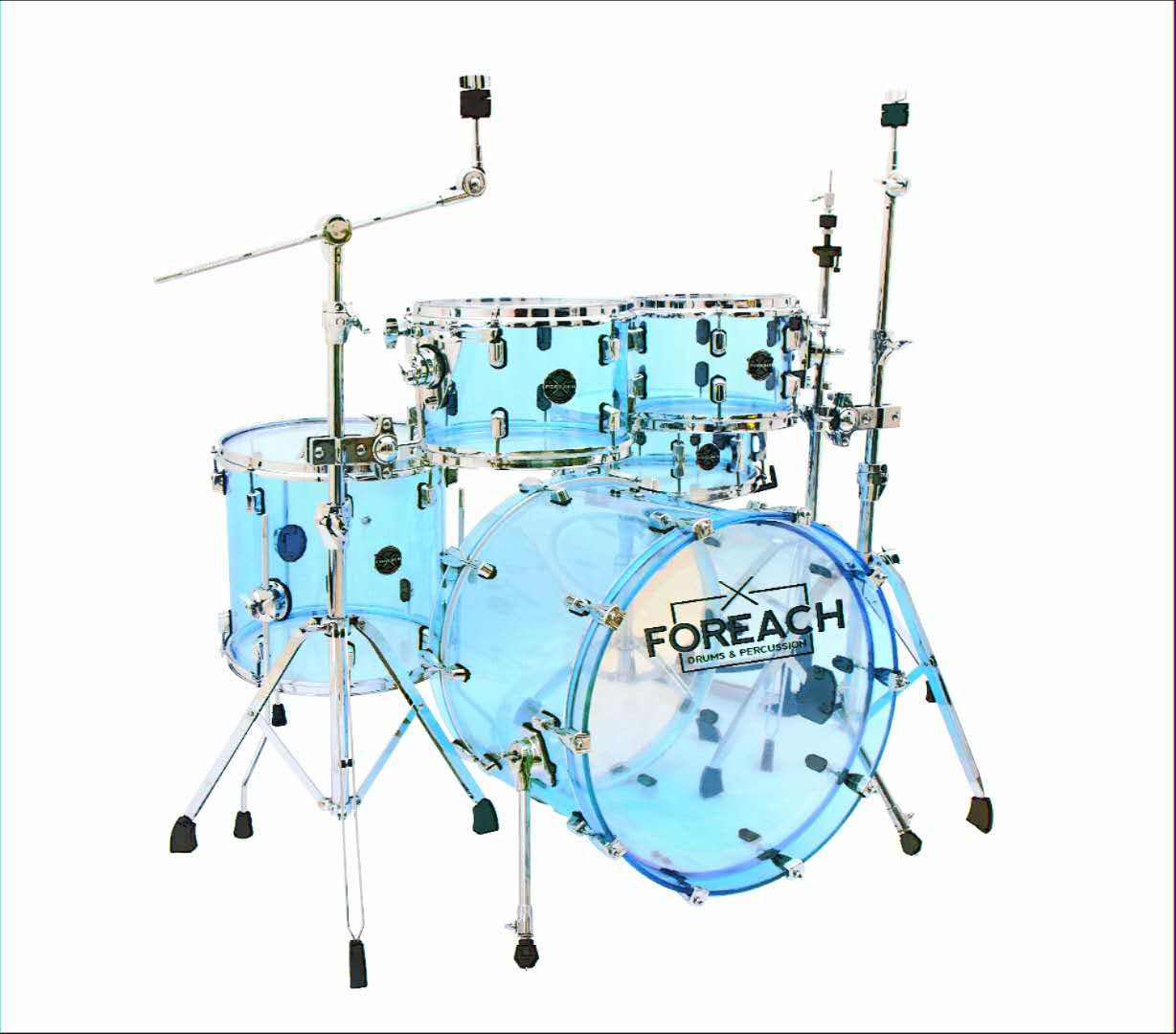
Acrylic drums make a completely different statement. Their introduction in the 1970s was a visual revolution, and they remain a symbol of modern, high-impact style. The most iconic acrylic look is complete transparency, often referred to as a "jellybean" kit. Seeing through the drums to the hardware and even the drummer behind them is a powerful visual effect.
Beyond clear, acrylic shells are available in a wide range of options:
The look of an acrylic drum set is bold, futuristic, and unapologetically loud. It commands attention and is a perfect match for high-energy performances and elaborate stage productions.
Both materials offer extensive customization, but they excel in different areas. With a wood drum set, customization often revolves around exotic veneers, intricate inlay work, and custom paint jobs. The focus is on enhancing the organic beauty of the material.
Acrylic opens up a unique avenue for customization: lighting. Because the shells are transparent or translucent, drummers can place LED lights inside their drums. This creates a stunning visual effect on a dark stage, with the drums glowing from within and pulsing in time with the music. This level of visual integration with stage lighting is something a wood drum simply cannot offer.
The choice of hardware—the lugs, hoops, and mounting systems—also contributes significantly to the overall look. Chrome hardware is the standard for both, but options like black nickel, brass, and satin chrome can be used to create a custom aesthetic that complements either the warm tones of wood or the clean lines of acrylic. Exploring the wide variety of available musical instruments and their hardware options can be a rewarding part of the selection process.
For a drummer, the physical sensation of playing the instrument—the way the stick rebounds from the head and the way the drum vibrates through the floor—is a vital part of the experience. This tactile feedback, or "feel," is directly influenced by the shell material and its resonant properties. Wood and acrylic communicate with the player in distinctly different ways.
Playing a wood drum set is often described as a more interactive, organic experience. When a wood drum is struck, the shell resonates in a complex way, and this vibration is transmitted back through the hardware, the stands, and ultimately to the player. You can often feel the "bloom" of the note through your hands and feet.
An acrylic drum set provides a more direct and immediate playing experience. The feel is often described as faster and cleaner, mirroring the sonic characteristics of the material.
The bearing edge is the point of contact between the drumhead and the shell, and it is a critical component in shaping both the sound and the feel of a drum. The profile of this edge determines how much of the drumhead's surface area touches the shell.
The feel of a drum is a subtle but important factor. The best way to understand the difference is to spend time playing both types of kits. Pay attention not just to the sound but to the physical sensation of the stick hitting the head and the way the drum responds to your touch.
For most musicians, the purchase of a new set of musical instruments is a significant financial decision. The cost of a drum kit is not just the initial price tag; it also involves considerations of long-term value, durability, and potential resale price. The economic landscapes of wood and acrylic drum sets are complex and have evolved over the years.
The price of a wood drum set can range from a few hundred dollars for an entry-level poplar kit to many thousands of dollars for a high-end, custom-built instrument made from exotic wood. Several factors determine the cost:
Historically, acrylic drum sets were positioned as professional, high-end instruments and were often more expensive than their wood counterparts. In 2026, the market has diversified.
Generally, a professional-grade seamless acrylic kit will be priced similarly to a professional-grade maple or birch kit from a major brand. Entry-level acrylic options are less common than entry-level wood options, but the market is expanding.
Resale value is an important consideration. A well-maintained wood drum set from a reputable brand tends to hold its value very well. Certain vintage wood kits can even appreciate in value over time. The market for used wood drums is large and active.
The resale market for acrylic drum sets is more niche. Vintage acrylic kits from the 1970s, particularly from brands like Ludwig and Zickos, are highly sought after by collectors and can command high prices if they are in good condition. Modern acrylic kits can also have good resale value, but the market is smaller. Because they are heavier and appeal to a more specific aesthetic and sonic taste, it may take longer to find a buyer. The condition is paramount; a badly scratched or cracked acrylic kit will have very little resale value.
The following table provides a general comparison of the economic factors.
| Economic Factor | Wood Drum Set | Acrylic Drum Set |
|---|---|---|
| Entry-Level Price | Widely available, starting from a few hundred dollars. | Less common, but becoming more available. |
| Professional Price | Wide range, from mid-tier to very high-end. | Generally comparable to professional wood kits. |
| Key Cost Drivers | Wood species, craftsmanship, brand reputation. | Seamless vs. seamed construction, brand. |
| Resale Market | Large and active; good brands hold value well. | More niche; vintage kits are collectible. |
| Long-Term Value | Strong, especially for well-known brands. | Good, but highly dependent on condition. |
Ultimately, both a quality wood drum set and a quality acrylic drum set can be sound long-term investments. The decision should be guided primarily by your sonic and aesthetic preferences, with the understanding that a well-cared-for instrument from a reputable maker will always retain more value than a neglected one.
The creation of a drum is a fascinating blend of art and science. The methods used to transform raw materials into a resonant musical instrument are vastly different for wood and acrylic, reflecting two distinct manufacturing philosophies. Understanding these processes provides a deeper appreciation for the instrument itself.
Most modern wood drum shells are made from multiple thin layers of wood called plies. This method, known as ply construction, creates a shell that is strong, stable, and tonally consistent.
The production of an acrylic drum set is more a process of chemical and industrial engineering. There are two primary methods:
After the shell is formed, it undergoes a similar finishing process to a wood shell: it is cut to depth, the bearing edges are routed, and then it is meticulously polished to a high gloss.
A drum shell, whether wood or acrylic, is incomplete without its hardware. The quality of the drum parts is just as important as the quality of the shell in determining the drum's overall performance and durability.
The choice of these components is a critical part of the design process. Manufacturers like Tianjin Foreach Musical Instruments Co., Ltd. specialize not only in shells but also in producing the high-quality drum parts needed to complete these intricate musical instruments (2024).
While any drum can theoretically be used for any style of music, the distinct sonic personalities of wood and acrylic have led them to be naturally associated with certain genres. A musician's choice of instrument is often a strategic decision to achieve a sound that is appropriate for their musical context.
The warm, complex, and resonant tones of a wood drum set make it incredibly versatile and a staple in countless genres.
The loud, cutting, and focused sound of an acrylic drum set makes it a powerful tool in high-volume and highly produced musical environments.
Of course, these are not strict rules. Many drummers delight in using their musical instruments in unconventional ways. A jazz drummer might use an acrylic kit for a modern fusion project to achieve a more aggressive sound. A metal drummer might use a vintage mahogany kit to get a darker, warmer tone.
One of the most exciting trends in 2026 is the rise of hybrid kits. Drummers are increasingly mixing and matching shells to create a custom sonic palette. For example, a drummer might use:
This approach allows a player to get the best of all worlds, tailoring their setup to their exact sonic needs. The choice is no longer a binary between an all-wood drum set or an all-acrylic drum set. It is about assembling the perfect collection of voices to express your unique musical identity.
Yes, significantly. Acrylic is a denser material than wood. A standard 5-piece acrylic drum set can be noticeably heavier to carry than a comparable wood kit. This is an important practical consideration for drummers who frequently transport their own gear to gigs.
For most beginners, a wood drum set is the recommended starting point. Entry-level wood kits are more affordable and widely available. More importantly, the warm, versatile tone of a wood kit is suitable for learning a wide variety of musical styles. The tonal complexity of wood also helps a beginner develop their ear for tuning and dynamics.
While acrylic is a strong material, it is more brittle than wood. It is resistant to the environmental stresses that can damage wood, but it can crack or shatter from a sharp, direct impact. Damage is most likely to occur during transport, setup, or teardown if a drum is dropped. With proper care and handling, however, an acrylic kit can last a lifetime.
Yes, dramatically. The drum shell provides the instrument's foundational voice, but the sound can be heavily modified by other factors. Changing the type of drumheads (e.g., from a single-ply to a two-ply head) will have a huge impact on the attack, sustain, and overtones. Tuning also plays a massive role. Experimenting with different heads and tuning schemes is the best way to shape the sound of any drum, whether it's made of wood or acrylic.
The price of musical instruments, particularly drums, is determined by a combination of materials, craftsmanship, and brand reputation. An expensive wood drum set might use a rare, premium wood and feature a flawless multi-coat lacquer finish. An expensive acrylic drum set will likely have seamless shells, which are more difficult to manufacture. In both cases, a higher price usually reflects superior craftsmanship, higher-quality drum parts, and rigorous quality control.
The debate between wood and acrylic is not about determining a victor. There is no universally "better" material. Instead, this exploration reveals a wonderful duality in the world of percussion. Wood offers a connection to nature and tradition, providing a voice that is warm, complex, and filled with subtle character. It is an instrument that breathes and sings with a life of its own. Acrylic, born from industrial innovation, offers a voice of power, clarity, and precision. It is an instrument of bold assertion, designed to command attention with its focused attack and striking visual presence.
The choice, then, is a matter of artistic intent. It is an act of self-reflection. Ask yourself what sound you hear in your head. Consider the music you wish to create, the venues you will play, and the visual statement you want to make. Do you seek the organic warmth that blends and supports, or the cutting punch that defines and leads? By understanding the fundamental differences in sound, resilience, aesthetics, and feel, you empower yourself to select the instrument that will not just serve your needs, but will truly inspire your playing. The perfect drum set is the one that feels like an extension of your own voice, enabling you to communicate your musical ideas with passion and authenticity.