
This exploration examines the multifaceted world of musical instruments, with a particular emphasis on the diverse family of percussion. It provides a detailed analysis of seven distinct percussion instrument types, investigating their historical origins, acoustic properties, and roles across various musical traditions. The study extends to the foundational families of wind and string instruments, elucidating the physical principles behind their sound production and their established functions within orchestral and contemporary ensembles. A dedicated section addresses Orff percussion, situating these instruments within the context of developmental music education and their pedagogical value. The analysis considers the practical and philosophical dimensions of selecting a music instrument, evaluating factors from personal aspiration to the physics of sound. By synthesizing historical context, technical mechanics, and cultural significance, the work aims to provide a comprehensive framework for understanding how these objects become conduits for human emotion, community, and artistic expression. The discourse is intended for musicians, educators, and enthusiasts seeking a deeper appreciation of the tools of musical creation.
To embark on an exploration of the music instrument is to engage with one of humanity's oldest and most profound forms of expression. Before recorded history, humans struck objects, blew through reeds, and stretched skins to create sound that moved beyond mere communication into the realm of ritual, emotion, and art. An instrument is not merely a tool; it is a partner in a creative dialogue, an extension of the body and breath that gives voice to the ineffable. The classification of these instruments, a practice known as organology, provides a map to this vast territory. The most widely accepted system, the Hornbostel-Sachs system, categorizes instruments based on how they produce sound. This framework reveals a beautiful logic in the seemingly endless variety of musical tools.
Idiophones are instruments where the body of the instrument itself vibrates to create sound, without the use of strings or membranes. Think of the crystalline ring of a triangle or the resonant crash of a cymbal. Membranophones produce sound through a vibrating stretched membrane or skin, the quintessential example being the drum. Chordophones create sound through the vibration of a string or strings stretched between two points, a family that includes the violin and the guitar. Aerophones produce sound primarily by causing a body of air to vibrate, encompassing everything from the flute to the pipe organ. Finally, electrophones generate sound through electronic means.
Within these broad categories lie the familiar families of the Western orchestra: strings, woodwinds, brass, and percussion . These groupings, while practical for orchestral arrangement, sometimes blur the lines of the Hornbostel-Sachs system. For example, the percussion family contains both idiophones (like xylophones) and membranophones (like timpani). Understanding both the scientific classification and the traditional orchestral families provides a richer, more nuanced perspective. It allows us to see the deep connections between a West African djembe (a membranophone) and an orchestral bass drum, or between a simple penny whistle (an aerophone) and a grand concert flute. This guide will traverse these families, focusing deeply on the vibrant world of percussion before exploring the realms of wind and string instruments, offering a pathway to understanding not just what these instruments are, but what they do for us as creators and listeners.
The percussion family is arguably the oldest and most diverse of all instrument groups. Its members are defined by being struck, shaken, or scraped to produce sound (Britannica, 2025). This direct, physical action connects the player to the sound in a uniquely primal way. Percussion provides the rhythmic foundation—the very pulse—of most musical ensembles, but its role extends far beyond timekeeping. Percussion instruments add color, texture, and explosive dynamics, painting with a palette of sounds that can be as subtle as a whisper or as powerful as a thunderclap.
The family is broadly divided into two categories: pitched and unpitched. Pitched percussion instruments, like the marimba or timpani, are tuned to produce specific musical notes. Unpitched instruments, like a snare drum or a cymbal, produce sounds of indefinite pitch that are defined by their timbre and rhythmic character. Our journey will explore seven instruments from this vast family, chosen for their unique voices, cultural significance, and versatility.
To understand the djembe is to touch upon centuries of West African history and culture, particularly that of the Mandinka people of Mali, Guinea, Senegal, and surrounding nations. The name "djembe" is said to come from the Bambara saying "Anke djé, anke bé," which translates to "everyone gather together in peace," a phrase that beautifully encapsulates the drum's traditional role as an instrument of social cohesion. It is not an instrument of war but of celebration, ceremony, and communication.
A true djembe is a goblet-shaped drum carved from a single log of a sacred African hardwood. The choice of wood is significant, as it is believed to contain the spirit of the tree itself. The drum's head is traditionally made from goatskin, chosen for its thickness and durability, which is stretched and tuned by an intricate system of ropes. This construction yields a remarkably wide tonal range from a single surface. A skilled player can produce three fundamental sounds: the deep, resonant bass, achieved by striking the center of the drum head with the palm; the full, open tone, struck near the rim with the flat of the fingers; and the sharp, penetrating slap, a more complex stroke at the edge that requires precision and practice. It is the interplay between these three sounds that allows the djembe to "talk."
In its traditional context, the djembe is part of a polyrhythmic ensemble, often accompanied by one or two other djembes and a set of bass drums called dunun. The lead djembe soloist improvises complex rhythmic patterns over the stable foundation provided by the rest of the ensemble, creating a rich, layered tapestry of sound. Each rhythm has a specific purpose and is associated with particular events, such as harvests, weddings, or rites of passage. The djembe player is not just a musician but a historian and a storyteller, preserving cultural memory through rhythm. In recent decades, the djembe has found a global audience, becoming a popular music instrument in drum circles, world music fusion, and even pop music, a testament to its powerful and universal appeal.
The journey of the conga drum is a story of cultural fusion and resilience. Its ancestors are the various drums brought to Cuba by enslaved Africans, primarily from the Congo region. In Cuba, these traditions blended with Spanish influences to create a new and vibrant musical culture. The conga drum, or tumbadora, became a cornerstone of genres like rumba, son, and later, salsa and Latin jazz.
Unlike the djembe, modern congas are typically constructed from staves of wood (like a barrel) or fiberglass. They are tall, narrow, single-headed drums, and are most often played in sets of two or three. The three most common sizes are the quinto (the highest-pitched lead drum), the conga or tres dos (the middle drum), and the tumbadora or tumba (the lowest-pitched drum). The heads are traditionally made of mule or cowhide and are tuned with metal hardware, a departure from the rope-tuned systems of many African drums. This allows for more precise and stable tuning.
Conga playing is a sophisticated art form involving the entire hand. The primary strokes include the deep open tone, played with the four fingers near the rim; the sharp, ringing slap, which can be open or closed (muted); the resonant bass tone, played with the full palm in the center; and various muted tones, touches, and heel-toe movements that create a continuous, flowing rhythmic texture. A master conguero can create the illusion of a full percussion section with just two drums, weaving together melodic and rhythmic patterns with dazzling complexity. They are the engine of a salsa band, providing the fundamental tumbao pattern that locks in with the bass and piano to create the irresistible urge to dance.
The history of the cajón is a powerful example of creativity born from oppression. In 18th and 19th century Peru, Spanish colonial authorities banned traditional African drums, fearing they could be used to communicate and incite rebellion among enslaved populations. In response, Afro-Peruvian musicians turned to the simple wooden shipping crates and boxes that were readily available. They discovered that these boxes could be made to produce a surprisingly versatile range of sounds. The cajón (Spanish for "box" or "drawer") was born.
The traditional Peruvian cajón is a simple six-sided box, typically made of plywood. The player sits on top of the box and strikes the front face, or tapa, with their hands. The tapa is generally made of a thinner piece of wood to allow for greater resonance. By striking different parts of the face, a player can produce a high, sharp tone near the top corners and a deep, resonant bass tone in the center.
The modern "flamenco" cajón, developed in the 1970s when Spanish guitarist Paco de Lucía introduced the instrument to flamenco music, includes a significant innovation: the addition of snare wires, guitar strings, or other items against the inside of the tapa. This gives the cajón a crisp, sizzling snare sound when the upper part of the face is struck, allowing it to mimic the fundamental components of a standard drum kit (bass drum and snare drum). This evolution has made the cajón an incredibly popular music instrument for acoustic gigs, "unplugged" sessions, and street performance. Its portability and versatility make it a "drum kit in a box."
| Feature | Djembe | Congas | Cajón |
|---|---|---|---|
| Origin | West Africa (Mali, Guinea) | Cuba (Afro-Cuban) | Peru (Afro-Peruvian) |
| Shape | Goblet | Tall, narrow barrel | Rectangular box |
| Material | Single log of wood, goatskin head | Wood staves or fiberglass, hide head | Plywood |
| Tuning | Rope-tuned system | Metal lugs and bolts | Generally fixed (some are tunable) |
| Primary Tones | Bass, Tone, Slap | Bass, Open Tone, Slap, Muted | Bass (center), High/Snare (edge) |
| Playing Posture | Seated with drum between knees, or standing with strap | Standing (on stands) or seated | Seated on top of the instrument |
| Typical Genre | Traditional African, World Music | Salsa, Latin Jazz, Rumba | Flamenco, Acoustic/Pop, World Music |
The bongos are the smaller, higher-pitched cousins of the congas and are also a product of Afro-Cuban musical evolution. They are a pair of small, open-bottomed drums of different sizes, joined together. The larger drum is called the hembra (female) and the smaller drum is the macho (male). Traditionally, the player is seated and holds the bongos between their knees, with the macho on the left.
The primary role of the bongocero (bongo player) in traditional Cuban and salsa music is to play a steady, driving eighth-note pattern called the martillo (hammer) during verses and introductory sections of a song. The sound is sharp, crisp, and articulate, played with the fingertips and the first joint of the thumb. However, the bongos truly shine during instrumental solos and more energetic sections of the music. Here, the player is free to improvise, creating rapid, fiery, conversational rhythms that dance over the top of the band. The dialogue between the macho and hembra can sound like an excited conversation, full of tension and release. This improvisational role makes the bongo a thrilling instrument to play and to hear.
We now move from hand percussion to the realm of the orchestra, and to one of its most dramatic and powerful voices: the timpani, or kettledrums. Timpani are large, bowl-shaped drums, usually made of copper, with a head stretched over the opening. Unlike most drums, timpani are tuned to produce definite pitches. A modern orchestra will typically have a set of four or five timpani of different sizes, allowing the timpanist to play a range of notes.
The most significant innovation in the history of the timpani was the development of the pedal tuning mechanism in the 19th century. Before this, a timpanist would have to manually tighten or loosen a series of hand-screws around the rim of the drum to change its pitch—a slow and cumbersome process. The pedal mechanism allows the player to change the pitch of the drum quickly and accurately by simply depressing or releasing a foot pedal, which uniformly alters the tension on the drumhead. This invention transformed the role of the timpani from a purely rhythmic and harmonic anchor to a melodic one. Composers like Beethoven and later, Berlioz and Mahler, began to write complex, melodic parts for the timpani, using them to create moments of profound tension, dramatic thunder, and lyrical beauty.
Playing the timpani requires a unique touch. The player uses a variety of mallets with heads made of felt, wood, or leather to produce different timbres, from a soft, warm roll to a hard, articulate attack. The choice of striking spot on the head also dramatically affects the tone, requiring from the player a deep sensitivity and aural awareness.
From the thunder of the timpani, we turn to the bright, crystalline voice of the glockenspiel. The glockenspiel is a pitched percussion instrument consisting of a set of tuned steel bars arranged in the manner of a piano keyboard. It is a member of the metallophone family. The name comes from the German words Glocken (bells) and Spiel (play), and its sound is indeed bell-like, though much brighter and more focused than actual bells.
In an orchestral setting, the glockenspiel is used to add a high-register shimmer and sparkle to the musical texture. Its piercing, pure tone can cut through the sound of a full orchestra, often used to double a melody played by a flute or piccolo, adding a touch of magic and brilliance. Think of the celestially beautiful passages in "The Dance of the Sugar Plum Fairy" from Tchaikovsky's The Nutcracker or the magical glissandos in Dukas's The Sorcerer's Apprentice.
The glockenspiel also plays a vital role in music education, particularly within the Orff Schulwerk approach . Its simple layout, pleasant tone, and immediate response make it an excellent first music instrument for children to explore melody and harmony. Student models are often diatonic (containing only the notes of a major or minor scale) and feature removable bars, allowing a teacher to simplify the instrument further for very young learners.
The marimba is a pitched percussion instrument that can be seen as the deep, warm, and resonant counterpart to the glockenspiel. It consists of a set of wooden bars, also arranged like a piano keyboard, which are struck with yarn- or rubber-headed mallets. Below each wooden bar hangs a resonator, a tube (usually metal) that is tuned to the fundamental frequency of the bar above it. These resonators are what give the marimba its characteristic rich, full, and sustained sound. Without them, the sound of the wooden bars would be short and dry, much like a xylophone.
The marimba has roots in both Africa and Central America, where various forms of gourd-resonated xylophones have existed for centuries. The modern concert marimba, with its chromatic tuning and wide five-octave range, is a 20th-century development. Its sonic warmth and expressive potential have made it a favorite for solo performers. A skilled marimbist, often using four mallets (two in each hand), can play complex contrapuntal music, lush harmonies, and rapid melodic lines, making the instrument a self-contained orchestra. It has also found a home in percussion ensembles, chamber music, and even jazz. The sound of a marimba roll can be one of the most beautiful and soothing sounds in all of music, a gentle hum that feels both earthy and ethereal.
| Feature | Timpani | Glockenspiel | Marimba |
|---|---|---|---|
| Classification | Membranophone (Pitched) | Idiophone (Pitched, Metallophone) | Idiophone (Pitched, Xylophone family) |
| Material | Copper bowl, plastic/calfskin head | Tuned steel bars | Tuned rosewood/padauk bars |
| Sound Production | Struck with mallets, pitch changed by pedal | Struck with hard mallets (plastic/metal) | Struck with soft mallets (yarn/rubber) |
| Sound Quality | Resonant, booming, capable of rolls | Bright, bell-like, piercing, short sustain | Warm, rich, full, long sustain |
| Primary Role | Orchestral harmony, rhythm, dynamics | Orchestral color, melody, special effects | Solo performance, ensemble melody/harmony |
| Range | Limited to specific tuned notes per drum | High register (typically 2.5-3 octaves) | Wide range (typically 4-5 octaves) |
If percussion instruments form the skeleton and heartbeat of music, wind instruments are its breath and voice. An aerophone, the scientific term for a wind instrument, is a musical device that contains a column of air that is set into vibration. The player's breath, channeled and shaped in a specific way, is the energy that brings the instrument to life. This intimate connection between the player's own body and the resulting sound makes playing a wind instrument a uniquely personal and expressive act. The sound is quite literally shaped by the breath of the musician.
The two principal families of wind instruments within the Western tradition are the woodwinds and the brass. This distinction, as we shall see, has more to do with the method of sound production than the material from which the instrument is made (Kennedy Center, n.d.). A modern flute, for example, is almost always made of metal, yet it remains a cornerstone of the woodwind family. A deep dive into these families reveals a fascinating world of physics, craftsmanship, and artistry. For those looking to add these voices to their musical palette, a wide selection of high-quality wind instruments is available, catering to students and professionals alike.
At the heart of any wind instrument is a resonator—a tube of a specific length and shape that contains a column of air. To make music, this air column must be made to vibrate at a specific frequency, which we perceive as pitch. The fundamental difference between woodwind and brass instruments lies in how this vibration is initiated.
In brass instruments, like the trumpet or tuba, the player's lips themselves are the source of the vibration. By pressing their lips against a cup-shaped mouthpiece and forcing air through them, the player creates a "buzzing" sound. This buzzing contains a wide spectrum of frequencies. The instrument then acts as a resonator, amplifying the frequencies that match its own natural harmonic series and shaping the raw buzz into a clear, focused musical tone.
In woodwind instruments, the player's lips do not vibrate. Instead, the vibration is created in one of two ways. The first is by splitting a stream of air against a sharp edge, as with a flute or a recorder. This is known as an edge-tone. The second method involves passing air over a thin, flexible piece of material called a reed, causing it to vibrate. Clarinets and saxophones use a single reed that vibrates against a mouthpiece, while oboes and bassoons use two reeds bound together that vibrate against each other (a double reed).
Once the sound is initiated, the player changes the pitch by altering the effective length of the air column. This is done by opening and closing holes along the body of the instrument. Opening a hole shortens the vibrating air column, resulting in a higher pitch. Closing it lengthens the column, producing a lower pitch. This is the fundamental principle behind the keys and valves on all wind instruments.
The woodwind family is celebrated for its diverse range of timbres. Because each type of instrument generates sound in a slightly different way, the family as a whole provides the composer with an incredibly rich palette of tonal colors.
The modern concert flute is a marvel of engineering, but its principle is ancient. As an edge-tone instrument, it produces a sound that can be pure and ethereal in its high register, or warm and breathy in its low register. Its agility allows for rapid, bird-like passages, making it a favorite for virtuosic melodies. The piccolo is its smaller sibling, playing an octave higher and adding brilliant sparkle to the top of the orchestra's range.
The clarinet, a single-reed instrument, is perhaps the most versatile of the woodwinds. It possesses an exceptionally wide dynamic range, capable of playing at a barely audible whisper or a powerful cry. Its tone is rich and full in its low register (the "chalumeau" register), clear and bright in its middle register, and piercing in its highest notes. This chameleon-like quality allows it to blend beautifully with other instruments or stand out as a solo voice. It is a staple of orchestral music, chamber music, jazz, and klezmer.
The double-reed instruments have some of the most distinctive and evocative voices in the orchestra. The oboe produces a focused, penetrating, and somewhat nasal tone that is incredibly expressive and lyrical. It is often described as having a pastoral quality. Because its pitch is so stable and penetrating, the oboe is the instrument that traditionally gives the "A" to which the entire orchestra tunes. The bassoon is the bass voice of the woodwind family. It is a long, conical tube doubled back on itself. Its tone can be comical and staccato in its lower register or singing and plaintive in its upper range, capable of great tenderness and humor.
If the woodwinds are a collection of diverse individuals, the brass family is a unified chorus of power and majesty. Because all brass instruments produce sound via the same method—the player's buzzing lips—they share a core timbral quality. The differences between them arise from the shape of the mouthpiece (cup-shaped for trumpets, funnel-shaped for horns), the shape of the tubing (cylindrical or conical), and the size of the instrument.
The trumpet is the highest and most brilliant voice of the brass family. Its cylindrical bore gives it a clear, focused, and commanding tone. It is an instrument of fanfares, military calls, and soaring heroic melodies. In jazz, it became a primary solo voice, capable of both fiery virtuosity in the hands of players like Dizzy Gillespie and profound, introspective lyricism with Miles Davis.
Often simply called the horn, this instrument is one of the most beautiful and challenging to play. Its long, conical tubing is coiled into a circular shape, and it uses a deep, funnel-shaped mouthpiece. This combination produces a rich, warm, and noble tone that is less piercing than a trumpet's. The horn acts as a bridge between the woodwind and brass sections, blending effortlessly with both. Its sound can evoke pastoral scenes, heroic quests, or deep nostalgia.
The trombone is unique among modern brass instruments for its use of a slide instead of valves to change pitch. The player physically extends and retracts a section of tubing to change the length of the air column. This allows for a perfect, seamless glissando—a slide between notes—that is impossible on valved instruments. The trombone has a powerful and rich tone that is similar to the trumpet's but in a lower register. It can be noble and grand, as in a symphony, or brash and "vocal" in a jazz band.
The tuba is the foundation of the brass section, providing the lowest notes. Its wide, conical bore and large size give it a deep, resonant, and rounded tone that anchors the harmony of the entire orchestra. While it often plays a supporting role, the tuba is also capable of surprising agility and can be a gentle and lyrical solo instrument in the hands of a masterful player.
The family of string instruments, or chordophones, produces sound from the vibration of stretched strings. The emotional range of this family is immense, capable of expressing the most delicate tenderness, the most soaring passion, and the most profound sorrow. The sound of a string section can swell from a whisper to a roar, creating a rich, complex texture that is the heart of the symphony orchestra. Outside the orchestra, instruments like the guitar and the harp have become central to countless folk, pop, and classical traditions around the world. The act of drawing a bow across a string or plucking it with a finger is a direct and intuitive way to make music, connecting the player's physical gesture to the resulting sound wave in an immediate and satisfying way.
These instruments are more than just wood and wire; they are intricate acoustic machines designed to amplify and color the simple vibration of a string into a voice that can sing. Exploring this family reveals a beautiful intersection of physics, craftsmanship, and centuries of musical evolution. A comprehensive musical instrument category page can offer a glimpse into the vast array of options available to aspiring string players.
To appreciate a string instrument, it helps to understand the basic physics at play. When a string is plucked, bowed, or struck, it vibrates back and forth. The speed of this vibration, its frequency, determines the pitch of the note we hear. Three main factors control this frequency:
However, a vibrating string on its own is nearly silent. It moves very little air. The magic of a string instrument lies in its body. The vibrations from the string travel through a piece called the bridge to the hollow wooden body of the instrument. This body acts as a resonator and an amplifier. It has a much larger surface area than the string, so it can move a lot more air, making the sound loud enough to be heard. The specific shape of the body, the type of wood used, and the craftsmanship of its construction all contribute to the instrument's unique timbre, or tonal quality.
The core of the symphony orchestra is its string section, which consists of four main instruments: the violin, the viola, the cello, and the double bass. These instruments share a similar construction and are all played primarily with a bow, a stick with horsehair stretched across it. Drawing the rosined hair of the bow across the string causes a "slip-stick" motion, pulling the string aside until its tension causes it to snap back, repeating this cycle hundreds of times per second to create a sustained, singing tone.
The violin is the soprano voice of the string family. Held under the chin, it is celebrated for its brilliant, singing tone and its incredible agility. It often carries the main melody and is capable of dazzling displays of virtuosity. An orchestra typically has two sections of violins—the first violins and the second violins—which play different parts to create a richer harmonic texture.
Slightly larger than the violin and tuned five notes lower, the viola is the alto voice. Its tone is darker, richer, and more mellow than the violin's. For a long time, the viola was relegated to a supporting harmonic role, but composers increasingly came to appreciate its unique, melancholic voice, and it now has a rich solo and chamber music repertoire. Its sound is often described as introspective and warm.
The cello is the tenor voice of the string family. It is much larger than the viola and is played while seated, with the instrument resting between the player's knees. Its range is vast, and its tone is deep, rich, and often compared to the human voice for its warmth and expressive power. The cello can provide a powerful bass line, a rich harmonic texture, or a soaring, lyrical melody.
The double bass is the giant of the string family and provides the foundation for the entire orchestra's harmony. The player stands or sits on a tall stool to play it. Its strings are long and thick, producing notes so low they are often felt as much as they are heard. While its primary role is foundational, the double bass is also an essential instrument in jazz, where it is most often played by plucking the strings (pizzicato) to create a walking bass line.
While the bowed strings form the core of the orchestra, the world of plucked and strummed instruments is equally vast and influential.
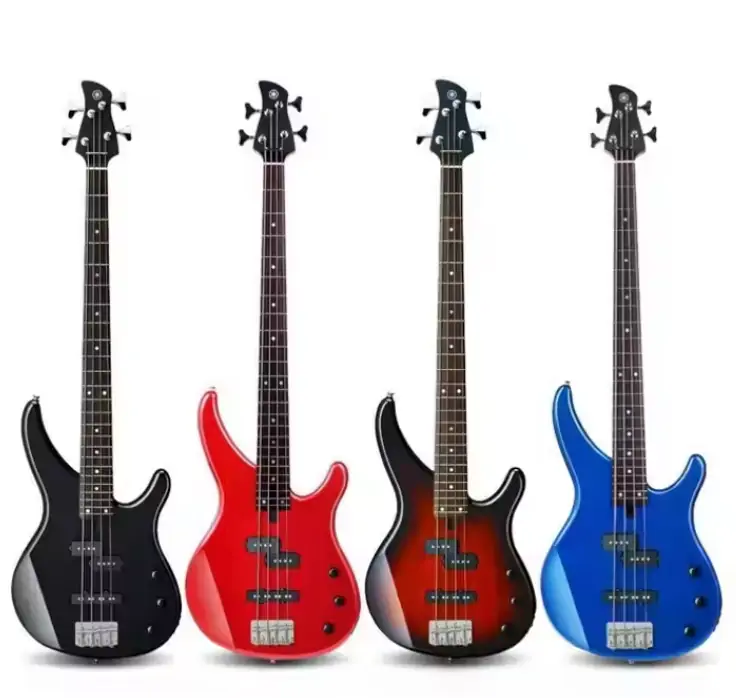
Perhaps the most popular music instrument in the world, the guitar comes in many forms. The classical (or Spanish) guitar, with its nylon strings and fan-braced body, has a soft, intimate, and nuanced tone perfect for the intricate counterpoint of Bach or the evocative melodies of Spanish composers. The steel-string acoustic guitar, with its larger body and X-bracing, has a brighter, louder, and more percussive sound that is the backbone of folk, country, and pop music. The electric guitar, a 20th-century invention, uses magnetic pickups to convert the string vibrations into an electrical signal, which can then be amplified and modified to create an almost infinite variety of sounds.
The harp is one of the most ancient string instruments, with depictions appearing in cultures across the globe for millennia. The modern concert harp is a large, triangular-framed instrument with 47 strings and a complex system of seven pedals at its base. These pedals allow the player to change the pitch of the strings, making the instrument fully chromatic. The sound of the harp is ethereal and magical, produced by plucking the strings with the fingertips. It is most famous for its sweeping arpeggios and glissandos that can wash over an orchestra with a wave of sound.
Beyond the professional concert stage and the intimate folk gathering lies a critically important domain of music-making: education. How do we introduce children to the joys of rhythm, melody, and harmony in a way that is intuitive, engaging, and collaborative? One of the most influential answers to this question came from the German composer and educator Carl Orff in the early 20th century. Together with his colleague Gunild Keetman, he developed a comprehensive approach to music education known as the Orff Schulwerk, or "school work."
The Orff approach is not a rigid method but a philosophy centered on the idea that music, movement, and speech are inseparable parts of a child's world of play (West Music, n.d.). It posits that children can learn music in the same way they learn language: through imitation, exploration, and improvisation, long before they are introduced to the complexities of formal notation. A key component of this philosophy is a specially designed set of musical instruments, known as Orff instruments, which are built to be accessible, durable, and sonically pleasing.
At its core, the Orff approach is elemental. It begins with the most basic instruments available: the body (clapping, stomping, snapping, patsching) and the voice (singing, chanting, speaking rhymes). From there, it introduces a range of percussion instruments that are easy to play and produce a satisfying sound immediately. The goal is not technical perfection but joyful participation and creative expression.
An Orff classroom is a place of activity. Children learn rhythms through rhymes, melodies through simple songs, and harmony through ensemble playing. Improvisation is encouraged from the very beginning. A teacher might present a simple rhythmic or melodic pattern (an "ostinato") and invite students to create their own variations or accompanying parts. This process fosters active listening, social cooperation, and individual creativity. The instruments are the tools for this creative play.
While the Orff ensemble includes a variety of unpitched percussion like woodblocks, triangles, and hand drums, its heart is a family of pitched mallet percussion instruments. These instruments are visually intuitive, laid out like a piano keyboard, and allow children to immediately see the relationship between different notes. They are designed to sound good together, creating a consonant, pleasing sonority even with simple or improvised parts. The three core members of this family are the glockenspiel, the xylophone, and the metallophone.
As we encountered in the orchestral section, the glockenspiel has small metal bars that produce a bright, bell-like, and sustained sound. In the Orff context, they are the soprano voice of the pitched percussion ensemble. Their clear, high-pitched tone is perfect for playing simple melodies that can be heard clearly above the other instruments. Orff glockenspiels often have removable bars, a feature that allows a teacher to create a simple pentatonic (five-note) scale by removing the "F" and "B" bars from a C major scale. This is a brilliant pedagogical tool, as any combination of notes on a pentatonic scale will sound harmonious, freeing the child to improvise without the fear of playing a "wrong" note.
The Orff xylophone has wooden bars, typically made of rosewood or a synthetic equivalent like Pau Rosa. Unlike the glockenspiel, the sound of the xylophone is dry, crisp, and has a very short sustain. This percussive quality is excellent for playing rhythmic ostinatos and articulate melodic lines. Orff xylophones come in different sizes, including soprano, alto, and bass, allowing for the creation of a full-voiced ensemble. The bass xylophone, with its large, resonant bars, provides a satisfying harmonic foundation for the group.
The metallophone is the third member of this core trio. Like the glockenspiel, it has metal bars, but they are much larger, thicker, and made of a different alloy. This gives the metallophone a sound that is much softer, mellower, and more sustained than the xylophone, but deeper and warmer than the glockenspiel. They are the alto and bass voices of the Orff metal instrument family. Their long sustain is wonderful for creating a harmonic "pad" of sound over which the xylophones and glockenspiels can play more active parts.
The genius of the Orff instrumentarium is how these different timbres complement one another. The bright glockenspiel, the dry xylophone, and the sustained metallophone create a rich and balanced ensemble sound. This allows children to experience the joy of creating complex, beautiful music in a group setting, fostering skills that extend far beyond music into the realms of social interaction, listening, and creative problem-solving. These instruments are a testament to the idea that the right tool can make learning not a chore, but an act of joyful discovery.
The decision to learn a music instrument is the start of a remarkable journey. It is a commitment to a new form of self-expression, a new discipline, and a new way of hearing the world. But with a universe of instruments to choose from, how does one begin? The process of selecting an instrument is deeply personal, involving a blend of practical considerations and emotional resonance. It is less like choosing a tool and more like choosing a companion for a long and rewarding adventure. The perfect instrument for one person may be entirely wrong for another. A careful and honest self-assessment is the best first step.
The journey begins at home, with thoughtful consideration of your own life and goals. But it often finds its destination in a place where you can see, touch, and hear the instruments themselves. A well-curated musical marketplace like EasyGoGlobal can be an invaluable resource, offering a space to explore possibilities and connect with the tools of the trade.
Before you are swayed by the elegant curve of a cello or the gleaming brass of a saxophone, it is wise to look inward. What is drawing you to music? The answer to this question can provide a powerful compass.
Consider the music you love to listen to. What instrument's voice consistently captures your attention? If you are a fan of classical music, are you drawn to the soaring melodies of the violin or the noble calls of the French horn? If you love jazz, does the intricate improvisation of a saxophone speak to you, or is it the rhythmic foundation of the double bass and drums? If you are passionate about folk and singer-songwriter music, the acoustic guitar might be a natural fit. Aligning your choice with your musical taste ensures that you will be motivated to learn the songs and styles that inspire you. Playing an instrument you have always admired in the hands of your heroes is a powerful motivator.
Think about the social context in which you envision yourself making music. Do you see it as a solitary, meditative practice? Instruments like the classical guitar, the piano, or the marimba are wonderfully self-sufficient and offer a universe of solo repertoire. Or are you drawn to the energy and camaraderie of playing with others? If so, instruments that are central to band and orchestral settings, such as the bass guitar, the drums, a brass or woodwind instrument, or an orchestral string instrument, might be a better choice. The joy of locking into a groove with a drummer or harmonizing with another singer is a unique and powerful experience.
Be honest about your ambitions. Is your goal to play for your own enjoyment at home, to join a local community orchestra, to write your own songs, or to play in a rock band with friends? There is no wrong answer, but your goal can influence your choice. A large, loud instrument like a tuba or a full drum kit might be impractical if your only goal is quiet, personal enjoyment in a small apartment. Conversely, a ukulele might not be the best choice if your dream is to play in a symphony orchestra.
Once you have a sense of your musical direction, it is time to consider the practical realities of learning and owning a music instrument.
Instruments vary wildly in price. A beginner ukulele or harmonica can be very affordable, while a high-quality concert harp or grand piano can represent a major financial investment. It is important to set a realistic budget. Remember that the initial cost of the instrument is not the only expense. You will also need to budget for accessories (cases, tuners, stands, reeds, strings), maintenance, and, most importantly, lessons. While it is tempting to buy the cheapest available option, a very low-quality instrument can be difficult to play and produce a frustratingly poor sound, which can be a major source of discouragement for a beginner. Often, a good quality, second-hand instrument is a better investment than a brand-new, poorly made one.
Consider your living situation. Do you have space for a double bass or a marimba? Do you have neighbors who will be tolerant of a beginner trumpet player or drummer? The acoustic reality of an instrument is a major factor. Many instruments now have "silent" or electronic versions (like digital pianos or electronic drum kits) that can be played with headphones, which can be a fantastic solution for those in apartments or with families. For purely acoustic instruments, consider the volume. A flute is much quieter than a trombone. A classical guitar is much more apartment-friendly than a banjo.
Finally, consider the physical demands of the instrument. While most instruments can be adapted for people of all shapes and sizes, some have specific physical requirements. Playing the cello requires a comfortable seated posture and a hand span that can reach the notes. Brass instruments require strong facial muscles and good breath control. The aural sensitivity required for a fretless instrument like a violin is different from the more defined pitch of a fretted guitar. The best way to assess this is to try the instruments out. Go to a music store. Ask to hold a violin, to sit at a cello, to try to make a sound on a flute mouthpiece. This physical interaction can often tell you more than hours of research. It can feel like a handshake, a moment of recognition where an instrument just feels "right" in your hands.
What is the easiest music instrument to learn for an adult?
While "easy" is subjective, instruments like the ukulele, keyboard (piano), and cajón are often recommended for adult beginners. The ukulele has soft nylon strings and simple chord shapes. Keyboards offer a visual layout of notes and instant gratification. The cajón provides an intuitive way to learn rhythm without the complexity of a full drum kit. The most important factor, however, is choosing an instrument you are genuinely excited to play, as passion is the greatest driver of progress.
How long does it take to become proficient at a music instrument?
Proficiency is a spectrum. You can learn to play simple songs within a few months on many instruments. Achieving a basic level of competence where you can play in a group or read music comfortably might take one to three years of consistent practice. Reaching an advanced or professional level is a lifelong pursuit. The key is consistent, focused practice rather than the total amount of time passed.
Should I rent or buy my first instrument?
Renting is an excellent option for beginners, especially for larger or more expensive orchestral instruments like the cello, saxophone, or French horn. It allows you to start on a good-quality, well-maintained instrument for a low monthly cost. Many rental programs also offer rent-to-own options. Buying is a good choice for more affordable instruments like guitars or ukuleles, or if you are certain about your long-term commitment.
What is the difference between a xylophone, a marimba, and a glockenspiel?
These are all pitched percussion instruments played with mallets, but they differ in material and sound. A glockenspiel has small, high-pitched metal bars that produce a bright, bell-like tone. A xylophone has wooden bars that produce a sharp, dry, and short sound. A marimba also has wooden bars but includes resonators (tubes) under each bar, which create a much warmer, richer, and more sustained tone.
Do I need to learn to read music to play an instrument?
It depends on your goals. You can learn to play many instruments, particularly guitar, bass, and drums in popular music styles, by using tablature (a form of notation that shows finger placement) and by learning by ear. However, learning to read standard music notation is a powerful skill that opens up a vast world of music. It is essential for playing in orchestras, concert bands, and for understanding music theory on a deeper level.
How do electronic instruments like synthesizers fit into the instrument families?
In the Hornbostel-Sachs classification system, instruments that produce sound primarily through electronic means are called electrophones. A synthesizer is a classic example. It generates sound electronically, often by creating and shaping electrical waveforms. This allows it to imitate the sounds of acoustic instruments or create entirely new, never-before-heard timbres.
Is it too late to start learning a music instrument as an older adult?
Absolutely not. While children may have some advantages in neuroplasticity, adult learners bring focus, discipline, and a deep appreciation for music that can lead to rapid progress. Learning an instrument is one of the best activities for maintaining cognitive health and provides a deeply rewarding creative outlet at any age. Many people find great joy and a new sense of purpose by picking up an instrument later in life.
What is the role of a conductor in an orchestra?
The conductor has several roles. The most visible is keeping time, providing a clear beat so that the large group of musicians can play together precisely. Beyond that, the conductor shapes the music dynamically and emotionally, indicating when a section should play louder or softer, faster or slower, or with a different emotional character. They are the unifying artistic interpreter of the musical score, guiding the orchestra toward a single, cohesive vision of the piece (Kennedy Center, n.d.).
The journey through the world of the music instrument is a journey into the heart of human culture, physics, and emotion. From the visceral pulse of a djembe to the ethereal shimmer of a glockenspiel, from the breathy whisper of a flute to the soulful cry of a cello, these objects are far more than assemblies of wood, metal, and skin. They are resonant vessels for our stories, our joys, our sorrows, and our aspirations. They are the tools with which we paint with sound, building structures of rhythm and color that can move us in ways words cannot.
Understanding the families of instruments—the percussive, the winds, the strings—and the principles by which they operate enriches our listening and our playing. It allows us to appreciate the genius of a composer's orchestration, the skill of a performer's technique, and the centuries of innovation that have led to the instruments we have today. Whether your path leads you to the structured world of the symphony orchestra, the improvisational freedom of a jazz combo, the elemental play of an Orff ensemble, or the simple pleasure of strumming a guitar on your own, the act of making music is a profoundly human one. It connects us to a tradition that stretches back to the dawn of our species and offers a limitless frontier for future creativity. The right instrument is waiting, not as an object to be mastered, but as a voice to be discovered.