
The selection of industrial hardware, particularly components such as pipe clamps, hangers, and couplings, represents a critical nexus of material science, mechanical engineering, and environmental analysis. This document examines the multifaceted considerations integral to specifying the correct hardware for a given application, moving beyond rudimentary cost-based decisions to a more holistic, performance-oriented framework. It analyzes seven pivotal factors: material composition and durability, load dynamics and mechanical stress, environmental and chemical compatibility, functional design anatomy, installation precision, regulatory standards and quality assurance, and application-specific requirements. By dissecting each factor, this guide provides a comprehensive methodology for professionals in plumbing, HVAC, automotive, and construction industries. The objective is to mitigate risks of system failure, leaks, and safety hazards by empowering engineers, technicians, and procurement specialists with the knowledge to make informed, reliable hardware choices in 2026 and beyond, ensuring structural integrity and operational longevity.
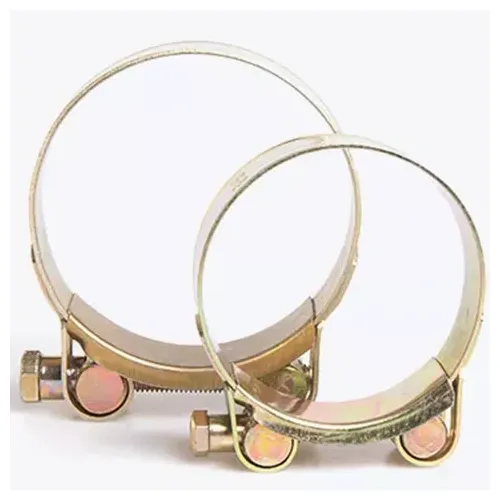
In the grand theater of engineering and construction, the massive beams, powerful engines, and sprawling networks of pipe often take center stage. They are the visible, celebrated components of our infrastructure. Yet, supporting this entire superstructure, often out of sight and out of mind, is an army of small, indispensable components. These are the clips, the hangers, the couplings—the industrial hardware that functions as the system's connective tissue. To dismiss their importance is to misunderstand the very nature of structural integrity. A system is only as strong as its weakest link, and all too often, that weak link is a poorly chosen clamp or a corroded hanger.
Imagine a state-of-the-art fire protection system in a new high-rise building. Millions have been invested in the pumps, sprinklers, and large-bore piping. But what holds those pipes to the ceiling? A series of pipe hangers. If an inferior, non-certified hanger is chosen to save a few dollars, it might fail under the immense, water-filled weight during an actual emergency, rendering the entire system useless. Consider a high-performance automotive engine where a simple hose clamp secures a coolant line. If that clamp fails due to vibration or material fatigue, the resulting coolant leak can lead to catastrophic engine failure. The consequences of overlooking this small piece of hardware are disproportionately large. The selection of a hose clamp, a heavy duty clamp, or a no hub coupling is not a trivial procurement decision; it is an engineering decision with profound implications for safety, reliability, and long-term cost. The initial savings from a cheaper component are often erased many times over by the costs of failure, which can include system downtime, property damage, and, in the worst cases, personal injury.
The default tendency in many projects is to select hardware based on the lowest bid. This approach is fundamentally flawed. A truly professional selection process requires a more nuanced, multi-faceted framework. This guide proposes such a framework, built around seven critical factors that, when considered together, lead to a robust and defensible hardware specification. We will move through these factors methodically, starting with the very substance of the component—its material—and progressing through the forces it must endure, the environment it must survive, its functional design, the precision of its installation, the standards that guarantee its quality, and finally, the unique demands of its specific application. This is not merely about choosing a product; it is about understanding a system. It is an exercise in applied physics, chemistry, and mechanical engineering, all focused on a component that might fit in the palm of your hand but holds the integrity of a much larger system in its grasp. By embracing this level of intellectual rigor, we can elevate the practice of hardware selection from a simple purchase to a calculated engineering discipline.
The journey to selecting the perfect piece of industrial hardware begins at the atomic level. The material from which a clamp or hanger is forged dictates its strength, its resistance to degradation, and its overall lifespan. Choosing the wrong material is like building a house on a foundation of sand; no matter how well-designed the structure, it is destined to fail. The world of materials is vast and complex, but for the majority of hardware applications, the choice often revolves around a few key families of metals. Understanding their distinct personalities—their strengths, weaknesses, and behaviors under stress—is the first and most critical step in our framework.
When one thinks of quality hardware, stainless steel is often the first material that comes to mind, and for good reason. It offers an excellent combination of strength, corrosion resistance, and aesthetic appeal. However, "stainless steel" is not a single entity. It is a family of iron-based alloys containing a minimum of 10.5% chromium. The chromium is the magic ingredient; it reacts with oxygen to form a thin, invisible, and incredibly durable passive layer of chromium oxide on the surface. This layer protects the underlying steel from rust and corrosion. If the surface is scratched, the passive layer instantly reforms, making it self-healing.
Within this family, two grades are particularly common in the world of clamps and fasteners: Grade 304 and Grade 316.
The choice between 304 and 316 is a classic engineering trade-off between performance and cost. One must ask: is the application exposed to salt, de-icing agents, or aggressive chemicals? If so, the additional investment in 316 is not a luxury; it is a necessity for ensuring long-term reliability.
Before stainless steel became widely available and affordable, carbon steel was the king of industrial materials. It is strong, easy to form, and significantly less expensive than its stainless counterparts. Its major Achilles' heel, however, is its vulnerability to rust. Left unprotected, a carbon steel clamp will quickly oxidize and fail, especially in damp environments. To combat this, a protective coating is almost always applied, with galvanization being the most common method.
Galvanization involves applying a layer of zinc to the surface of the steel. This can be done through several methods, but hot-dip galvanizing is common for hardware, creating a thick, durable coating. The zinc protects the underlying steel in two ways. First, it acts as a simple physical barrier, preventing moisture and oxygen from reaching the steel. Second, it provides "sacrificial" or cathodic protection. Zinc is more electrochemically active than iron. If the coating is scratched and the steel is exposed, the surrounding zinc will corrode first, sacrificing itself to protect the steel. This is a crucial advantage. Galvanized steel hardware is a workhorse in general construction, agricultural applications, and indoor industrial settings where extreme corrosion is not a primary concern but strength and cost-effectiveness are. Many heavy-duty pipe clamps and beam clamps are offered in a galvanized finish to provide a good balance of performance and budget (Heavydutypipeclamps.com, n.d.).
While stainless and carbon steels cover the vast majority of applications, certain extreme environments call for more specialized materials.
The table below provides a comparative overview of the most common hardware materials.
| Material | Corrosion Resistance | Strength | Cost | Common Applications |
|---|---|---|---|---|
| Carbon Steel (Plain) | Poor | High | Low | Dry, indoor environments; must be coated. |
| Carbon Steel (Galvanized) | Good | High | Low-Medium | General construction, agriculture, industrial. |
| 304 Stainless Steel | Very Good | High | Medium | General plumbing, HVAC, automotive, household. |
| 316 Stainless Steel | Excellent | High | High | Marine, chemical processing, food & beverage. |
| Brass | Good | Medium | Medium | Plumbing fittings, decorative, spark-resistant. |
| Nylon/Plastic | Excellent | Low | Low | Low-load cable management, electrical insulation. |
Beyond galvanization, a variety of other coatings and finishes can be applied to hardware to enhance its properties.
The material of a piece of hardware is its DNA. It predetermines its capabilities and its limitations. A thoughtful analysis of the demands of the application, balanced against the properties and costs of the available materials, is the first and most fundamental responsibility of anyone specifying these critical components.
Once we have determined the appropriate material to survive the environment, we must turn our attention to the forces the hardware will be asked to endure. A pipe clamp or hanger is, at its core, a structural component. Its purpose is to resist forces—gravity, pressure, vibration, thermal expansion—and maintain the position and integrity of the system it supports. A failure to correctly account for these forces is a direct path to mechanical failure. This analysis requires a shift in thinking, from the mindset of a chemist to that of a physicist or mechanical engineer.
The forces acting on a piece of hardware can be broadly categorized into two types: static and dynamic. A failure to distinguish between them can lead to significant under-specification of components.
Static Loads: These are forces that are constant and applied slowly. The most common example is the dead weight of a pipe filled with a stationary fluid. Calculating the static load on a pipe hanger is relatively straightforward: it involves determining the weight per foot of the pipe, adding the weight of the fluid inside, and multiplying by the distance between hangers. For example, a 4-inch Schedule 40 steel pipe weighs about 10.8 lbs/ft. Filled with water (at 8.34 lbs/gallon), its total weight increases significantly. If hangers are placed every 10 feet, each hanger must support the weight of that 10-foot section. This is a static load. While simple in concept, it's the baseline calculation for any support system.
Dynamic Loads: These are forces that change over time. They are often more complex and more destructive than static loads. Examples include:
A professional approach to hardware selection always considers the potential for dynamic loads, often applying a "safety factor" to the static load calculations to account for these unpredictable forces.
For a component like a hose clamp or a no hub coupling, the primary function is not to support weight, but to create a seal. This is achieved by generating a compressive, radial force around the circumference of the hose or pipe. Let's think about what happens when you tighten a worm gear hose clamp. The screw (worm) engages with the slots in the band. As you turn the screw, it pulls the band, reducing its diameter. This reduction in diameter squeezes the hose against the underlying spigot or pipe.
The effectiveness of the seal depends on two things:
A high-quality clamp design, like a German Type hose clamp with rolled band edges, ensures that this clamping force is distributed evenly around the circumference of the hose, creating a consistent seal without cutting into the hose material (TheOne, 2026). A cheaper, stamped-slot clamp may concentrate stress at the sharp edges of the slots, potentially damaging the hose and creating a leak path.
When applications involve high pressure, large diameters, or significant dynamic loads, a standard worm gear clamp may not suffice. This is where heavy duty clamp designs come into play. These are engineered specifically to generate and withstand much higher forces.
The selection of a heavy duty clamp is a clear example of matching the mechanical capabilities of the hardware to the stresses of the application.
For a pipe hanger, the primary load is the weight of the pipe and its contents. The key engineering decision is not just the strength of the individual hanger but also their spacing. Placing hangers too far apart can cause the pipe to sag, creating low points where sediment can collect and inducing stress in the pipe itself. Placing them too close together is inefficient and unnecessarily expensive.
Standard plumbing and mechanical codes provide tables for maximum allowable hanger spacing based on the pipe material, diameter, and whether the line is horizontal or vertical. For example, a 1-inch copper pipe might require a support every 8 feet, while a 4-inch cast iron soil pipe might need a support at every joint and at least every 10 feet between joints. These codes are based on extensive engineering calculations and testing designed to limit pipe deflection (sag) to an acceptable level. A diligent engineer or installer will not guess at this spacing; they will consult the relevant codes and manufacturer recommendations to ensure the long-term structural integrity of the piping system. This is where components like a threaded rod pipe clamp or a beam clamp pipe hanger become integral parts of a larger, engineered system .
A piece of hardware can be made from the finest alloy and engineered to withstand immense loads, but if it is placed in an environment that chemically attacks it, its failure is not a matter of if, but when. The third critical factor in our framework is therefore an analysis of the operational environment. We must consider the full spectrum of potential threats: ambient moisture, extreme temperatures, corrosive chemicals, and even sunlight. This requires us to think like a chemist again, anticipating the reactions that will occur on the surface of our chosen hardware over months and years of service.
Corrosion is the gradual destruction of materials by chemical or electrochemical reaction with their environment. For metals, it is the natural process of reverting to their more stable, oxidized state—rust, in the case of iron. It is a relentless and insidious process that can compromise the structural integrity of a clamp or hanger long before any visible signs of failure are apparent.
There are several types of corrosion that are particularly relevant to industrial hardware:
The primary defense against corrosion is material selection, as discussed in Factor 1. Choosing 316 stainless steel for a marine application is a direct strategy to combat chloride-induced pitting. Using insulating materials between dissimilar metals is a strategy to prevent galvanic corrosion.
The operating temperature of the application has a profound effect on material properties.
The expected temperature range of the application must be a key consideration in material selection.
In chemical plants, refineries, and manufacturing facilities, hardware is often exposed to a cocktail of aggressive chemicals. The pipes themselves may be carrying acids, bases, or solvents, and leaks or spills can expose the external clamps and hangers to these substances. Furthermore, the ambient air itself may contain corrosive vapors.
In these situations, a standard material like galvanized steel is often inadequate. A chemical compatibility chart is an indispensable tool. These charts list various materials and their resistance to a wide range of chemicals, typically rating them as "Excellent," "Good," "Fair," or "Unsatisfactory." For example, while 316 stainless steel has excellent resistance to many chemicals, it can be attacked by certain strong acids like hydrochloric acid. In such cases, a more exotic alloy or even a non-metallic component made from a resistant polymer like PTFE (Teflon) or PVDF might be the only viable option. The choice of rubber lining in a pipe clamp is also critical; an EPDM rubber lining offers good resistance to water and weather, but a Nitrile or Viton lining might be necessary if exposure to oils or fuels is expected (Glorex, n.d.).
For any hardware installed outdoors, the sun itself is an environmental threat. Ultraviolet (UV) radiation can degrade many materials over time. This is particularly true for plastics and rubbers. A standard, non-UV-stabilized plastic clamp will become brittle and discolored after a few years of sun exposure, eventually cracking and failing. Similarly, the rubber lining on a pipe hanger can be broken down by UV radiation, losing its elasticity and cushioning properties. When specifying non-metallic components for outdoor use, it is crucial to select materials that are specifically formulated with UV inhibitors. While metals are immune to UV degradation, the radiation can still affect any plastic or rubber coatings they may have. This long-term, slow degradation is easy to overlook during initial design but is a common cause of failure in the field.
Having considered the material and the external forces, we now turn our focus inward, to the design of the hardware itself. The world of clamps and hangers is one of remarkable diversity, with countless variations each engineered to solve a specific problem. Understanding the "anatomy" of these different designs—how they are constructed and how they function mechanically—is essential for matching the right tool to the right job. A worm gear clamp is not a T-bolt clamp, and a pear type clamp serves a different purpose than a beam clamp. Choosing the most appropriate design is a matter of optimizing for pressure, flexibility, ease of installation, and reliability.
The worm gear hose clamp is arguably the most recognizable piece of hardware in this category. Its design is simple yet effective: a metal band with a series of slots (or sometimes embossed ridges) is engaged by a screw, or "worm drive." Turning the screw pulls the band tight, creating clamping force. They are versatile, relatively inexpensive, and used in countless applications, from automotive coolant lines to plumbing drains.
However, even within this single category, there are important distinctions:
When the pressure requirements of an application exceed the capabilities of a worm gear clamp, engineers turn to more robust designs.
The no hub coupling is a brilliant piece of engineering that solved a long-standing problem in plumbing: how to quickly and reliably join cast iron soil pipe without the laborious and hazardous process of using a hot lead and oakum seal. The coupling consists of a cylindrical sleeve of resilient rubber (typically neoprene) and an outer shield of stainless steel with integrated tightening bands.
Here is how it works: The two plain ends of the cast iron pipes are butted together. The rubber sleeve is slid over the joint, and the stainless steel shield is positioned over the sleeve. The tightening bands, which are essentially integrated worm gear clamps, are then tightened to the specified torque. This action does three things simultaneously:
The result is a strong, durable, and watertight joint that can be made in a fraction of the time of traditional methods. It also allows for some flexibility, accommodating slight misalignment and absorbing vibration. The quality of a no hub coupling is determined by the quality of its components: a high-grade neoprene sleeve that resists degradation and a 300-series stainless steel shield and clamp assembly to prevent corrosion (Youde, 2026).
The world of pipe hangers also has its own array of specialized designs.
The following table compares these common clamp and hanger designs across key functional attributes.
| Hardware Type | Primary Function | Pressure Rating | Key Feature | Common Application |
|---|---|---|---|---|
| Worm Gear Hose Clamp | Sealing low-pressure hose | Low | Versatile, low cost | Automotive coolant, plumbing drains |
| T-Bolt Clamp | Sealing high-pressure hose | High | High clamping force | Turbochargers, industrial hoses |
| V-Band Clamp | Joining flanged pipes | Very High | Quick-release, rigid seal | Performance exhausts, process piping |
| No Hub Coupling | Joining plain-end pipes | Low (Gravity) | Flexible, fast installation | Cast iron soil pipe, drains |
| Pear Type Clamp | Supporting horizontal pipe | N/A (Load rated) | Allows for insulation/movement | HVAC, commercial plumbing |
| Beam Clamp | Attaching to structural beams | N/A (Load rated) | No-drill attachment | Suspending pipe hangers |
A perfectly engineered clamp made from the most exotic alloy will fail if it is the wrong size or installed improperly. The fifth factor in our framework addresses the critical importance of precision in both selection and application. This is where theoretical knowledge meets hands-on practice. An error of a few millimeters in measurement or a few Newton-meters in torque can be the difference between a secure, leak-free connection and a catastrophic failure. This stage of the process demands diligence, attention to detail, and a respect for the manufacturer's specifications.
One of the most fundamental and surprisingly common errors in selecting a hose clamp is confusing the Inner Diameter (ID) and Outer Diameter (OD) of the hose. A hose is specified by its ID, as this determines its flow capacity. For example, you might have a 1-inch ID coolant hose. However, the clamp must fit on the outside of the hose. Therefore, you need to know the hose's OD to select the correct clamp.
The process is further complicated by the fact that the hose's OD will increase when it is pushed onto a barbed fitting or spigot. The correct procedure is to measure the OD of the hose after it has been installed on the fitting. This is the true diameter that the clamp must accommodate.
Most clamp manufacturers specify a clamping range, for example, 40-60mm. The measured OD of your installed hose should ideally fall somewhere in the middle of this range. Choosing a clamp where your diameter is at the very minimum or maximum of its range is not ideal. At the minimum end, you may have an excessively long "tail" of the band sticking out. At the maximum end, you may not have enough thread engagement on the screw for a secure connection. A precise measurement with a caliper is always preferable to estimation.
Torque is a measure of rotational force. When you tighten a clamp's screw or a T-bolt's nut, you are applying torque. This torque is what generates the clamping force that creates the seal. Every high-quality clamp, from a simple hose clamp to a heavy duty clamp or a no hub coupling, has a recommended installation torque specified by the manufacturer.
These specifications are not suggestions; they are critical engineering parameters.
The only reliable way to ensure you are applying the correct torque is to use a calibrated torque wrench. These tools allow you to set a specific torque value. When that value is reached, the wrench will click, slip, or otherwise indicate that you should stop tightening. Using a standard screwdriver or socket wrench and "going by feel" is a recipe for inconsistency and failure. Professionals understand that investing in and using a torque wrench is non-negotiable for critical connections.
Proper installation goes beyond just torque. Each type of hardware has its own best practices.
Beyond sizing and torque, there are several other common mistakes that can compromise an installation.
Precision, care, and following the manufacturer's instructions are the hallmarks of a professional installation. No amount of engineering in the design of the hardware can compensate for a careless or uninformed installation practice.
In a globalized market, how can a buyer in the United States or Europe be confident that a piece of hardware manufactured on the other side of the world will perform as expected? The answer lies in a system of standards, certifications, and robust quality assurance processes. This sixth factor is about trust, but it is a trust that is earned and verified through objective measures. Relying on these systems is what separates professional sourcing from blind purchasing. It allows buyers to specify a desired level of quality and have a reasonable expectation that it will be met, regardless of the origin of the product.
When you see a clamp marked with "DIN 3017" or a fastener that meets an "SAE" specification, you are looking at a product that claims to conform to a specific, documented standard. These standards are developed by national and international organizations to ensure product safety, reliability, and interoperability.
These standards provide a common language for defining quality. When you specify a "DIN 3017 German Type Hose Clamp made from 316 Stainless Steel," you have communicated a precise set of requirements that any knowledgeable manufacturer can understand and meet.
A standard is just a piece of paper. The real challenge is consistently manufacturing products that meet that standard. This is the role of quality control (QC). A reputable manufacturer will have a multi-stage QC process integrated into their production line. This is not just about a final inspection; it is about building quality in at every step.
A comprehensive QC system, like the one described by Youde (2026), might include:
This commitment to process control is what separates a reliable supplier from a low-cost factory that might cut corners. When evaluating potential suppliers, asking detailed questions about their QC process is a crucial step. A good supplier will be proud to describe their system, as it is a key part of their value proposition.
Unfortunately, the market is not free from counterfeit and substandard products. A clamp might be stamped with "316 SS" but actually be made from a cheaper, less corrosion-resistant grade like 304 or even 201 series stainless steel. A heavy duty clamp might use a weaker bolt that will fail well below its advertised load rating. Identifying these fakes can be difficult without laboratory testing, but there are red flags to watch for:
The best suppliers are not just order-takers; they are partners with deep expertise in their products. A good supplier can help you navigate the complexities of standards and material selection. They can provide guidance on the best type of hardware for your specific application. Platforms that vet and consolidate reputable manufacturers, such as a One-Stop Trade Matching Platform, can be an invaluable resource, providing a layer of trust and access to pre-screened suppliers who understand the importance of quality and documentation. When you engage with a supplier, treat them as a resource. Share the details of your application and ask for their recommendation. Their experience can help you avoid costly mistakes and ensure you are specifying the most appropriate and cost-effective solution.
The final factor in our comprehensive framework is the synthesis of all the others, applied to the unique context of a specific application. A clamp is never used in a vacuum; it is part of a larger system with a specific purpose. The dominant challenges in an automotive engine bay are different from those in a marine bilge or a commercial plumbing riser. A truly optimal hardware selection requires an appreciation for these application-specific nuances. It is the final step where we tailor our general knowledge of materials, loads, and standards to the concrete realities of the job at hand.
The environment under the hood of a modern vehicle is one of the most challenging for any component. Hardware in this application must contend with:
For a high-performance turbocharged car, a robust T-bolt clamp is often the only option for the charge pipes, as the high pressure and heat would overwhelm a standard worm gear clamp.
In plumbing and heating, ventilation, and air conditioning (HVAC) systems, the primary concerns are longevity and the absolute prevention of leaks. A leaking pipe inside a finished wall can cause thousands of dollars in water damage.
A marine environment, with its constant exposure to saltwater, humidity, and sun, is the ultimate test of a material's corrosion resistance. Any hardware used on a boat or near the coast must be specified with this in mind.
For a marine application, the higher upfront cost of 316 stainless steel hardware is not an expense; it is an investment in safety and reliability.
These applications have their own unique sets of demands.
By analyzing the specific challenges of the application, we can make a final, informed decision, selecting a piece of industrial hardware that is not just adequate, but optimal for the task.
The primary difference is the addition of molybdenum (about 2-3%) to 316 stainless steel. This small addition significantly increases its resistance to corrosion, particularly from chlorides found in saltwater, de-icing salts, and some industrial chemicals. While 304 is excellent for general purposes, 316 is the necessary choice for marine applications or other harsh, corrosive environments to prevent a type of localized corrosion called pitting.
For common worm gear hose clamps, it is generally not recommended, especially in critical applications like automotive coolant or fuel lines. The band can stretch and the screw threads can wear during the first installation, meaning it may not achieve the same clamping force or reliability on subsequent uses. Given their low cost, replacing them is cheap insurance. More robust hardware like heavy-duty T-bolt clamps may be reused if they are carefully inspected for any signs of stretching, thread damage, or corrosion.
You should tighten it to the manufacturer's specified torque value using a calibrated torque wrench. "Good and tight" is not a measurable specification and can lead to either under-tightening (leaks) or over-tightening (damage to the clamp, hose, or fitting). The torque specification is an engineering parameter based on the clamp's design and materials to achieve the optimal clamping force without causing failure.
A no hub coupling is a component used to join sections of cast iron soil pipe that have plain, non-hubbed ends. It consists of a rubber sleeve and an outer stainless steel shield with tightening bands. It is used because it provides a strong, flexible, and leak-proof joint much faster and more safely than the traditional method of pouring molten lead. It has revolutionized drain, waste, and vent plumbing.
The rubber lining serves several purposes. First, it helps to isolate the pipe from the metal hanger, which can reduce the transmission of noise and vibration from the pipe to the building structure, a key concern in HVAC systems. Second, it protects the pipe from scratches and abrasion. Third, it can help prevent galvanic corrosion by separating a dissimilar pipe material (like copper) from a steel hanger.
No, they are not. There are significant differences in quality. A "German Type" clamp with a non-perforated, embossed band and rolled edges is generally superior to an "American Type" with a punched, perforated band, as it provides a smoother inner surface that is less likely to damage the hose and distributes clamping force more evenly. Material, build quality, and the design of the housing and screw also vary widely.
First, install the hose on the fitting or pipe it will connect to. Then, use a caliper or a flexible measuring tape to measure the outer diameter (OD) of the hose at the point where the clamp will sit. Clamps are sold with a specified clamping range (e.g., 25-40mm). Choose a clamp where your measured OD falls comfortably within the middle of that range, not at the extreme minimum or maximum.
The journey through the seven factors of hardware selection reveals a clear and compelling truth: choosing a clamp, hanger, or coupling is an act of engineering, not of simple shopping. It demands a holistic perspective that weaves together an understanding of material science, an appreciation for mechanical forces, a respect for the environment, and a commitment to precision. To neglect any one of these factors is to invite risk into a system. A focus solely on material without considering load can lead to structural failure. A focus on load without considering corrosion can lead to premature degradation.
The choice is not merely between a 304 and a 316 stainless steel clamp; it is between a short-term saving and long-term reliability. The decision is not just about tightening a screw; it is about applying a precise torque to achieve a calculated clamping force. In 2026, with global supply chains and a vast array of available products, the responsibility on the engineer, the technician, and the procurement specialist is greater than ever. They must be able to cut through the noise of marketing claims and low-cost temptations to identify true quality, verified by standards and backed by robust manufacturing processes.
Ultimately, these small pieces of hardware are the silent guardians of our infrastructure. They hold together the systems that provide our homes with water, our buildings with safety, and our vehicles with power. Granting their selection the intellectual rigor it deserves is not an academic exercise; it is a fundamental professional responsibility that ensures the safety, integrity, and longevity of the complex world we build.