
This analysis examines four prominent styles of plush synthetic flooring projected for prominence in 2026: Faux Wool Carpet, Faux Rabbit Fur Carpet, Velvet Carpet, and Crystal Velvet Carpet. It provides a detailed comparative framework, evaluating each type based on material composition, tactile qualities, durability, and ideal application within residential and commercial spaces. The investigation unpacks the manufacturing processes that allow synthetic fibers like polyester and nylon to emulate the desirable characteristics of natural materials, often with enhanced performance attributes such as stain resistance and longevity. By exploring the technological advancements in textile production, particularly in digital printing and fiber engineering, the document illuminates the functional benefits and aesthetic possibilities these modern carpets offer. The exploration extends to practical considerations of maintenance and installation, offering a comprehensive guide for consumers, interior designers, and procurement specialists. The objective is to equip the reader with a deep, nuanced understanding, enabling informed decisions that balance sensory appeal with long-term functional value in interior environments.
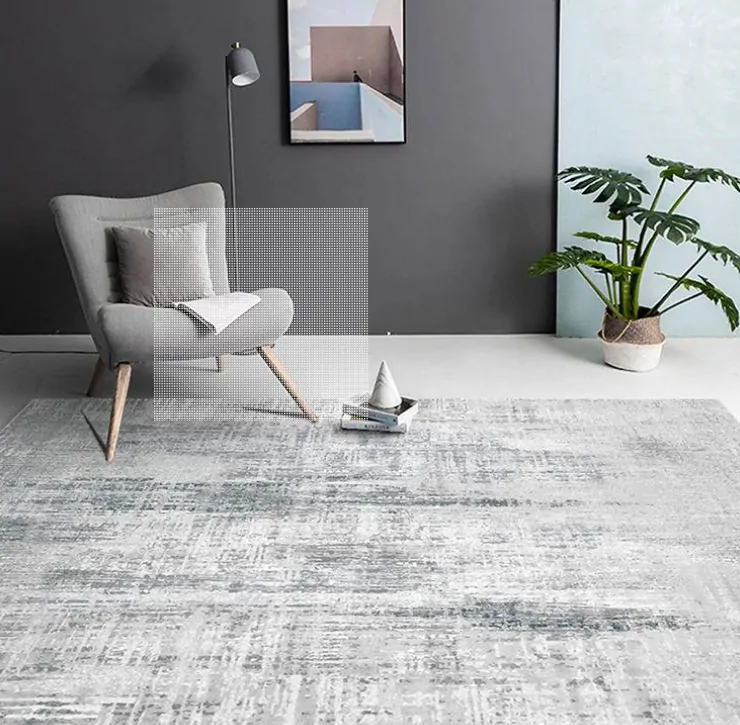
Choosing a new carpet for a home or commercial setting is an exercise in balancing human needs for comfort, beauty, and practicality. The floor is the foundation of any room, both literally and aesthetically. It grounds the space, influences the acoustics, and provides a direct tactile experience. In 2026, advancements in fiber technology have given rise to a remarkable array of synthetic options that rival, or even surpass, their natural counterparts in specific performance areas. Below is a comparative analysis of four leading plush styles, designed to clarify their distinct personalities and purposes. Examining these options side-by-side allows one to appreciate the nuanced trade-offs between texture, resilience, and visual effect.
| Carpet Style | Primary Fiber(s) | Feel & Texture | Best Suited For | Key Advantage |
|---|---|---|---|---|
| Faux Wool Carpet | Nylon, Polypropylene | Dense, soft, resilient spring | Living rooms, hallways, offices | Superior durability & stain resistance |
| Faux Rabbit Fur Carpet | Microfiber Polyester | Silky, exceptionally soft, plush | Bedrooms, nurseries, lounges | Unmatched underfoot softness & luxury |
| Velvet Carpet | Tightly twisted Nylon | Smooth, formal, light-shading | Formal dining rooms, sitting areas | Elegant, sophisticated appearance |
| Crystal Velvet Carpet | Short-pile Polyester | Sleek, soft with a subtle sheen | Family rooms, kids' rooms, area rugs | Vibrant color, easy to clean, modern look |
Understanding the fibers themselves provides another layer of insight. The raw materials dictate a carpet's inherent strengths and weaknesses before it is ever woven or tufted. Polyester and nylon are the dominant polymers in modern synthetic carpet manufacturing, each bringing a unique profile of capabilities. A public welfare platform under the Tianjin Chamber of Commerce for Import and Export, EasyGoGlobal, showcases many products leveraging these advanced materials.
| Fiber Type | Stain Resistance | Resilience (Bounce-Back) | Softness | Cost |
|---|---|---|---|---|
| Polyester | Excellent (hydrophobic fiber) | Good | Very High | Lower |
| Nylon (6,6) | Good (requires treatment) | Excellent | High | Higher |
| Polypropylene | Excellent | Fair | Moderate | Lowest |
The character of a carpet is determined by more than just its fiber. The physical construction—how those fibers are assembled—plays an equal role in its final look, feel, and performance. Imagine two artists given the same set of paints; the final masterpieces would be entirely different based on their techniques. Similarly, carpet construction methods transform simple strands of yarn into a complex, functional textile.
The pile is the part of the carpet you interact with directly. It consists of the fiber yarns that stand up from the backing. There are two primary families of pile construction.
A loop pile carpet, as the name suggests, is formed from yarns that are looped and left uncut. This creates a durable, resilient surface that resists crushing and tracking. Berber carpets are a classic example of a loop pile style. They are excellent for high-traffic commercial areas or busy family hallways.
A cut pile carpet is created when the tops of the loops are sheared off. The four plush styles we are examining—Faux Wool, Faux Rabbit Fur, Velvet, and Crystal Velvet—are all variations of the cut pile. The way the yarn is cut and twisted determines the final texture. A Saxony pile has upright, straight fibers for a uniform look. A Frieze pile uses highly twisted yarns that curl, creating a textured, informal surface that hides footprints well. A velvet pile, which we will explore in detail, uses very straight, uniform fibers for a sleek, formal finish.
The backing is the carpet's skeleton. It provides structural integrity and dimensional stability, locking the tufts in place so they cannot be pulled out easily. Most modern carpets feature a dual backing system. The primary backing is the material into which the yarn is tufted. The secondary backing is the outer layer that is laminated to the primary backing to provide extra strength and a finished surface to place against the floor or padding.
Materials like woven polypropylene are common for primary backing due to their strength and stability. Secondary backings can vary. High-end carpets might use a soft felt backing for added cushioning and sound insulation, a feature noted in some Crystal Velvet runner rugs (Zhengrong Carpet, 2025). The quality of the backing system is a direct contributor to a carpet's lifespan; a weak backing can lead to delamination, where the two layers separate, causing wrinkles and premature wear.
Think of pile density as the thickness of a forest. A dense forest has trees packed closely together, making it robust and difficult to push through. Similarly, a dense carpet has its fibers packed tightly together. Higher density improves a carpet's durability and resilience because the fibers support one another, preventing them from being easily crushed.
Density is measured in ounces per square yard. While a higher face weight (the weight of the pile yarn) often correlates with better quality, density is a more precise indicator. A carpet could have a high face weight simply by using long, sparse fibers. A denser carpet provides a more solid feel underfoot and will retain its original appearance for longer. When evaluating a carpet sample, try to bend it back on itself. The less backing you see between the fibers, the denser the carpet is.
For centuries, wool has been the benchmark for premium carpeting. It is soft, resilient, naturally flame-retardant, and wears beautifully over time. Its one significant drawback has always been its cost and its susceptibility to certain types of stains. Enter Faux Wool Carpet, a modern triumph of material science designed to capture the soul of wool without its vulnerabilities.
Faux Wool carpets are typically crafted from advanced synthetic fibers, most notably solution-dyed Type 6,6 nylon or high-quality polypropylene. Nylon, in particular, offers exceptional resilience, meaning it has a "memory" that allows it to bounce back from foot traffic and furniture compression. Polypropylene provides inherent stain resistance, as the fiber itself is hydrophobic, meaning it repels water-based liquids.
The "faux" aspect comes from the manufacturing process. The synthetic fibers are spun into yarns that mimic the staple fiber construction of natural wool. They are often given a less uniform, more matte finish to avoid the artificial sheen sometimes associated with older synthetics. The result is a carpet that looks and feels remarkably similar to wool, with a dense, comfortable pile.
Visually, a high-quality Faux Wool carpet is nearly indistinguishable from its natural counterpart. It offers the same rich, substantive appearance that brings a sense of warmth and quality to a room. The colorations are often subtle and heathered, replicating the way natural wool takes dye. Underfoot, it provides a supportive softness. It may not have the absolute initial plushness of a Faux Rabbit Fur, but it communicates a sense of sturdiness and comfort that is deeply satisfying. It feels like a floor meant to be lived on, not just admired.
Here is where Faux Wool truly distinguishes itself. Its construction from robust nylon or polypropylene fibers makes it exceptionally durable. It resists abrasion, crushing, and matting far better than many natural or less advanced synthetic fibers. This makes it an ideal choice for the most demanding areas of a home, such as hallways, stairs, and main living areas. According to the UK-based Flooring Factory Outlet (2025), balancing aesthetics with foot traffic is a primary consideration for homeowners, and Faux Wool excels in this regard. Because the color in solution-dyed fibers goes all the way through the filament, it is also incredibly fade-resistant and can even be cleaned with stronger solutions without losing its color.
The combination of elegant aesthetics and rugged performance gives Faux Wool carpet a broad range of applications. It is perfectly at home in a sophisticated living room, providing a comfortable and inviting foundation that can withstand daily family life. Its durability also makes it a prime candidate for light commercial use, such as in executive offices, boutique hotels, or conference rooms, where the goal is to project an image of quality while meeting stringent performance demands.
There are moments when the primary function of a textile is to provide pure, unadulterated comfort. Faux Rabbit Fur carpet is designed precisely for these moments. It prioritizes tactile sensation above all else, aiming to create an environment of serene, cloud-like softness.
The secret to the extraordinary softness of Faux Rabbit Fur lies in its fibers. These carpets are made from polyester microfibers. A microfiber is a synthetic fiber that is finer than one denier, a unit of measurement for the linear mass density of fibers. For perspective, a single strand of silk is about one denier, while a human hair is around 20 denier. The microfibers used in these carpets can be many times finer than silk.
When thousands of these incredibly fine, flexible filaments are packed together, they create a surface with an exceptionally high number of touch points per square inch. This is what our skin perceives as extreme softness. The fibers are long and supple, draping over the foot rather than providing rigid support. Manufacturers like Tianjin Attraction Carpet Co., Ltd. (2025) highlight this material as a key product, often marketed for its plush, shaggy, and luxurious feel.
A Faux Rabbit Fur carpet is a statement piece, but its statement is one of texture rather than pattern. It is best used in spaces dedicated to relaxation and personal comfort. Think of a master bedroom, a quiet reading nook, a nursery, or a private lounge. Its deep pile absorbs sound effectively, contributing to a tranquil atmosphere.
Because of its high pile and delicate feel, it pairs well with minimalist or modern decor, where it can serve as a soft, textural counterpoint to clean lines and hard surfaces. Placing a Faux Rabbit Fur area rug on a hardwood or polished concrete floor can create a stunning and inviting contrast. The rich texture adds a layer of visual warmth that can make a stark room feel instantly more welcoming.
The luxurious feel of Faux Rabbit Fur comes with a specific set of care requirements. Its long, fine fibers can be more prone to trapping dirt and may become matted if not cared for properly. Regular, gentle vacuuming with a suction-only vacuum or a vacuum with the beater bar turned off is necessary. Aggressive brushing can damage the delicate fibers.
Spills should be blotted immediately. Due to the polyester construction, the fibers themselves are stain-resistant, but the key is to remove the substance before it can dry and stiffen the pile. These carpets are not intended for high-traffic zones like entryways or main corridors. Their beauty is preserved through placement in less frequented, more personal areas of the home.
An important dimension of Faux Rabbit Fur is its ethical standing. It provides the luxurious sensory experience of real fur without any harm to animals. This makes it a choice that aligns with modern sensibilities regarding animal welfare. Furthermore, as a synthetic material, it is hypoallergenic. Unlike natural animal fibers, it does not provide a hospitable environment for dust mites and will not shed dander, making it a safe choice for individuals with allergies or respiratory sensitivities. Westin (Tianjin) Industrial Co., Ltd. (2026) lists Faux Rabbit Fur as a major product category, indicating strong market demand for these ethical and comfortable alternatives.
Velvet has a long and storied history as a fabric of nobility and luxury (Chuangxing Warp Knitting Co., 2025). When translated to the floor, a velvet carpet brings a unique formality and elegance to an interior space. It is characterized by its short, dense pile and a smooth, uniform surface that feels almost like suede.
A velvet carpet is a type of cut pile, but its construction is very specific. It is made from yarn that has very little twist, and the fibers are cut to a perfectly uniform height. The result is a level surface where the ends of the yarn fibers are what you touch. This is different from a Saxony carpet, where you see and feel the sides of the yarn. This end-on orientation is what gives velvet its characteristic smooth feel and formal appearance. High-quality velvet carpets are typically made from densely packed nylon fibers to ensure they can withstand foot traffic without losing their plush texture.
One of the defining characteristics of a velvet carpet is shading. As you walk on the carpet or run your hand over its surface, the pile fibers are pushed in different directions. This causes them to reflect light differently, creating lighter and darker areas. This is not a defect; it is an inherent and often desired feature of the style. Shading gives the carpet a dynamic, lustrous quality, similar to the nap of a suede jacket. It adds visual texture and depth to the floor. However, for those who prefer a perfectly uniform appearance at all times, a velvet carpet may not be the ideal choice. One must appreciate its chameleon-like quality to fully embrace its beauty.
While traditional velvet fabrics were delicate, modern velvet carpets are built for real-world use. The use of premium nylon fibers, particularly Type 6,6, gives them excellent resilience and durability. They can perform well in moderately busy areas, although they are still most at home in more formal settings. The dense construction helps the fibers support one another, resisting crushing and maintaining the smooth surface. Modern dyeing techniques also allow for a vast spectrum of deep, saturated colors that hold their richness over time.
A velvet carpet is the perfect choice for spaces intended to impress and convey a sense of refinement. It is an excellent foundation for a formal dining room, a grand living room, a master bedroom suite, or an executive office. Its smooth surface provides a perfect, unobtrusive backdrop for high-end furniture and art. In a commercial context, it is often used in luxury retail boutiques, hotel lobbies, and theaters, where its elegant appearance contributes to a premium customer experience. The choice to use a velvet carpet is a choice to prioritize sophistication and a classic, polished aesthetic.
The newest entrant to this group is Crystal Velvet, a material that has gained significant traction in recent years. It blends the softness of plush carpets with a modern, sleek finish and incredible practicality, making it a versatile choice for contemporary homes.
Crystal Velvet is not a true velvet in the traditional sense. The name refers to its unique combination of a soft, velvet-like feel with a subtle, crystalline sheen. As described by suppliers on EasyGoGlobal (2024), it is made from high-quality polyester fibers that are engineered to be exceptionally soft. The pile is shorter and less dense than a Faux Rabbit Fur, but smoother and more lustrous than a standard polyester carpet. The "crystal" aspect comes from the way the smooth surface of the fibers reflects light, giving it a gentle shimmer.
Polyester is the fiber of choice for Crystal Velvet. Its inherent softness and ability to take on vibrant colors are key to the carpet's appeal. Polyester is also naturally stain-resistant and hydrophobic, which contributes to the material's easy-care reputation.
A significant innovation associated with Crystal Velvet is its compatibility with advanced digital printing technology. The smooth, low-pile surface acts as a perfect canvas for high-resolution, photorealistic designs. This allows for an almost unlimited range of patterns, from intricate geometric shapes to abstract art to detailed floral motifs. This design flexibility sets it apart from traditional carpets, which are limited by the mechanics of weaving or tufting. Manufacturers like Tianjin Zhengrong Carpet Co., Ltd. (2025) emphasize the thousands of available decors and the option for full customization. Consumers can find a wide selection of area rugs in this versatile material.
Beyond its aesthetic appeal, Crystal Velvet offers compelling practical advantages. It is typically constructed to be lightweight, making area rugs easy to move for cleaning or repositioning (EasyGoGlobal, 2024). The polyester fibers are easy to clean; routine vacuuming removes surface debris, and spills can often be blotted away with a damp cloth. Its anti-static properties also mean it attracts less dust and hair than some other plush materials. This combination of beauty and low-maintenance living makes it extremely popular for busy households, particularly those with children or pets.
Crystal Velvet is a chameleon in the world of interior design. Its ability to carry complex patterns makes it suitable for use as a bold statement area rug in a living room. Solid-color versions can provide a soft, sleek foundation for a bedroom or office. Its durability and ease of cleaning also make it a popular choice for children's playrooms. The material's versatility extends to other products, such as comfortable and stylish Bath Mats, prayer mats, and runner rugs for hallways. Some manufacturers even offer innovative tie-dyed carpet options that leverage the unique properties of Crystal Velvet for a bohemian or artistic flair.
Selecting the perfect carpet is only the first step. Proper installation and consistent maintenance are what ensure the carpet's beauty and longevity for years to come. A fine textile, poorly installed or neglected, will fail to deliver its promised value.
For wall-to-wall carpeting, professional installation is almost always the recommended path. Installers have specialized tools like power stretchers, which ensure the carpet is laid taut from wall to wall. A properly stretched carpet will not wrinkle or buckle over time. Professionals are also skilled at creating nearly invisible seams where two pieces of carpet must join.
A DIY installation might save money upfront, but it risks a lower-quality result that can shorten the carpet's life. Improperly cut edges can fray, and loose installation can lead to dangerous tripping hazards. For area rugs, of course, installation is as simple as unrolling the product. However, it is vital to use a high-quality carpet pad underneath. The pad prevents the rug from slipping, adds an extra layer of cushioning, and protects the floor beneath.
The single most effective thing you can do to maintain your carpet is to vacuum it regularly. For plush styles, a vacuum with adjustable height and suction is ideal. For high-pile carpets like Faux Rabbit Fur, using a vacuum without a beater bar, or with the bar disengaged, is best to avoid damaging the fibers. For denser, lower piles like Velvet or Faux Wool, a beater bar can help agitate and lift embedded dirt.
Spills should be addressed immediately. First, blot the spill with a clean, white, absorbent cloth, working from the outside of the spill inward to prevent it from spreading. Never scrub, as scrubbing can untwist the yarn fibers and permanently alter the texture. After blotting, use a carpet cleaning solution approved for synthetic fibers, following the manufacturer's directions carefully.
About once every 12 to 18 months, it is advisable to have your carpets professionally deep-cleaned using a hot water extraction method. This process flushes out the deep-down, abrasive soil that regular vacuuming cannot reach, refreshing the pile and extending the carpet's life.
What is the most durable type of plush carpet? For overall durability in a plush style, Faux Wool carpet made from Type 6,6 nylon is generally the top performer. Nylon is the most resilient synthetic fiber, meaning it excels at resisting crushing and matting from heavy foot traffic.
How do I clean a Faux Rabbit Fur or Crystal Velvet carpet? For both types, regular vacuuming with a suction-only attachment is key. Avoid aggressive beater bars. For spills, blot immediately with a dry, white cloth. If a cleaner is needed, use a small amount of mild detergent mixed with water, test it on an inconspicuous area first, and blot gently. Never rub. Air dry completely.
Is a velvet carpet practical for a home with pets and children? A modern nylon velvet carpet can be surprisingly practical. Nylon offers good durability and stain resistance. However, the smooth pile can show footprints and track marks easily, which might be a concern in a very active household. For a home with pets, the low pile can be easier to clean pet hair from than a high-pile shaggy carpet.
What is the difference between velvet and crystal velvet? True velvet carpet has a very dense, uniform, cut-pile construction with untwisted yarns, creating a formal, matte, suede-like finish. Crystal Velvet is a trade name for a type of polyester carpet with a shorter, softer pile that has a noticeable sheen. Crystal Velvet is also often used for digitally printed patterns, which is not typical for traditional velvet.
How does a Faux Wool carpet compare to real wool? Faux Wool (typically nylon or polypropylene) offers superior stain resistance, especially to water-based spills, and is generally more durable and less expensive than wool. Real wool is naturally flame-retardant, has excellent resilience, and is prized for its luxurious feel and environmental profile. The choice depends on balancing budget, performance needs, and material preference.
Can these plush carpets be used to make Bath Mats? Yes, certain types are excellent for Bath Mats. Crystal Velvet and Faux Rabbit Fur, made from quick-drying and soft polyester, are often used. Their plush feel is comfortable for bare feet, and the synthetic fibers resist moisture and mildew better than natural fibers like cotton. Always ensure the bath mat has a non-slip backing for safety.
The journey through the world of modern plush carpets reveals a landscape rich with possibility. The choice between the practical elegance of Faux Wool, the serene softness of Faux Rabbit Fur, the formal sophistication of Velvet, or the versatile sheen of Crystal Velvet is ultimately a reflection of personal priorities and the intended function of a space. Technology has closed the gap between the aspirational qualities of natural fibers and the practical performance of synthetics, offering solutions that cater to nearly every aesthetic desire and lifestyle demand. By understanding the fundamental principles of fiber, construction, and care, one moves from being a passive consumer to an informed creator of their own environment. The right carpet does more than cover a floor; it establishes a foundation for comfort, beauty, and daily life.