
The proliferation of electric bicycles has fundamentally reshaped personal mobility and recreational cycling, presenting consumers in 2026 with a diverse yet complex marketplace. This guide provides a comprehensive analysis for prospective buyers, focusing on three prominent categories: commuter, fat tire, and folding e-bikes. It systematically deconstructs the five most significant factors influencing a purchase decision: a thorough assessment of individual riding needs, a technical examination of motor and drivetrain systems, a detailed exploration of battery technology and range implications, a legal review of classifications across the United States and Europe, and a functional analysis of frame design and component selection. By offering a structured framework for evaluation, this document aims to equip readers with the necessary knowledge to navigate the technical specifications, regulatory landscapes, and practical considerations inherent in selecting an electric bicycle. The objective is to foster an informed decision-making process, ensuring the chosen vehicle aligns precisely with the user's lifestyle, environment, and performance expectations.
The process of selecting an electric bicycle begins not in a showroom or on a webpage, but with a period of introspection. The ideal e-bike is not a universally perfect machine, but rather a specific tool exquisitely matched to a particular life and landscape. Before one can meaningfully compare specifications like motor torque or battery capacity, one must first construct a clear portrait of their own requirements. This foundational self-assessment acts as a compass, guiding you through a market saturated with options and ensuring your final choice is one of utility and delight, not regret. It requires an honest evaluation of how, where, and why you intend to ride. A failure to perform this initial analysis is akin to building a house without a blueprint; the resulting structure may be functional, but it will never feel truly like home.
The purpose of your electric bicycle is the primary determinant of its ideal form. Are you seeking a machine to replace or supplement your daily commute? If so, your needs will gravitate towards reliability, comfort over long distances, and features that support all-weather travel. A commuter e-bike is a workhorse. It must be dependable day in and day out. Its design should anticipate the challenges of the urban environment: stop-and-go traffic, potholes, and the need to carry work essentials like a laptop and a change of clothes. You might think about features like integrated lighting that runs off the main battery, fenders to protect you from road spray, and a rear rack to accommodate panniers. The geometry of such a bicycle often prioritizes an upright, comfortable riding posture, which affords better visibility in traffic and reduces strain on your back and neck during a 30- or 60-minute ride.
Perhaps your vision is one of weekend leisure and exploration. You imagine yourself gliding along scenic bike paths, exploring state parks, or simply enjoying the fresh air. For recreational riders, priorities may shift towards ride quality, range for long, uninterrupted journeys, and perhaps a more performance-oriented feel. The bike is no longer just a tool for transit but a vehicle for joy and discovery. You might not need the robust fender and rack system of a dedicated commuter, instead favoring a lighter, more agile frame. The type of recreational riding also matters. A leisurely cruise along a paved coastal path calls for a different kind of bicycle than an ambitious trek through hilly, unpaved trails.
Finally, consider the role of utility. Is the electric bicycle intended to be a cargo-hauling machine, a substitute for a second car? Utility and cargo e-bikes are a rapidly growing segment, designed to transport groceries, business deliveries, or even children. These models are characterized by their robust, often elongated frames, powerful motors to handle heavy loads, and a vast ecosystem of accessories like front baskets, large rear racks, and child seats. Their design philosophy is one of pure function, prioritizing stability and carrying capacity above all else. Choosing a utility bicycle involves a careful calculation of the weight and volume of your typical cargo, which will directly influence the required motor power and frame strength. Each of these three use cases—commuting, recreation, and utility—points toward a different branch of the electric bicycle family tree.
The physical environment you will navigate is as important as your purpose for riding. The topography of your daily routes dictates the kind of motor and gearing system that will serve you best. A rider in a flat coastal city like Amsterdam or Miami has vastly different needs than someone in the hilly landscapes of San Francisco or Sheffield. For the former, a simple, lightweight hub motor might be perfectly adequate, providing a gentle push to get up to speed and cruise efficiently. The absence of significant inclines means that the raw climbing power of a more sophisticated motor is an unnecessary expense and weight.
However, if your world includes hills, the conversation changes dramatically. A steep incline can drain an e-bike's battery at an astonishing rate and can overwhelm an underpowered motor, leaving you to struggle with a heavy bicycle. For hilly terrain, a mid-drive motor system is almost always the superior choice. These motors are positioned at the crankset (where the pedals attach) and apply power directly to the drivetrain. This allows the motor to leverage the bicycle's existing gears, much like a car shifting into a lower gear to climb a steep road. The result is more efficient power delivery and superior climbing ability. When you face a challenging hill, you can shift your bicycle into an easier gear, and the motor will likewise benefit from the mechanical advantage, multiplying its torque to help you ascend with relative ease.
Beyond hills and flats, consider the surfaces you will encounter. Will you be exclusively on smooth, paved roads? Or will your journey include gravel paths, cobblestone streets, dirt trails, or even sand and snow? The surface determines the appropriate tire choice. For pavement, narrower, high-pressure tires offer low rolling resistance and efficiency. For mixed or rough surfaces, wider tires with more aggressive tread provide better traction and cushioning. This is the domain where the Fat Tire E-Bikes excel, with their oversized tires that can float over soft surfaces and absorb bumps, providing a stable and comfortable ride where a conventional bicycle would struggle. The presence of potholes, cracks, and other urban imperfections also argues for wider tires or the inclusion of a suspension fork to smooth out the ride and improve control.
The final element of your self-assessment involves what—or who—you plan to carry. The solitary rider has the simplest set of requirements. But if you intend to carry groceries, a briefcase, gym gear, or other items, the bicycle must be equipped to handle the load. Look for models that come standard with racks or have the necessary mounting points (called braze-ons) to add them later. The weight capacity of these racks is a specification to check. A standard rear rack might be rated for 20-25 kg (44-55 lbs), which is sufficient for a couple of bags of groceries or a loaded set of panniers.
If your cargo needs are more substantial, you enter the realm of dedicated cargo e-bikes. These are engineered from the ground up to be stable and safe while carrying significant weight. They come in various forms, such as "longtails," which have an extended rear rack, or "front-loaders" (often called "bakfiets" in Dutch), which feature a large cargo box situated between the handlebars and the front wheel. These are the minivans of the bicycle world, capable of hauling a week's worth of shopping or two small children to school.
Transporting children introduces a new level of safety considerations. You must ensure that the bicycle is compatible with the type of child seat you plan to use, whether it is a rear-mounted seat or one integrated into a cargo bike's design. The stability of the bicycle is paramount; a low center of gravity, a strong kickstand, and a sturdy frame are non-negotiable features. The powerful assistance of an electric motor makes carrying such loads feasible for many people who would find it impossible on a non-electric bicycle, opening up new possibilities for car-free family life. By carefully considering your use case, terrain, and cargo needs, you create a detailed personal specification that will act as your most valuable tool in the selection process.
At the core of any electric bicycle is its motor, the system that transforms it from a purely human-powered vehicle into a synergistic combination of muscle and machine. The motor is the source of the "assist," that magical feeling of a gentle, persistent push that flattens hills and shortens distances. However, not all motors are created equal. In 2026, the market is dominated by two primary architectures: hub motors and mid-drive motors. The choice between them is perhaps the single most important technical decision a buyer will make, as it profoundly influences the bicycle's performance, handling, and overall ride feel. Understanding their respective principles of operation, their strengths, and their weaknesses is fundamental to selecting a bicycle that feels intuitive and responds to your efforts in a pleasing way.
A hub motor, as the name suggests, is integrated into the hub of either the front or rear wheel. It applies power directly to the wheel it inhabits. A rear hub motor creates a "pushing" sensation, which many riders find natural and intuitive. A front hub motor, which is less common on quality e-bikes today, creates a "pulling" sensation. Hub motors are generally simpler in design, less expensive to manufacture, and place minimal stress on the bicycle's chain and cassette. This can translate to lower maintenance costs for drivetrain components. They operate independently of the bicycle's gears, providing a consistent level of assistance regardless of which gear you are in. This makes for a simple, straightforward user experience.
A mid-drive motor, by contrast, is located in the middle of the bicycle's frame, integrated into the bottom bracket and crankset. It does not power the wheel directly. Instead, it powers the chain, driving the bicycle forward through its own drivetrain. This is a crucial distinction. Because the motor's power is routed through the gears, it can benefit from the mechanical advantage they provide. When you shift to an easier gear to climb a hill, the motor also gets the benefit, allowing it to operate at its optimal RPM (revolutions per minute) range. This results in superior climbing performance and often greater efficiency, which can translate to longer battery range. The central and low placement of the motor's weight also contributes to a more balanced and stable ride, making the bicycle feel more like a traditional, non-electric bicycle.
| Feature | Hub Motor | Mid-Drive Motor |
|---|---|---|
| Location | Integrated into the front or rear wheel hub. | Located at the center of the frame (bottom bracket). |
| Power Application | Directly rotates the wheel. | Drives the chain via the crankset. |
| Hill Climbing | Generally less effective; can struggle on steep, sustained inclines. | Excellent; leverages the bike's gears for high torque at low speeds. |
| Ride Feel | A "pushing" or "pulling" sensation; power is independent of pedaling effort. | Natural and intuitive; assistance is amplified through the pedals. |
| Weight Distribution | Concentrates weight at the front or rear, can affect handling. | Central and low, providing a balanced, stable ride. |
| Drivetrain Wear | Minimal additional wear on chain, cassette, and derailleur. | Can cause increased wear on drivetrain components due to high torque. |
| Cost & Complexity | Generally less expensive and mechanically simpler. | Typically more expensive and mechanically complex. |
| Best For | Flatter terrain, commuting, budget-conscious buyers. | Hilly terrain, mountain biking, performance-oriented riders. |
When browsing for an electric bicycle, you will be confronted with a series of numbers related to motor performance, primarily watts (W) and newton-meters (Nm). It can be tempting to assume that bigger numbers are always better, but the reality is more nuanced.
Watts (W) represent the motor's power output. In most regulated markets like the UK and EU, the nominal (continuous) power output for a legal electric bicycle is capped at 250W (GOV.UK, 2024). In the US, regulations are often more permissive, with motors commonly rated at 500W, 750W, or even higher. It is helpful to think of watts as a measure of the motor's ability to sustain speed. A higher wattage motor can help you maintain a higher top assisted speed, especially against wind resistance or on slight inclines. However, many manufacturers also list a "peak" wattage, which is the maximum power the motor can deliver for short bursts, such as during initial acceleration. A 250W nominal motor might be able to peak at 500W or 600W for a few seconds.
Newton-meters (Nm) measure the motor's torque. Torque is rotational force, and it is the single best indicator of a motor's ability to get you moving from a standstill and to power you up a hill. Think of it as the "grunt" or "oomph" of the motor. A motor with high torque will feel powerful off the line at a traffic light and will make climbing feel significantly easier. Mid-drive motors typically produce higher torque figures than hub motors of a similar wattage because of their gearing advantage. A typical commuter hub motor might offer 40-60 Nm of torque, while a performance-oriented mid-drive motor designed for electric mountain bikes can produce 85 Nm, 90 Nm, or even more. For a rider in a hilly area, a higher torque figure is far more relevant than a high peak wattage.
The motor delivers its power through a control system. The most common system is Pedal Assist, or "pedelec." In a pedelec system, the motor only engages when you are actively pedaling. The system uses a sensor to detect your effort and then adds a corresponding amount of motor assistance. There are two main types of sensors.
Cadence sensors are the simpler type. They detect whether the pedals are turning. As soon as you start rotating the cranks, the motor provides a fixed amount of power corresponding to your chosen assistance level (e.g., Eco, Tour, Turbo). It is essentially an on/off switch. The assistance feels less organic, sometimes kicking in abruptly a moment after you start pedaling and continuing for a moment after you stop.
Torque sensors are more sophisticated and provide a much more intuitive and natural ride feel. They measure how hard you are pressing on the pedals. The harder you pedal, the more assistance the motor provides. If you are soft-pedaling on a flat section, the motor gives a gentle nudge. If you attack a hill and push hard on the pedals, the motor responds instantly with a powerful surge of assistance. This creates a seamless, symbiotic relationship where the bicycle feels like it is an extension of your own body, amplifying your effort rather than simply adding a separate layer of power. Most premium mid-drive systems use torque sensors.
In addition to pedal assist, some electric bicycles, particularly in the US market, are equipped with a throttle. A throttle allows you to engage the motor without pedaling at all, similar to a scooter or motorcycle. It is usually a twist-grip or a thumb lever on the handlebar. Throttles can be useful for getting a heavy bicycle started from a dead stop, for a quick burst of speed, or for moments when you simply do not wish to pedal. Bicycles with throttles fall into specific legal categories, which we will explore later.
The frontier of e-bike technology in 2026 is the integration of "smart" systems that automate and simplify the riding experience. One of the most significant developments is the emergence of automatic and continuously variable transmissions (CVTs) paired with mid-drive motors. These systems eliminate the need for manual shifting. You simply set your preferred pedaling cadence (e.g., 80 revolutions per minute), and the system will automatically and seamlessly adjust the gearing to maintain that cadence, whether you are climbing a hill, accelerating from a stop, or cruising on a flat road. This technology lowers the barrier to entry for new cyclists who may be intimidated by gears and allows experienced riders to focus purely on the road and their effort.
Alongside automatic shifting, smart systems are becoming more common. These systems often integrate with a smartphone app, allowing for a high degree of customization. You can tune the motor's assist characteristics for each level, track your ride data (distance, speed, calories burned), and even use the app for navigation, with turn-by-turn directions displayed on the bicycle's head unit. Some systems feature integrated anti-theft capabilities, including GPS tracking and motor-locking, which can disable the electric assistance if the bicycle is stolen. These advancements are transforming the electric bicycle from a simple vehicle into a connected, intelligent transport solution, making the experience more seamless and secure than ever before. Exploring this global marketplace for cycling products can reveal the latest in these technological integrations.
If the motor is the heart of an electric bicycle, the battery is its lifeblood. The battery stores the energy that fuels your assisted journeys, and its capacity, design, and health are critical determinants of the bicycle's utility and your overall satisfaction. A common anxiety for potential e-bike owners revolves around range: "How far can I go on a single charge?" The answer is complex, influenced by a host of variables beyond the battery itself. A deep understanding of battery technology empowers you to look past marketing claims and make a realistic assessment of a bicycle's capabilities. It also equips you with the knowledge to properly care for this expensive and vital component, maximizing its performance and lifespan.
When you examine the specifications of an electric bicycle, you will see battery capacity expressed in two main ways: Amp-hours (Ah) and Watt-hours (Wh). Amp-hours measure the charge capacity, but it is not the most useful metric on its own. Watt-hours is the superior figure for comparing the "size of the fuel tank" between different bicycles. It represents the total amount of energy the battery can hold. You can calculate it easily if it is not listed: Watt-hours (Wh) = Volts (V) x Amp-hours (Ah). For example, a common 36V battery with a 14Ah capacity holds 36 x 14 = 504 Wh of energy.
A larger Wh number generally means a longer potential range. In 2026, typical e-bike batteries range from around 300 Wh for lightweight, short-range folding or city bikes, to 500 Wh or 625 Wh for standard commuters and trail bikes, and up to 750 Wh, 1000 Wh, or even more for long-range touring bikes and heavy-duty cargo models. Some systems even support dual-battery setups, effectively doubling the range.
However, the manufacturer's stated range ("up to 100 miles!") should be viewed with extreme skepticism. That figure is almost always calculated under ideal, unrealistic conditions: a lightweight rider on perfectly flat terrain, with no wind, using the lowest possible assistance level. Your real-world range will almost certainly be less. The actual distance you can travel is affected by:
A more realistic approach is to consider the battery's Wh capacity. As a rough rule of thumb, you might expect to use between 8-20 Wh per mile, depending on the factors above. So, for a 500 Wh battery, a realistic range might be anywhere from 25 miles (heavy rider, hilly terrain, high assist) to 60 miles (light rider, flat terrain, low assist).
The physical design and placement of the battery have significant implications for a bicycle's aesthetics, handling, and practicality. For many years, the most common design was an external battery mounted onto the top of the down tube (the frame tube running from the handlebars to the pedals) or on a rear rack. This design is simple, cost-effective, and makes the battery very easy to remove for off-bike charging. This is a major advantage for people who live in apartments or need to charge their battery at their desk at work. The downside is that it can look like an afterthought, clearly marking the vehicle as an electric bicycle and sometimes compromising the frame's clean lines.
In recent years, the trend has moved decisively towards integrated batteries. These batteries are housed inside the bicycle's down tube, creating a sleek, clean aesthetic that often makes the e-bike almost indistinguishable from a non-electric one. This design also helps protect the battery from the elements and minor impacts. The central placement within the frame can contribute to a more balanced feel. Most integrated batteries are still removable, though the process might be slightly more involved, often requiring a key to unlock a latch at the bottom or top of the down tube. Some hyper-lightweight or performance-focused models may have a non-removable integrated battery to save weight and increase frame stiffness, but this comes at the cost of charging convenience. When choosing, consider your charging situation. If you can easily bring the whole bicycle near an outlet, an integrated battery's sleekness is a major plus. If you must charge the battery away from the bike, ensure the removal process is simple and convenient.
An electric bicycle is only useful if its battery is charged. The time it takes to recharge a battery depends on its capacity and the output of the charger, which is measured in amps (A). Most e-bikes come with a standard 2A charger. To estimate charging time, you can divide the battery's Amp-hour rating by the charger's amp rating. For example, a 14Ah battery with a 2A charger will take approximately 14 / 2 = 7 hours to charge from empty to full. Many manufacturers now offer "fast chargers" (e.g., 4A or 6A) as an optional upgrade, which can cut charging time in half or more. This can be a valuable investment for riders who use their bike frequently or need a quick top-up during the day.
The battery is the most expensive single component on an electric bicycle, so maximizing its lifespan is economically prudent. A modern lithium-ion e-bike battery can typically withstand 500 to 1,000 full charge-discharge cycles before its capacity begins to degrade significantly. For a daily commuter, this translates to several years of reliable use. To achieve this longevity, follow these best practices:
In the wake of widely publicized fires related to e-mobility devices, battery safety has become a paramount concern. These incidents are almost always linked to cheap, uncertified batteries and chargers. Reputable manufacturers have responded by adhering to stringent safety standards. When purchasing an electric bicycle in 2026, it is vital to look for certification marks that indicate the entire electrical system—battery, motor, and controller—has been tested and approved by a recognized body.
In the United States, the most important standard is UL 2849, "Standard for Electrical Systems for E-bikes." This certification from Underwriters Laboratories goes beyond just the battery pack (which is covered by UL 2271) to test the functional safety of the complete system, ensuring that all components work together reliably and do not pose a fire or electrical shock hazard. Many municipalities, like New York City, have begun mandating UL 2849 certification for any electric bicycle sold within their jurisdiction.
In Europe and the United Kingdom, the equivalent standard is EN 15194. This standard is part of the CE marking process and defines the safety requirements and test methods for Electrically Power Assisted Cycles (EAPCs). It covers both mechanical and electrical safety, including electromagnetic compatibility (EMC) to ensure the bike's electronics do not interfere with other devices.
Purchasing a bicycle that is certified to one of these standards provides a powerful assurance of its safety and quality. It signifies that the manufacturer has invested in proper engineering and testing. When exploring the vast number of options available from a wide range of suppliers, making this certification a non-negotiable requirement is the single most effective step you can take to ensure a safe and worry-free ownership experience.
The legal status of an electric bicycle is not uniform; it varies significantly depending on your geographic location. These regulations dictate where you can ride, how fast you can go with assistance, and whether you need a license or insurance. This legal framework is a critical piece of the purchasing puzzle. Buying a bicycle that is not legal for your intended use can lead to fines and restrictions, turning your dream machine into a garage ornament. The industry has largely coalesced around a "class" system to bring clarity to this regulatory patchwork, but it is incumbent upon the rider to understand the specific rules of their state, country, and even local municipality.
In an effort to standardize regulations, a majority of U.S. states have adopted a three-class system for defining electric bicycles (Preston & Linkov, 2025). This framework, first championed by the advocacy group PeopleForBikes, helps to distinguish e-bikes from mopeds and motorcycles. It is essential to know which class of e-bike you are considering, as this determines its legal standing and where it can be operated.
| Class | Pedal Assist (PAS) | Throttle | Maximum Assisted Speed | Typical Use Rights |
|---|---|---|---|---|
| Class 1 | Yes, assists only when the rider is pedaling. | No | 20 mph (32 km/h) | Generally allowed wherever traditional bicycles are allowed, including bike paths and multi-use trails. |
| Class 2 | Yes, assists only when the rider is pedaling. | Yes, can power the bike without pedaling. | 20 mph (32 km/h) | Often treated similarly to Class 1, but some local trail networks may restrict throttle-equipped bikes. |
| Class 3 | Yes, assists only when the rider is pedaling. | No * | 28 mph (45 km/h) | Typically restricted to road use and on-street bike lanes. Often prohibited from multi-use paths and trails. |
| *Some jurisdictions may permit Class 3 e-bikes to have a throttle, but it must be disabled at 20 mph. |
Class 1 e-bikes offer the most universally accepted form of assistance. Because they require the rider to pedal and assistance cuts out at a moderate 20 mph, they are generally treated like conventional bicycles and granted the widest access to cycling infrastructure. Many of the best Commuter E-Bikes fall into this category, providing a perfect balance of assistance and access for urban travel.
Class 2 e-bikes add a throttle to the Class 1 specification. The throttle is a useful feature for some, but it can be a point of contention with land managers and other trail users, who may view it as motorizing the experience. While many states treat Class 2 the same as Class 1, it is always wise to check the rules for specific parks or trail systems you plan to use.
Class 3 e-bikes are designed for speed and are primarily intended for on-road commuting. The higher maximum assisted speed of 28 mph allows riders to keep pace with urban traffic more effectively. This performance comes with greater restrictions. Class 3 e-bikes are almost always prohibited from sidewalks and shared-use paths to avoid conflicts with pedestrians and slower cyclists. Many states also impose a minimum age for operators (often 16) and may require helmet use.
It is crucial to recognize that while over 40 states have adopted some version of this model, the laws are not identical everywhere. Some states have their own unique definitions, and local cities and park districts can impose their own, often stricter, rules. Before purchasing, especially a Class 2 or Class 3 e-bike, you must research the specific regulations for your state and the local areas where you plan to ride.
The regulatory environment in the United Kingdom and across the European Union is more standardized than in the United States, but it has its own important distinctions. The primary legal category is the Electrically Assisted Pedal Cycle (EAPC). To be classified as an EAPC and be treated legally as a conventional bicycle (meaning no registration, licensing, or insurance is required), a vehicle must meet a strict set of criteria (GOV.UK, 2024).
The key requirements for an EAPC are:
Any e-bike sold by a reputable dealer in the UK or EU will be compliant with these regulations. It is a simple, clear standard. The assistance can be delivered via pedal-assist or a limited throttle, but the throttle is only permitted to assist up to 6 km/h (walking speed) for a "walk assist" function; it cannot power the bike up to the 25 km/h limit without pedaling.
There is another category for more powerful electric bicycles, known as Speed Pedelecs (S-Pedelecs). These are vehicles that offer assistance beyond the 25 km/h limit, typically up to 45 km/h (approximately 28 mph), similar to a Class 3 e-bike in the US. However, legally, S-Pedelecs are not considered bicycles. They are classified as mopeds. This has significant legal implications. To ride an S-Pedelec in the UK or EU, you must:
The administrative burden and restrictions associated with S-Pedelecs mean they are a niche product for dedicated, high-speed commuters. For the vast majority of riders in Europe, a standard 250W, 25 km/h EAPC is the most practical and legally straightforward choice.
Beyond the basic legal classifications, there are further practical considerations. In the US, access to trails for e-bikes, particularly electric mountain bikes (e-MTBs), is a complex and evolving issue. While Class 1 e-MTBs are gaining wider acceptance on non-motorized trails, access is not guaranteed. Federal agencies like the National Park Service and the Bureau of Land Management have their own policies, and local land managers have the final say. Always look for signage at the trailhead or check the park's website before riding. Assuming an e-bike is allowed just because a regular bicycle is can lead to conflicts and jeopardize future access for all riders.
In most jurisdictions, if your electric bicycle fits within the legal definition (Class 1/2/3 in the US, EAPC in the UK/EU), you do not need a special license to operate it, though age restrictions may apply for Class 3 models. Similarly, specific e-bike insurance is not typically required by law. However, it is highly recommended. Your homeowner's or renter's insurance may offer limited coverage for theft, but it often has low limits and may not cover the bike when it is away from your home. Specialized bicycle insurance policies can cover theft, accidental damage, and, crucially, liability. If you were to cause an accident resulting in injury or property damage, liability coverage could protect you from significant financial loss. Given that an electric bicycle is a significant investment and a powered vehicle, securing appropriate insurance is a sensible measure.
Once you have defined your needs, decoded the motor systems, understood the battery's implications, and navigated the legal landscape, you can turn your attention to the bicycle itself—the frame that holds everything together and the components that define its character. The geometry of the frame determines your riding position and the bike's handling, while the choice of brakes, gears, and tires dictates its performance and suitability for specific tasks. This is where we examine the distinct personalities of the three focus categories: the reliable urban workhorse, the all-terrain adventurer, and the master of portability. The right choice is the one that not only functions perfectly for your needs but also feels comfortable and confidence-inspiring to ride.
A commuter electric bicycle is engineered for the rigors of daily travel in an urban or suburban environment. Its design philosophy prioritizes comfort, safety, and practicality over raw speed or featherlight weight. The frame geometry is a key feature. Many commuter models offer a step-through frame design (also known as a "low-step" or "open" frame), which lacks a high top tube. This makes mounting and dismounting the bicycle effortless, which is a significant benefit in stop-and-go traffic or for riders wearing business attire or who have limited flexibility. The traditional step-over or "diamond" frame is also available, offering greater stiffness, which can be beneficial for heavier riders or those carrying cargo. Regardless of the frame style, the riding position is typically upright or semi-upright, reducing strain on the back, neck, and wrists while providing a commanding view of the road ahead.
Functionality is paramount. A good commuter e-bike comes equipped with a suite of integrated accessories that make daily riding safer and cleaner. Full-coverage fenders are essential for riding in inclement weather, keeping road spray off your clothes. An integrated rear rack is a must for carrying panniers, a briefcase, or groceries, moving the weight off your back and onto the bicycle's frame. Integrated lighting, powered by the main battery, is another hallmark of a quality commuter. This means your lights are always with you and never run out of power, a crucial safety feature for riding at dawn, dusk, or at night. The components are chosen for durability and reliability, often featuring puncture-resistant tires and robust, low-maintenance drivetrains, such as an internally geared hub instead of a traditional derailleur.
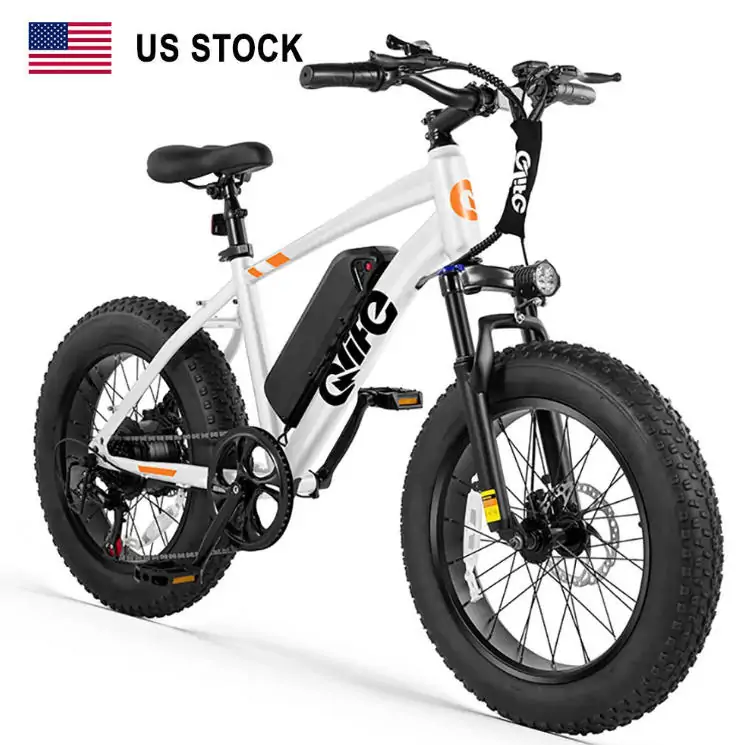
Fat tire e-bikes are the sport utility vehicles of the cycling world. Their defining feature is their enormous tires, typically 4 inches wide or more, mounted on 20- or 26-inch rims. These high-volume tires are designed to be run at very low pressures—sometimes as low as 5-10 PSI, compared to the 60-100 PSI of a road bike tire. This low pressure allows the tire to deform and create a massive contact patch with the ground, providing extraordinary traction and floatation on surfaces where a normal bicycle would sink and flounder: soft sand, deep snow, sticky mud, and loose gravel. They effectively smooth out rough terrain, with the tires themselves acting as a form of suspension.
The powerful motors often found on fat tire e-bikes are necessary to overcome the increased rolling resistance of the large tires and to power through challenging conditions. Both hub and mid-drive motors are common, with the choice depending on the intended use—hub motors for cruising on soft surfaces and powerful mid-drives for technical, hilly trail riding. Many fat tire e-bikes also include a front suspension fork to further absorb impacts and improve control on bumpy terrain. The frames are built to be robust, prioritizing strength and durability to handle the stresses of off-road use. While their weight and tire drag make them less efficient for long-distance pavement commuting, their go-anywhere capability opens up a world of four-season adventure. Their rugged looks and comfortable ride have also made them a popular choice for recreational riding and even urban cruising, with some designs taking cues from innovative motorcycle-style e-bikes to create a unique aesthetic.
For the urban dweller with limited storage space or the commuter whose journey involves multiple modes of transport, the folding electric bicycle is a marvel of engineering. Its primary virtue is its ability to transform from a capable vehicle into a compact, portable package in a matter of seconds. This allows it to be taken onto a train or bus during peak hours, stored under a desk at the office, or tucked away in a small apartment closet. The key to a good folding e-bike is the quality and ease of use of its folding mechanism. The best designs use robust, secure latches and hinges that can be operated quickly without tools, resulting in a compact shape that is easy to carry or roll.
To achieve this portability, folding e-bikes almost always use smaller wheels, typically 16 or 20 inches in diameter. These smaller wheels accelerate quickly, making them feel zippy in city traffic, but they can be less stable at high speeds and are more susceptible to being unsettled by potholes compared to their larger-wheeled counterparts. The frames are a compromise between strength and portability, and the overall weight of the bike is a critical factor. While the electric components add weight, manufacturers go to great lengths to keep folding e-bikes as light as possible, as the user will inevitably need to lift and carry it. Most folding e-bikes utilize a hub motor to save space and complexity in the frame's hinge area. The battery is often cleverly integrated, sometimes hidden within the seatpost or a main frame tube. A Folding E-Bikes is a specialized tool, trading the ride quality and stability of a full-sized bicycle for an unparalleled level of convenience and portability.
Beyond the frame, the specific components chosen by the manufacturer have a profound impact on safety and performance. Brakes are arguably the most important safety feature on any bicycle, and on a heavier, faster electric bicycle, their importance is amplified. Mechanical disc brakes are the minimum standard you should accept, offering better performance in wet weather than older rim brakes. However, hydraulic disc brakes are vastly superior. They provide significantly more stopping power with less hand effort, are more reliable, and offer better modulation (fine control over braking force). For any e-bike, but especially for heavier models like fat tire or cargo bikes, or faster Class 3 commuters, hydraulic disc brakes should be considered a non-negotiable feature.
Suspension comes in two primary forms: a front suspension fork or full suspension (both front and rear). A front suspension fork, common on many commuter and trail e-bikes, absorbs impacts from the front wheel, improving comfort and control on rough roads or trails. Full suspension provides the ultimate in comfort and capability for serious off-road riding, keeping both wheels in contact with the ground for maximum traction and control. For most urban commuting and path riding, a suspension fork is a welcome feature, but full suspension is often unnecessary and adds weight, cost, and maintenance complexity.
Finally, the gearing, or drivetrain, works in conjunction with the motor to propel the bicycle. E-bikes with mid-drive motors rely on their gears to climb effectively. A wide range of gears, with a very low "granny gear," is essential for tackling steep terrain. For hub-motor bikes, gears are less critical for motor performance but still important for finding a comfortable pedaling cadence. For ultimate low-maintenance simplicity, especially on a commuter bicycle, an internally geared hub (IGH) is an excellent option. All the gearing is sealed within the rear hub, protected from the elements, and you can even shift gears while at a complete stop, a huge advantage in city traffic.
How much should I expect to spend on a quality e-bike in 2026? While entry-level options exist below $1,000, a quality, reliable electric bicycle from a reputable brand typically starts around $1,500 to $2,000. Models in this range will feature dependable motors and batteries with safety certifications. Mid-range commuter and hardtail models often fall between $2,500 and $4,000, offering better components like hydraulic brakes and torque-sensing mid-drive motors. High-performance, specialized models like full-suspension electric mountain bikes or lightweight carbon fiber e-bikes can easily exceed $5,000 and go well beyond $10,000.
Can I ride an electric bicycle in the rain? Yes, most modern electric bicycles are designed to be water-resistant and can be ridden in the rain without issue. The motor and battery systems are sealed to protect against water ingress from normal riding conditions. However, you should avoid fully submerging the components, such as by riding through deep standing water. It is also not advisable to use a high-pressure washer to clean your e-bike, as it can force water past the seals. After a wet ride, it is good practice to wipe the bike down to prevent corrosion.
How do I maintain my e-bike battery to maximize its lifespan? Proper care can significantly extend the life of your battery. Avoid storing it in extreme hot or cold temperatures; room temperature is ideal. For long-term storage (more than a month), store the battery with a partial charge, between 40% and 80%. Try to avoid regularly running the battery completely to zero. Finally, only use the charger supplied by the manufacturer, as using an incompatible charger can damage the battery and pose a safety risk.
What is the difference between a torque sensor and a cadence sensor? A cadence sensor detects if you are pedaling and turns the motor on to a pre-set level. It's an "on/off" system. A torque sensor measures how hard you are pedaling and delivers motor assistance in proportion to your effort. This provides a more natural, intuitive ride feel, as if your own strength is being amplified. Torque sensors are generally found on more premium, mid-drive e-bikes.
Are fat tire e-bikes difficult to pedal without electric assistance? Yes, they can be significantly more challenging to pedal without assistance compared to a standard bicycle. The large, heavy tires have much higher rolling resistance, which creates a lot of drag. While it is certainly possible to pedal one with the motor off, especially on flat ground, you will notice the effort required. The electric motor is essential for making fat tire bikes enjoyable and practical for most riders, especially on hills or soft surfaces.
How heavy are folding e-bikes, and are they easy to carry? Folding e-bikes are heavier than their non-electric counterparts due to the added weight of the motor and battery. In 2026, most folding e-bikes weigh between 18 kg and 27 kg (40-60 lbs). While this is manageable for short distances, like lifting it into a car trunk or carrying it up a few stairs, it can be cumbersome for longer carries. Look for models that are designed to be rolled on their wheels when folded, which can make navigating a train station much easier.
Do I need a license or insurance to ride my electric bicycle? In most places, if your bike conforms to the local legal definition of an electric bicycle (e.g., Class 1/2/3 in the U.S. or EAPC in the U.K./E.U.), you do not need a driver's license, registration, or vehicle insurance. However, for more powerful "speed pedelec" models that assist beyond 25 km/h or 28 mph, these requirements often do apply. While not legally mandated, specialized bicycle insurance is highly recommended to cover theft and liability.
The journey to selecting the right electric bicycle in 2026 is a process of aligning technology with personal truth. It moves beyond a simple comparison of specifications to a thoughtful consideration of one's life, environment, and aspirations. By first establishing a clear understanding of your individual needs—your commute, your terrain, your cargo—you create a lens through which all other technical details gain meaning. A powerful motor is only useful if it is suited to your hills; a long-range battery is only valuable if your journeys demand it.
The distinctions between motor types, the nuances of battery capacity, the complexities of legal classifications, and the functional differences in frame design are not merely academic points. They are practical realities that shape the daily experience of ownership. A mid-drive motor can transform a daunting hill into a manageable slope. A folding bicycle can seamlessly integrate public transit into a daily commute. A fat tire bicycle can open up trails and seasons that were previously inaccessible.
Ultimately, the best electric bicycle is one that feels like a natural extension of your will, a silent partner that empowers your movement and expands your horizons. It should reduce friction in your life, not add to it. Armed with a clear understanding of the core principles outlined in this guide, you are now equipped to engage with the market not as a passive consumer, but as an informed expert on the most important subject of all: your own needs. The final, indispensable step is to translate this knowledge into experience. Test ride several models. Feel how they accelerate, how they handle, how they brake. The perfect electric bicycle is waiting, and you now have the map to find it.