
An analysis of the contemporary bicycle market reveals a landscape of increasing specialization, where distinct design philosophies cater to specific rider needs and environments. This guide examines five principal archetypes of the modern bicycle: the Road Bike, the Mountain Bike (MTB), the City Bike, the Folding Bike, and the BMX Bike. For each category, a detailed exploration of its design rationale, material composition, and intended application is undertaken. The study delves into the nuances of frame geometry, component selection, and the resulting experiential qualities of the ride. It further investigates the logistical complexities of the global supply chain, including international shipping protocols, customs regulations, and the financial implications of import duties, drawing on current practices in 2026. By providing a structured comparison and in-depth analysis of each bicycle type, this document serves as a foundational resource for consumers and retailers, aiming to foster an informed decision-making process that aligns the chosen vehicle with the rider's functional requirements and personal aspirations.
To choose a bicycle is to make a statement about how you wish to move through the world. It is a decision that extends beyond mere transportation; it is an selection of perspective, an embrace of a particular relationship between body, machine, and environment. The sheer diversity of the bicycle market in 2026 can feel overwhelming, yet this variety is not a source of confusion but a testament to the machine's adaptability. Each design represents a refined solution to a specific set of problems. Is the goal to conquer long distances on paved surfaces with maximum efficiency? Or is it to navigate the technical challenges of a rugged, unpaved trail? Perhaps the need is for a practical, reliable vehicle for daily urban commuting, or a compact machine that can integrate seamlessly with public transport. By first understanding these core intentions, we can begin to demystify the choices and see the logic embedded within the form of each bicycle.
Before we delve into the intricate details of each category, a high-level comparison can help frame our understanding. Think of this as looking at a map of a new region before exploring its individual cities. Each bicycle type occupies a distinct territory defined by its strengths and intended purpose. The following table provides a concise summary, allowing you to quickly identify which categories might best align with your personal needs. This initial orientation is a practical first step in the journey toward finding the perfect bicycle.
| Bicycle Type | Primary Use | Ideal Terrain | Riding Posture | Key Characteristic |
|---|---|---|---|---|
| Road Bike | High-speed riding, long distance, racing, fitness | Paved roads, smooth asphalt | Aggressive, forward-leaning | Efficiency and low weight |
| MTB Bike | Off-road trail riding, technical descents | Dirt trails, rocky paths, mountains | Varies from neutral to aggressive | Durability and suspension |
| City Bike | Commuting, errands, leisurely urban rides | City streets, bike paths | Upright and relaxed | Comfort and practicality |
| Folding Bike | Multimodal commuting, space-saving storage | Paved surfaces, urban environments | Generally upright | Portability and compactness |
| BMX Bike | Tricks, stunts, dirt racing | Skateparks, dirt tracks, street | Varies; often standing | Agility and extreme durability |
The character of a bicycle is profoundly shaped by the material from which its frame—its very skeleton—is constructed. This choice is not arbitrary; it is a deliberate balance of weight, stiffness, comfort, durability, and cost. Each material possesses a unique set of properties that translates into a distinct ride quality. A steel frame, for example, is often praised for its "lively" feel and ability to absorb road vibrations, a quality that speaks to a certain harmony between the rider and the road surface. Carbon fiber, on the other hand, offers unparalleled stiffness-to-weight ratios, allowing engineers to sculpt frames that are both feather-light and brutally efficient, yet with a capacity for vibration damping that can exceed even steel. Understanding these material differences is fundamental to appreciating why two bicycles designed for the same purpose can feel so remarkably different.
| Material | Key Advantages | Key Disadvantages | Typical Cost | Ride Feel |
|---|---|---|---|---|
| High-Tensile Steel | Very inexpensive, durable | Very heavy, prone to rust if untreated | Low | Compliant but sluggish |
| Chromoly Steel | Strong, durable, comfortable "lively" feel | Heavier than aluminum/carbon, can rust | Low to Mid | Smooth, compliant, responsive |
| Aluminum Alloy | Lightweight, stiff, corrosion-resistant, affordable | Harsher ride feel than steel/carbon | Mid | Stiff, efficient, sometimes "harsh" |
| Carbon Fiber | Extremely lightweight, high stiffness, tunable ride feel | Expensive, can be fragile to sharp impacts | High | Stiff, responsive, excellent vibration damping |
| Titanium | Lightweight, extremely durable, corrosion-proof, excellent ride | Very expensive, difficult to manufacture | Very High | Supple, comfortable, "lifetime" frame |
The road bicycle is perhaps the most iconic and pure expression of human-powered velocity on land. Its design is a relentless pursuit of a single goal: to convert the rider's physical effort into forward motion with the least possible waste. Every curve of the frame, every component choice, is scrutinized through the lens of efficiency, weight, and aerodynamics. To ride a road bicycle is to engage in a dialogue with the wind, the pavement, and the limits of one's own physiology. It is an instrument built for rhythm and distance, for the joy of a smooth, sweeping corner and the satisfaction of cresting a long climb.
At its core, the road bicycle is a tool for liberation. It extends the radius of human exploration, turning a day's journey into a hundred-mile adventure. Its philosophy is one of minimalism and purpose. Anything that does not contribute to speed or efficiency is stripped away. There are no bulky suspension forks, no wide, knobby tires, no superfluous racks or fenders in its purest form. This minimalist ethos creates a machine that feels directly connected to the rider's inputs. A slight shift in weight, a subtle increase in cadence—these actions translate immediately into changes in speed and direction. This directness fosters a profound sense of connection between rider and machine, a partnership in the act of covering ground. The experience is not one of being passively transported, but of actively propelling oneself through the landscape, feeling every nuance of the road's texture and gradient.
The distinctive silhouette of a road bicycle is a product of its geometry. The steep angles of the head tube and seat tube, the short wheelbase, and the low handlebar position all work in concert to create a forward-leaning, aggressive riding posture. This posture serves two primary functions. First, it lowers the rider's frontal profile, reducing aerodynamic drag, which is the single greatest force a cyclist must overcome at speed. Think of how a downhill skier tucks their body to go faster; the principle is identical. Second, this posture positions the rider's body to recruit the powerful gluteal and quadriceps muscles more effectively, maximizing power output.
In recent years, the science of aerodynamics has moved from the esoteric world of time trials into mainstream road bicycle design. Frame tubes are now often shaped like airfoils, with rounded leading edges and tapered trailing edges, to help the wind flow smoothly around them. Handlebars, wheels, and even helmets are designed as an integrated system to minimize drag. A modern aero road bicycle is a marvel of fluid dynamics, sculpted by countless hours of computer modeling and wind tunnel testing. The goal is to make the bicycle as invisible to the wind as possible, saving precious watts of energy that can be deployed for acceleration or sustained speed.
While all road bicycles share a common DNA of efficiency, the category has diversified into several sub-types, each tailored to a specific style of riding.
These are the thoroughbreds of the cycling world. They prioritize stiffness and low weight above all else. The frame geometry is at its most aggressive, demanding flexibility and a strong core from the rider. The handling is incredibly sharp and responsive, almost telepathic, which is ideal for navigating a tightly packed peloton or diving into a fast corner. The ride can feel firm or even harsh, as comfort is a secondary consideration to pure performance. A race bicycle is an uncompromising tool for those whose primary goal is to go as fast as possible.
An endurance road bicycle offers a more balanced approach. It acknowledges that not every ride is a race. The frame geometry is slightly more relaxed, with a taller head tube and a longer wheelbase. This creates a slightly more upright and stable riding position, reducing strain on the rider's back, neck, and arms over long distances. These frames are often engineered with specific features, known as "compliance," to absorb road vibrations and improve comfort without sacrificing too much efficiency. An endurance bicycle is the perfect companion for long charity rides, multi-day tours, or for riders who simply value comfort on their daily excursions.
As mentioned, these machines are shaped by the wind. They represent the pinnacle of aerodynamic design, with deep-section wheels and airfoil-shaped tubes. While they offer a distinct advantage at high speeds on flat or rolling terrain, they can be slightly heavier and less comfortable than a traditional race bike, and they may be more susceptible to crosswinds.
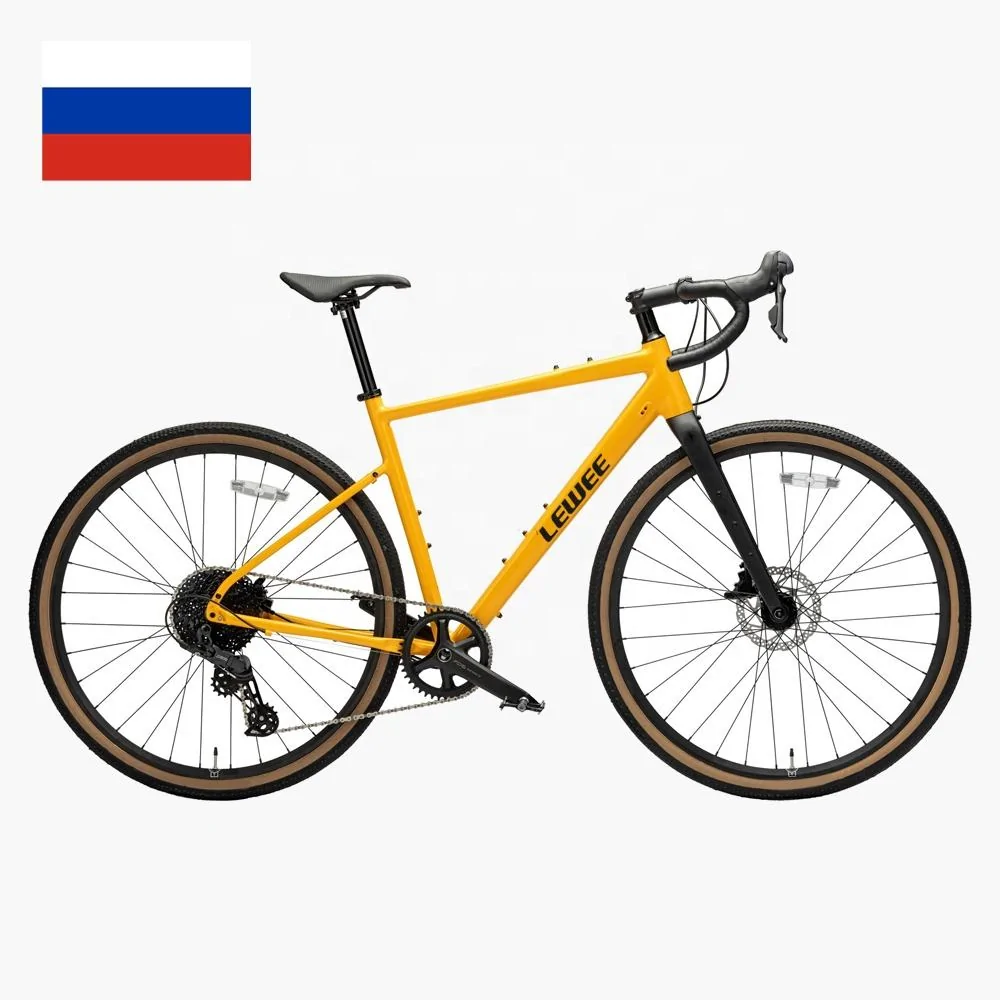
A relatively new and incredibly popular category, the gravel bicycle is a versatile machine that bridges the gap between road and off-road riding. It combines the drop handlebars and efficient posture of a road bicycle with features from the mountain bike world, such as wider tire clearance (allowing for knobby tires), more stable geometry, and often, more robust gearing. This creates a bicycle that is fast on pavement but capable of confidently handling dirt roads, forest tracks, and light trails. It is the ideal choice for the adventurous rider who wants one bicycle to do almost everything.
The choice of frame material is particularly consequential in the world of road bikes, where small differences in weight and stiffness are magnified over long distances.
Carbon fiber is the dominant material in the high-performance market. Its unique property is that its characteristics can be precisely "tuned." Engineers can add layers of carbon in specific orientations to make one part of the frame, like the bottom bracket, incredibly stiff for power transfer, while making another part, like the seat stays, more compliant for comfort. This level of control is impossible with metals.
Aluminum remains a popular choice for its excellent balance of performance and cost. Modern aluminum frames, using advanced hydroforming techniques (shaping tubes with high-pressure fluid), can be very lightweight and stiff, often rivaling the performance of older carbon frames at a fraction of the price. While they generally provide a firmer ride, they represent outstanding value for aspiring racers and serious enthusiasts.
Steel, the traditional material, has seen a resurgence among discerning riders who value ride quality and durability. A high-quality chromoly steel frame has a unique "springiness" that many find exceptionally comfortable and responsive. While it cannot compete with carbon on pure weight, its longevity and classic aesthetic hold a powerful appeal. For many, a steel road bicycle is a "forever" bike, a trusted partner for a lifetime of riding.
The road bicycle is for the rider who is motivated by distance, speed, and physical challenge. It is for the person who sees a ribbon of asphalt curving over a distant hill not as an obstacle, but as an invitation. This rider might be a competitive racer, a dedicated fitness enthusiast tracking their performance with data, or a touring cyclist who measures progress by the towns and landscapes they pass through. They are willing to trade some of the go-anywhere capability of other bikes for the unparalleled efficiency on paved surfaces. They appreciate the feeling of a finely tuned machine, the hum of tires on smooth pavement, and the simple, profound joy of moving quickly under their own power.
If the road bicycle is about conquering distance, the mountain bike, or MTB, is about conquering terrain. It is a machine born from a spirit of playful rebellion, a desire to leave the pavement behind and explore the wilder places. Its design philosophy is centered on control, traction, and durability. Riding an MTB is a full-body experience, a dynamic dance with the trail where the rider must constantly shift their weight, choose their line, and react to an ever-changing surface. It is a vehicle that opens up a world of forests, mountains, and deserts, transforming them from scenery into a personal playground.
The genesis of the mountain bicycle in the 1970s in California involved a group of enthusiasts modifying old, heavy "klunker" bikes to ride down fire roads. This origin story reveals the core spirit of the MTB: adaptation and adventure. It is about making the impassable, passable. The modern MTB is a far cry from those early klunkers, but the spirit remains. It is a tool that empowers the rider to tackle steep climbs, navigate rock gardens, flow through bermed corners, and descend technical singletrack with confidence.
Mastering a mountain bicycle is a journey of skill acquisition. It is not just about pedaling; it is about learning to "unweight" the bike to clear obstacles, to corner effectively on loose surfaces, and to modulate braking for maximum control. This focus on skill makes mountain biking deeply engaging. Every ride presents new challenges and opportunities for improvement, creating a powerful feedback loop of accomplishment and progression. The joy comes not just from the destination, but from the technical mastery of the journey itself.
The most defining feature of a modern MTB is its suspension system. Suspension serves two critical functions: it improves control by keeping the tires in contact with the ground over rough terrain, and it enhances comfort by isolating the rider from impacts.
A "hardtail" is an MTB with a suspension fork at the front but a rigid rear frame. This design is lighter, simpler, more affordable, and requires less maintenance than a full-suspension setup. Hardtails are wonderfully efficient climbers and provide a very direct, connected feel to the trail. They are excellent for learning fundamental skills, as they teach a rider to be smooth and choose good lines rather than simply plowing through obstacles. They are a popular choice for cross-country racing and general trail riding on less aggressive terrain.
A full-suspension bicycle has both a suspension fork and a rear shock that allows the rear wheel to move independently of the main frame. This dramatically increases traction and control on rough, technical terrain, allowing the rider to maintain higher speeds and tackle more challenging features. The design of rear suspension systems is a complex art, involving pivots, linkages, and carefully tuned shocks to balance pedaling efficiency with bump absorption. Early designs often suffered from "pedal bob," where the suspension would compress under pedaling forces, wasting energy. Modern systems, however, are incredibly sophisticated, often providing a firm platform for pedaling while remaining fully active over bumps.
The amount of suspension "travel" (the distance the wheels can move up and down) is a key indicator of an MTB's intended purpose. A short-travel bike might have 100-120mm of travel, while a long-travel downhill bike could have 200mm or more.
Just as the road bicycle has diversified, the MTB has evolved into several specialized forms, each optimized for a different style of off-road riding.
XC bikes are the endurance athletes of the MTB world. They are designed for speed and efficiency on rolling terrain with significant climbing. They have the least amount of suspension travel (typically 100-120mm) and prioritize low weight and pedaling efficiency. The geometry puts the rider in a powerful, aggressive position for climbing and sprinting. An XC bicycle is perfect for racing, fast-paced fitness rides, and covering long distances on moderate trails.
The trail bike is arguably the most versatile and popular category of mountain bicycle. It is the "do-it-all" machine, designed to be an efficient climber and a capable, fun descender. With suspension travel typically in the 130-150mm range, and a more balanced geometry than an XC bike, it hits a sweet spot. The geometry is relaxed enough to inspire confidence on steep descents but not so slack that it feels sluggish on climbs or flat sections. For the rider who wants one mountain bicycle to handle the widest variety of trails, the trail bike is the definitive choice.
Enduro is a race format where the descents are timed, but riders must pedal to the top of each stage under their own power. The bikes designed for this discipline reflect this. An enduro bicycle is essentially a long-travel trail bike, with 160-180mm of travel, and very slack, confidence-inspiring geometry. It is built to be durable and to handle high-speed, technical descents with ease, yet it must still be efficient enough to be pedaled for several hours. These are big, capable machines for riders who prioritize descending performance on the most aggressive trails.
A downhill bicycle is a highly specialized instrument built for one purpose: to go down steep, technical tracks as fast as humanly possible. They feature massive amounts of suspension travel (200mm+), extremely slack and long geometry for stability at speed, and powerful brakes. They are not designed to be pedaled uphill; riders typically use a ski lift or a shuttle vehicle to get to the top. A DH bike is the two-wheeled equivalent of a trophy truck, designed to absorb huge impacts and provide maximum traction and control in the most extreme conditions.
Modern mountain bicycles have seen a revolution in gearing. The trend has been toward simpler, more robust "1x" (pronounced "one-by") drivetrains. These systems use a single chainring at the front and a very wide-range cassette at the rear, often with 11 or 12 cogs. This eliminates the front derailleur, which simplifies shifting, reduces weight, and improves reliability by removing a component that can get clogged with mud. The enormous rear cogs provide an incredibly low gear, allowing riders to winch their way up even the steepest climbs.
Braking is equally critical. Virtually all modern MTBs use hydraulic disc brakes. These systems, similar to those in a car, use fluid to actuate the brake calipers, providing immense stopping power and fine control (modulation) with very little hand effort. This power is essential for controlling speed on long, steep descents and allows riders to brake later and with more confidence.
The MTB rider is someone who seeks challenge, adventure, and a deep connection with nature. They are not deterred by mud, rocks, or steep gradients. They find joy in the physical and mental puzzle of navigating a difficult trail. This rider could be a competitive racer, a weekend warrior exploring local trail networks with friends, or a backcountry adventurer on multi-day bikepacking trips. They value the robustness and capability of their machine. For them, the bicycle is not just a vehicle, but a key that unlocks access to experiences and landscapes that would otherwise be out of reach. They understand that a little dirt and a lot of effort are small prices to pay for the freedom of the trail.
The city bicycle, often referred to as a commuter or hybrid, is the unsung hero of the cycling world. It is a pragmatic and reliable tool designed to make urban life more efficient, healthy, and enjoyable. Unlike its more specialized cousins, the city bicycle's design philosophy is not one of extreme performance but of practical elegance. It prioritizes comfort, utility, and low maintenance, creating a machine that integrates seamlessly into the rhythms of daily life. To ride a city bicycle is to rediscover your own neighborhood, to turn the daily commute from a chore into a moment of mindful movement.
The city is a unique and demanding environment. It requires frequent starting and stopping, navigating traffic, carrying loads, and dealing with variable weather and road surfaces. The city bicycle is designed with these realities in mind. Its ethos is one of robustness and convenience.
Comfort is paramount. The most defining feature of a city bicycle is its upright riding posture. This is achieved through swept-back handlebars and a frame geometry that places the rider in a relaxed, heads-up position. This posture provides an excellent view of surrounding traffic and reduces strain on the back, shoulders, and wrists. It is a posture designed for awareness, not for aerodynamic efficiency.
Utility is another core tenet. Many city bikes come equipped from the factory with features that are expensive add-ons for other types of bikes. Fenders (or mudguards) are essential for riding in wet weather, keeping spray from the road off the rider's clothes. A rear rack provides a platform for carrying groceries, a work bag, or a child seat. A chainguard protects trousers from getting greasy or caught in the drivetrain. These are not exciting features, but they are the details that make a bicycle a truly practical daily vehicle.
The components chosen for a city bicycle reflect its purpose. The tires are typically wider than those on a road bike but smoother than those on an MTB. This provides a good balance of comfort, durability, and efficiency on paved city streets, while also handling imperfections like potholes and tram tracks with more stability.
Gearing is often simplified. Many city bikes use an internal gear hub. In this system, the gear-changing mechanism is sealed inside the rear wheel's hub, protecting it from dirt, water, and damage. This makes the system incredibly reliable and virtually maintenance-free. It also allows the rider to change gears even when stationary, a huge advantage when stopping at a traffic light and needing to select an easier gear to start again.
Even the frame design often incorporates convenience. "Step-through" or "low-step" frames, which lack a high top tube, make it much easier to get on and off the bicycle, especially for riders wearing regular clothes, skirts, or for those with limited flexibility. This seemingly small design choice removes a significant barrier to casual, everyday use.
The most significant development in urban cycling in the past decade has been the electric bicycle, or e-bike. An e-bike is a bicycle with an integrated electric motor that assists the rider's pedaling. It is crucial to understand that it is not a scooter or motorcycle; in most jurisdictions, the motor only provides assistance when the rider is pedaling and cuts off at a certain speed (typically 20 mph in the US or 25 km/h in Europe).
The e-bike has been a revolutionary force for city cycling. It flattens hills, making cities with challenging topography accessible to more people. It reduces the effort of carrying heavy loads, making cargo bikes a viable car replacement for many families. It allows for longer commutes without arriving at the office sweaty and exhausted. For many people, the e-bike is the key that unlocks the bicycle as a legitimate form of daily transportation. It democratizes cycling, making it accessible to people of all fitness levels and ages. China, as a dominant force in manufacturing, leads the global market in e-bike production, offering a vast array of models to suit every urban need (Basenton, 2024).
The demand for practical urban mobility solutions has created a massive global market. For businesses looking to source these types of bicycles, whether for retail sale or for creating urban bike-sharing fleets, navigating the international supply chain is a key challenge. China is the world's largest producer of bicycles, offering unparalleled variety and competitive pricing (Liu, 2024). However, importing requires careful planning. Businesses must consider shipping methods—sea freight for bulk orders is most common—as well as customs clearance and import duties, which can significantly impact the final cost. Partnering with a comprehensive foreign trade platform can streamline this process, connecting buyers with vetted manufacturers and handling complex logistics. The variety of bicycle models available is immense, ranging from simple city cruisers to sophisticated electric cargo bikes. The growth of bike-sharing programs has even created a niche for specialized manufacturers, like a supplier of sharing bikes, that design vehicles specifically for the rigors of public use.
The city bicycle is for the pragmatist, the urbanite who wants to move through their environment on their own terms. It is for the commuter who is tired of sitting in traffic, the parent looking for a healthier way to take their child to school, and the resident who wants to connect more deeply with their local community. This rider values reliability and convenience over raw speed or technical performance. They are not necessarily a "cyclist" in the sporting sense; they are simply a person who uses a bicycle to live their life. The city bicycle is a humble but powerful tool for social change, promoting healthier lifestyles, reducing congestion and pollution, and fostering more livable urban spaces.
The folding bicycle is a marvel of mechanical ingenuity, a brilliant solution to one of the most persistent challenges of urban transportation: the "first and last mile" problem. It is a machine designed not just to be ridden, but to be integrated into a larger transportation network. Its philosophy is one of ultimate flexibility and convenience. The ability to shrink a capable adult bicycle into a compact, portable package fundamentally changes its role, transforming it from a standalone vehicle into a component of a multimodal journey.
Consider the typical urban commute. It might involve a train, a bus, or a subway ride that gets you close to your destination, but not all the way. The remaining distance, often between half a mile and a few miles, is the "last mile." Walking can be too slow, and waiting for another bus can be inefficient. The folding bicycle solves this problem perfectly. It can be ridden from home to the train station, folded up and carried aboard, and then unfolded at the other end to complete the journey to the office.
This capability extends beyond the daily commute. A folding bicycle can be easily stored in the trunk of a car, ready for a spontaneous ride in a park. It can be taken on a boat or in a small airplane. It can be stored inside a small apartment or under a desk at work, safe from theft and weather. The fold removes the barriers of storage and transport that often discourage bicycle ownership in dense urban environments. It is a bicycle that adapts to your life, rather than requiring your life to adapt to it.
The heart of a folding bicycle is its hinge mechanism. This is where the engineering challenge lies: creating a system that is strong and rigid when the bicycle is being ridden, yet quick and easy to operate when folding and unfolding. There are many different folding designs, but most involve one or more hinges in the main frame, as well as a folding handlebar post. High-quality folding bikes feature precisely engineered hinges with robust locking mechanisms that ensure there is no flex or creaking during riding, providing a feeling of security and solidity that can rival a non-folding frame.
Wheel size is another defining characteristic. Most folding bicycles use smaller wheels than conventional bikes, typically ranging from 16 inches to 20 inches in diameter (compared to the 26-29 inches of most MTBs and road bikes). The smaller wheels are a key part of achieving a compact folded size. While one might assume that small wheels are less efficient, this is not necessarily the case. High-quality, high-pressure tires on small wheels can roll very efficiently, and the smaller size offers a significant advantage: faster acceleration. This makes folding bikes feel particularly zippy and nimble in stop-and-go city traffic.
It is a common misconception that folding bikes are slow, inefficient, or flimsy. While the cheapest examples can be, a well-designed folding bicycle from a reputable brand can offer a truly impressive riding experience. Many models feature high-quality components and a wide range of gears, often using internal gear hubs for reliability. The frames, though hinged, are engineered for stiffness and can provide a responsive and enjoyable ride.
Some high-performance folding bikes are even designed for touring, equipped with racks and durable components capable of carrying luggage over long distances. Riders have completed round-the-world trips on folding bicycles, a testament to their surprising robustness and capability. They prove that small size does not have to mean a compromise in performance. The key is quality engineering, which ensures that the convenience of the fold does not come at the expense of the joy of the ride.
Owning a folding bicycle changes one's relationship with a city. A train journey is no longer a single, linear trip; it becomes a series of potential starting points for a ride. A traffic jam is not a source of frustration, but an opportunity to park the car, unfold the bike, and continue the journey. The ability to bring the bicycle indoors at both ends of the trip provides total peace of mind regarding theft, a major concern for urban cyclists.
The learning curve is minimal. A good folding mechanism can be operated in 10-20 seconds with a little practice. The folded package is designed to be easy to carry or roll. It is a seamless experience. This ease of use is what elevates the folding bicycle from a novelty to an indispensable tool for modern urban mobility.
The folding bicycle is the ideal choice for a diverse range of people. The most obvious beneficiary is the multimodal commuter, who combines cycling with public transport. It is also perfect for city dwellers living in small apartments with no dedicated bike storage. Boat owners, RV travelers, and private pilots value the ability to have a bicycle with them without it taking up significant space. It is also an excellent choice for people who may only ride occasionally but want a quality bicycle that can be conveniently stored out of the way when not in use. The folding bicycle is for anyone who values flexibility, efficiency, and the clever application of engineering to solve a real-world problem.
The BMX bicycle is a unique and highly specialized machine that stands apart from all other categories. Its name, an acronym for Bicycle Motocross, points to its origins in the dirt tracks of Southern California, where kids in the 1970s raced their bikes in imitation of their motocross heroes. From these racing roots, BMX evolved and split, giving birth to the creative and expressive world of freestyle. The modern BMX bike is a tool for acrobatics and agility, a vehicle for personal expression as much as for transportation or competition. Its design philosophy is one of ultimate simplicity and bombproof durability.
BMX has two primary disciplines, and the bikes for each are subtly different.
This is the original form of BMX. Races take place on manicured dirt tracks with a starting gate, jumps (doubles, triples, step-ups), and banked corners called berms. The goal is pure speed. BMX race bikes are lightweight, often with aluminum or even carbon fiber frames. They have only one gear and a powerful rear brake. The emphasis is on explosive acceleration out of the gate and the ability to "pump" the bike through the rollers and jumps to generate speed without pedaling.
Freestyle is the creative side of BMX. It is not about racing against others, but about performing tricks and linking them together in a smooth, stylish "run." Freestyle itself has several sub-disciplines:
Freestyle bikes are built to be incredibly strong to withstand the high impacts of jumps and the stresses of grinding on ledges and rails. They are almost always made of durable chromoly steel.
A BMX bicycle is instantly recognizable by its small frame, small wheels (typically 20 inches), and tall, wide handlebars. This design is all about function.
The small frame and wheels make the bike incredibly agile and easy to maneuver, both on the ground and in the air. This nimbleness is essential for spinning, whipping the frame around, and making quick adjustments.
The frame geometry is compact, with a short rear end that makes it easier to lift the front wheel into a manual (a wheelie without pedaling) or to hop the entire bike.
The components are chosen for strength above all else. The cranks are typically three-piece units made of tubular chromoly steel, which are far stronger than the cranks on any other type of bicycle. The wheels often have 36 or even 48 spokes for maximum strength. The tires are wide and can be run at high pressures for speed and durability, or lower pressures for more grip and impact absorption.
Many freestyle bikes are equipped with pegs, which are cylindrical tubes mounted on the wheel axles. These allow the rider to "grind" along ledges and rails. Some bikes also have a "detangler" or "gyro," a device that allows the handlebars to be spun 360 degrees without the brake cables getting tangled. Others dispense with brakes entirely, a common trend in street riding, relying on foot-jamming techniques to stop. This minimalist approach is the ultimate expression of the BMX ethos: remove everything that is not absolutely necessary.
More than any other type of bicycle, the BMX bike is tied to a rich and vibrant subculture. This culture is rooted in a do-it-yourself (DIY) ethic, creativity, and mutual support. Riders often film and edit their own videos, build their own ramps and dirt jumps, and support independent, rider-owned brands. The community is a place where individual style and creativity are highly valued. Learning a new trick is a personal battle, but it is often achieved with the encouragement and advice of fellow riders. This sense of camaraderie and shared passion is a huge part of what makes BMX so appealing.
A BMX bicycle is not a practical choice for commuting or long-distance riding. It has one gear, a low seat that is not meant to be sat on while pedaling, and a design that is inefficient for covering ground. Its purpose lies elsewhere.
The BMX bike is for the rider who sees the world as a collection of creative possibilities. It is for the person who looks at a set of stairs and sees a potential trick, not just a way to get to the next level. This rider is patient, persistent, and not afraid to fall. They find profound satisfaction in the process of learning and mastering a difficult physical skill. It is for the young and the young-at-heart who value agility, creativity, and the freedom of a simple, durable machine. Choosing a BMX bicycle is choosing a form of play, a physical art form, and a community.
The bicycle you ride is the culmination of a remarkable global journey. The raw materials might be mined on one continent, processed on another, formed into components in several different countries, and finally assembled into a complete vehicle before being shipped to your local shop or front door. Understanding this complex logistical chain is particularly important for retailers and discerning consumers who order internationally. The process involves navigating a web of sourcing, shipping, and regulations that can be as intricate as the bicycle itself.
As highlighted by industry experts, China stands as the world's preeminent producer of bicycles and e-bikes, boasting a comprehensive and mature supply chain that spans from raw material processing to final assembly (Basenton, 2024). This manufacturing prowess provides buyers with an incredible diversity of choice and competitive pricing. However, engaging in this global marketplace requires diligence. The first step is identifying reliable suppliers, which can be done through platforms like Alibaba or by working with specialized sourcing agents who can vet manufacturers and negotiate terms (Airsupplycn, 2024).
Once a supplier is chosen, the logistical puzzle begins. The primary decision is the shipping method. For large, commercial orders, sea freight is the most cost-effective option, though it has the longest transit time. Air freight is significantly faster but comes at a much higher cost, typically reserved for high-value items or urgent shipments. Many logistics providers now offer door-to-door services, which can simplify the process by managing the entire journey, from the factory to the final destination . Careful packaging is also vital; investing in sturdy, smart packaging protects the bicycle during its long journey and prevents costly damage (Shiptocycle, 2025).
One of the most complex aspects of international bicycle shipping is customs clearance. Every country has its own set of rules, regulations, and taxes for imported goods. When a bicycle arrives in the destination country, it must be declared to customs authorities. This requires accurate and complete documentation, including a commercial invoice, bill of lading, and certificate of origin. As noted by Airdrop Bikes Limited (2025), any errors or omissions in this paperwork can lead to significant delays, inspections, and potential fines.
For consumers in the US, UK, or Spain purchasing a bicycle from an international seller, it is vital to understand that the price displayed on the website may not be the final cost. Many international retailers, like , charge a price that excludes local taxes. Upon arrival in the buyer's country, local authorities will assess import duties and a value-added tax (VAT) or sales tax. These charges are the responsibility of the buyer and are typically collected by the courier (like DPD, FedEx, or UPS) before the package is delivered . These taxes can be substantial, so it is wise to research the specific rates for your country before placing an order to avoid any unwelcome surprises.
For businesses, navigating these complexities can be a significant drain on resources. This is why choosing the right logistics partner is so important. A specialized partner who understands the unique requirements of the bicycle industry can be invaluable. They can offer guidance on customs regulations, ensure documentation is correct, and manage the entire shipping process, mitigating the risks and stress involved in international trade (Shiptocycle, 2025). Utilizing a one-stop platform for foreign trade can provide businesses with the tools and expertise needed to manage their supply chain effectively, from sourcing and financing to logistics and customs clearance. This kind of partnership allows a business to focus on its core mission—selling bicycles—while the experts handle the intricate journey from factory to customer.
What is the most important factor when choosing a bicycle? The most vital factor is aligning the bicycle type with your primary intended use. No single bicycle excels at everything. A road bike will be miserable on a mountain trail, and a downhill MTB will be exhausting to ride to the grocery store. Honestly assess where you will be riding most of the time—city streets, paved paths, or rugged trails—and choose the category of bicycle designed for that environment.
Is a more expensive bicycle always better? Not necessarily. While higher prices often correlate with lighter materials (like carbon fiber), more advanced components, and better performance, the "best" bicycle is the one that fits your needs and budget. A well-maintained, mid-range aluminum road bike will provide a far better experience for a new rider than a top-of-the-line professional race bike that is ill-fitting or has features they do not need. Focus on getting the right type of bike and a proper fit first.
How do I know what size bicycle to get? Bicycle sizing is crucial for comfort and injury prevention. While manufacturer charts based on your height provide a starting point, they are not a substitute for a proper fitting. The best approach is to visit a local bike shop where experienced staff can help you find the right size and make adjustments to the seat height, handlebar position, and other contact points. If buying online, look for brands that offer detailed geometry charts and sizing guides.
What is the difference between a City Bike and a Hybrid Bike? The terms are often used interchangeably, and there is significant overlap. Generally, a "City Bike" emphasizes comfort and utility, often featuring an upright posture, fenders, and racks. A "Hybrid" is typically a sportier blend of a road bike and a mountain bike, often with a flat handlebar like an MTB but with smoother, narrower tires suitable for pavement. A hybrid is often a better choice for fitness-oriented riding, while a city bike is superior for casual transport and commuting.
Do I need suspension on my bicycle? It depends entirely on the terrain. For riding exclusively on paved roads, suspension is unnecessary and adds weight and inefficiency. For serious off-road riding on rough, technical trails, suspension (especially full suspension) is essential for control and comfort. For city riding or light trail use, a bike with no suspension or just front suspension (a hardtail) is often sufficient.
How much maintenance does a bicycle require? Basic maintenance is straightforward and essential for safety and longevity. You should regularly check your tire pressure, clean and lubricate the chain, and inspect your brakes to ensure they are working properly. A more thorough tune-up by a professional mechanic is recommended once a year, or more frequently if you ride a lot. Bicycles with simpler systems, like single-speed or internal gear hubs, require less maintenance than those with complex derailleur systems.
Are electric bikes "cheating"? This is a common misconception. An electric bicycle provides assistance; it does not do all the work for you. You still have to pedal, and it is an excellent way to get exercise. E-bikes are a tool for accessibility. They enable people to ride longer distances, tackle hills they couldn't otherwise climb, and use a bicycle for transportation without being limited by their fitness level. They are not for cheating in a race, but for expanding the possibilities of cycling for everyone.
The act of selecting a bicycle is an exercise in self-reflection. It asks us to consider not only where we want to go, but how we wish to get there. The journey through the distinct worlds of the Road, Mountain, City, Folding, and BMX bicycle reveals that each design is a carefully considered response to a unique set of human desires: the desire for speed, for adventure, for practicality, for flexibility, for creative expression. There is no single "best" bicycle, only the bicycle that is best for you, for your life, and for your aspirations. Understanding the philosophy embedded in the frame, the logic behind the components, and the purpose of the geometry transforms the choice from a daunting task into an empowering one. By aligning the machine with your intention, you do more than just purchase a product; you acquire a partner for your journeys, a tool that can reshape your health, your community, and your perspective on the world around you.