
The global carpet industry is undergoing a significant transformation, with projections for 2026 indicating a market shaped by evolving consumer ethics, technological advancements, and a redefinition of living spaces. This analysis examines the seven dominant trends poised to influence the carpet sector across the United States, Europe, and the United Kingdom. Key drivers include a profound shift towards sustainability, encompassing recycled materials like PET and ECONYL, alongside a resurgence of natural fibers such as wool and jute. Technological integration, particularly through high-fidelity digital printing, is enabling unprecedented customization and design intricacy. Concurrently, a focus on health and wellness is popularizing hypoallergenic and low-VOC options. The demand for performance-driven products is evident in the growing market for washable and stain-resistant carpets, as well as durable home outdoor carpets that extend living areas. Aesthetic movements, including biophilic design and the revival of classic area rugs, reflect a deeper connection to nature and heritage, while the fluffy carpet texture speaks to a desire for comfort. These converging trends present a complex but opportunity-rich landscape for manufacturers, importers, and designers.
The conversation around the flooring we choose for our homes and commercial spaces has fundamentally shifted. It is no longer a dialogue solely about color, pattern, or price. A deeper, more resonant question now underpins consumer and commercial decisions: what is the story of this product, and what will its story be after its first life with us is over? For the carpet industry in 2026, this question is paramount. The movement towards sustainability is not a fleeting fashion but a deep-seated ethical and economic restructuring. It represents a maturation of the market, where the life-cycle of a carpet is considered with the same gravity as its aesthetic appeal. This is a response to a groundswell of environmental consciousness, with a significant portion of consumers, particularly in the US and Europe, actively seeking products that align with their values (GWI, 2023). For importers and designers, understanding the nuances of this trend is not just about corporate responsibility; it is about market relevance and survival.
For decades, synthetic fibers like nylon and polyester have been the workhorses of the carpet world, celebrated for their durability and cost-effectiveness. Their reliance on virgin petrochemicals, however, has long been their Achilles' heel. The innovation that defines the 2026 market is the sophisticated scaling of recycling these very materials. Think of it not as a simple second chance, but as a technological reincarnation.
Nylon, particularly Type 6, has seen remarkable progress. Companies like Aquafil have pioneered a closed-loop regeneration process with their ECONYL® product. This is not mere recycling; it is a process of depolymerization, breaking down post-consumer waste—such as fishing nets recovered from the ocean, fabric scraps, and old carpets—to its molecular level. From there, it is re-polymerized into nylon yarn that is identical in quality and performance to that made from virgin fossil fuels. Imagine the narrative power for a designer presenting a project: this luxurious, resilient carpet began its life as a ghost net threatening marine life in the North Sea. This is the kind of story that resonates with today's clients.
Polyester, primarily in the form of Polyethylene Terephthalate (PET), offers a similar tale of transformation. The ubiquitous plastic bottle, a symbol of single-use waste, is now a primary feedstock for soft, stain-resistant carpet fibers. Billions of plastic bottles are diverted from landfills annually, shredded into flakes, melted, and extruded into fine filaments that are then spun into yarn. The resulting PET carpet, often marketed as polyester, has made significant inroads, particularly in the residential sector. Its inherent stain resistance and soft feel make it an attractive proposition, and its environmental credentials provide a powerful purchasing incentive. As an importer, sourcing a high-quality printed carpet made from recycled PET allows you to offer a product that is both visually appealing and ethically sound.
While technology redeems synthetics, a parallel movement looks back to nature for answers. There is a growing appreciation for the inherent qualities of natural fibers, which offer a different kind of luxury—one rooted in authenticity, texture, and a direct connection to the earth.
Wool remains the time-honored standard for natural carpet fiber. It is a renewable resource, shorn from sheep annually, and is biodegradable at the end of its life. Its complex coiled structure gives it a natural resilience, bouncing back from foot traffic and furniture compression. Wool is also a natural insulator, helping to regulate both temperature and humidity within a room. Its fibers contain high levels of water and nitrogen, making it naturally flame-retardant. For the high-end residential and hospitality markets in the UK and parts of Europe, the appeal of a deep-pile wool carpet is timeless. It speaks of quality, comfort, and a connection to artisanal traditions.
Beyond wool, other plant-based fibers are gaining prominence. Jute, with its silky luster and soft feel, is excellent for a fluffy carpet feel in low-traffic areas like bedrooms. Sisal, derived from the agave plant, is incredibly durable and offers a tight, woven texture ideal for high-traffic zones and for creating a rustic, organic aesthetic. Seagrass, another option, is known for its non-porous fibers, making it naturally stain-resistant. These materials bring a unique character to a space; their slight imperfections and natural color variations are not flaws but features, telling a story of their agricultural origin. For designers aiming for a biophilic or wabi-sabi interior, these natural rugs are an indispensable tool.
| Fiber Type | Primary Source | Durability | Texture Profile | Typical Cost | Key Sustainability Credential |
|---|---|---|---|---|---|
| ECONYL® Nylon | Fishing nets, fabric scraps, old carpet | Very High | Versatile (plush to low-pile) | High | 100% regenerated from waste, closed-loop potential |
| Recycled PET | Post-consumer plastic bottles | Moderate to High | Soft, often plush | Low to Moderate | Diverts plastic from landfills and oceans |
| Wool | Sheep | Very High | Soft, resilient, naturally coiled | High | Renewable, biodegradable, naturally flame-retardant |
| Jute | Jute plant stalks | Low to Moderate | Soft, fibrous, silky | Low | Rapidly renewable, biodegradable |
| Sisal | Agave plant leaves | Very High | Coarse, woven, firm | Moderate | Highly durable, biodegradable, drought-resistant crop |
| Seagrass | Underwater grasses | High | Smooth, non-porous, waxy | Low to Moderate | Rapidly renewable, naturally water and stain resistant |
The most forward-thinking development in sustainable carpet is the shift from a linear "take-make-dispose" model to a circular one. This is a systemic change that requires rethinking a product's entire lifecycle at the design stage. In 2026, leading manufacturers are not just using recycled content; they are creating products that can be easily disassembled and recycled again.
This involves several key strategies. One is the use of mono-material construction. A traditional carpet is a composite of different materials—face fiber, various backing layers, and adhesives—which makes separation for recycling difficult and energy-intensive. A carpet made entirely of polyester (PET face fibers and a PET backing) or polypropylene can be shredded and remelted into new products far more efficiently.
Another strategy is designing for disassembly. This might involve using innovative click-together tile systems or adhesives that release with heat, allowing the face fiber to be cleanly separated from the backing. These innovations are critical for the commercial sector, where large volumes of carpet are replaced regularly. Facility managers and corporate clients are increasingly demanding take-back programs and products with clear end-of-life options, driven by both corporate sustainability goals and tightening regulations on landfill waste in the European Union (European Commission, 2020). For businesses engaged in international trade, partnering with manufacturers who have robust circular economy programs is becoming a significant competitive advantage. These are the partners that will thrive in a market that values stewardship as much as style.
The concept of a healthy home has expanded far beyond air purifiers and organic mattresses. It now extends to the very surfaces we live on. The floor is the largest single surface in any room, and the materials it is made from have a tangible impact on our physical well-being. For 2026, the carpet industry is responding to a highly informed consumer base that is acutely aware of indoor air quality, allergens, and the psychological impact of their environment. This trend is about creating spaces that not only look good but also feel good and contribute positively to the health of their occupants. A carpet is no longer just a decorative element; it is an active component of a home's wellness ecosystem.
One of the primary health concerns associated with home furnishings is the emission of Volatile Organic Compounds (VOCs). These are chemicals that can "off-gas" from new products, potentially causing respiratory irritation, headaches, and other health issues. Traditional carpets, their backings, and the adhesives used for installation have been sources of VOCs, most notably formaldehyde and styrene.
The market in 2026 demands a higher standard. Leading the charge are certifications that provide consumers with clear, trustworthy benchmarks for indoor air quality. In the United States, the Carpet and Rug Institute's (CRI) Green Label Plus program is a widely recognized standard. To qualify, a carpet must pass rigorous independent testing for emissions of 13 specific chemicals. For a product to carry this label, it must be among the lowest-emitting carpets on the market. Similarly, in Europe, certifications like Germany's Blue Angel or the broader EU Ecolabel have stringent criteria regarding chemical content and emissions.
For importers, specifying a Green Label Plus or equivalent certification is becoming non-negotiable, particularly for the US market. It’s a clear signal of quality and safety that resonates with health-conscious families, schools, and healthcare facilities. The focus also extends to the fibers themselves. Natural fibers like wool are inherently low in VOCs. Moreover, wool has the remarkable ability to actively improve indoor air quality. Its complex fiber structure can absorb common pollutants like formaldehyde and nitrogen dioxide and neutralize them through a chemical reaction, effectively trapping them within the fiber core. This is a powerful selling point that elevates a wool carpet from a passive floor covering to an active air-purifying surface.
The concern for allergens is another major driver. While hard surfaces have often been promoted as the solution for allergy sufferers, research has shown that a well-maintained carpet can actually be beneficial. It acts as a passive air filter, trapping dust, pollen, and other allergens and preventing them from becoming airborne where they can be easily inhaled. The key is regular and effective cleaning. This has spurred innovation in carpet construction, with manufacturers designing low-pile, dense carpets that are easier to vacuum thoroughly. Hypoallergenic carpet options, often made from tightly woven nylons or triexta fibers that are less hospitable to dust mites, are a growing segment.
The wellness trend extends beyond the purely physical to the psychological. Our sense of well-being is profoundly affected by the sensory inputs of our environment, particularly sound and touch. This is where carpet holds an innate advantage over hard-surface flooring.
Acoustics play a critical role in creating a calm and restorative atmosphere. Hard surfaces reflect sound, creating echo and amplifying noise, which can contribute to a sense of stress and agitation. Think of the clatter of footsteps in a minimalist loft or the harsh reverberations in an open-plan office. A carpet, by its very nature, absorbs sound. The fibers and underlay work together to dampen ambient noise, soften impact sounds, and reduce sound transmission between floors. This creates a quieter, more serene environment conducive to concentration, relaxation, and conversation. In multi-family dwellings, hospitality settings, and educational facilities, the acoustic performance of a carpet is a primary specification criterion. A high-pile, fluffy carpet in a bedroom, for example, contributes not just to visual softness but to an auditory calm that promotes restful sleep.
Thermal comfort is equally important. A carpet feels warm underfoot because its fibers are natural insulators. It has a low thermal conductivity, meaning it does not draw heat away from the body as quickly as tile or wood. In colder climates, like much of the UK and Northern Europe, this is a significant comfort factor. Beyond the immediate tactile sensation, this insulating property can contribute to energy efficiency. A carpeted floor can reduce heat loss through the floor, potentially lowering heating costs. The combination of a soft, warm surface underfoot provides a primal sense of comfort and security, transforming a house into a sanctuary. This tactile and thermal comfort is a core reason why carpet retains its dominant position in bedrooms and family living areas, even as hard surfaces gain popularity elsewhere.
For much of its history, the patterns and colors of carpet were constrained by the mechanical limitations of weaving and dyeing. Intricate designs were the preserve of time-consuming, expensive methods like Axminster or Wilton weaving, while broadloom carpet was often limited to simple motifs or solid colors. The digital age has shattered these constraints. By 2026, digital printing technology is not just an emerging novelty but a mature and transformative force within the carpet industry, enabling a level of creativity, speed, and personalization that was previously unimaginable. This technological leap is fundamentally changing the relationship between the designer, the manufacturer, and the end-user.
At the heart of this revolution is high-resolution digital jet printing. Imagine an enormous, highly specialized inkjet printer, but instead of paper, it processes rolls of undyed "greige" carpet, and instead of ink, it uses precisely formulated liquid dyes. This technology allows any digital image—a photograph, a complex geometric pattern, an abstract watercolor painting—to be translated directly onto a carpet with stunning clarity and color depth.
The advantages over traditional methods are profound. Traditional screen printing, for example, requires the creation of a separate screen for each color in a design. This is a costly and time-consuming process that makes small production runs economically unviable and limits the number of colors that can be used. Digital printing, in contrast, has no such limitations. It can produce a virtually unlimited palette of colors and shades within a single pass. A design can feature subtle gradients, photorealistic imagery, and millions of distinct hues, all without any additional setup costs. This is a game-changer for custom projects. An interior designer can create a bespoke rug that perfectly matches a specific fabric swatch or piece of art, or a hotel chain can deploy branded carpeting with intricate logos across its properties.
This technology is being applied to both broadloom carpet and carpet tiles. For carpet tiles, the design possibilities are particularly exciting. Individual tiles can be printed with non-repeating patterns that, when laid together, create a massive, seamless visual field, much like a huge mosaic. This allows for the creation of unique, large-scale abstract designs that flow across a large commercial floor space, turning the floor itself into a canvas. The precision of digital printing ensures that even when tiles are from different production batches, the color and pattern matching is near-perfect.
| Feature | Traditional Methods (e.g., Screen Printing) | Digital Jet Printing |
|---|---|---|
| Design Complexity | Limited by screen count and mechanical repeats | Virtually unlimited; photorealistic and complex non-repeating patterns are possible |
| Color Palette | Limited (typically 8-12 colors per design) | Unlimited; millions of colors and subtle gradients achievable |
| Setup Cost & Time | High; requires creation of physical screens for each color | Low to none; direct from digital file to printer |
| Minimum Order Quantity | High; large runs needed to be economical | Low; enables cost-effective small runs and one-off custom pieces |
| Production Speed | Slower for custom designs due to setup | Fast; rapid prototyping and on-demand production |
| Water & Energy Use | High; significant water used in dyeing and screen washing | Low; dye is applied precisely, reducing water and energy consumption |
The efficiency of digital printing is democratizing custom design. What was once a luxury reserved for high-budget commercial projects is now becoming accessible for smaller businesses and even individual residential customers. A boutique hotel can have a unique carpet designed for each of its rooms. A homeowner can have a child's drawing turned into a rug for their playroom. This is the shift from mass production to mass customization.
This capability is particularly potent for specific market niches. Consider the demand for a festive Christmas carpet. Instead of being limited to generic snowflake or reindeer motifs produced in the thousands, manufacturers can now offer a wide variety of sophisticated, limited-edition designs. A retailer could commission a local artist to create a unique holiday pattern, or a designer could specify a subtle, elegant pattern that incorporates festive colors without being overtly thematic. The ability to produce these designs in smaller, targeted batches reduces the risk of overstock for retailers and allows for more dynamic and responsive product offerings. Platforms that connect buyers with a global network of manufacturers are essential in this new landscape, allowing for the sourcing of specialized products like a custom printed carpet from suppliers who excel in this technology.
Beyond the aesthetic benefits, digital printing offers significant operational and environmental advantages. Traditional dyeing methods, particularly beck dyeing for solid colors, are water-intensive processes that generate large amounts of effluent that must be treated. Digital printing is a far "drier" process. The jets apply the dye precisely where it is needed, dramatically reducing the amount of water, dye, and energy consumed. This not only lowers the environmental impact but also reduces operational costs.
The speed and flexibility of the process are equally transformative. A new design can go from a computer screen to a finished sample in a matter of hours, rather than weeks. This allows designers and clients to iterate on designs quickly and accelerates the entire product development cycle. For importers and retailers, this means a much faster time-to-market. They can react to emerging trends, test new concepts with minimal investment, and maintain a fresher, more current inventory. In the fast-paced world of interior design, this agility is a powerful competitive edge. The ability to deliver a custom carpet in a fraction of the time required by traditional methods can be the deciding factor in winning a project.
While aesthetics and sustainability capture the imagination, the practical realities of daily life heavily influence flooring choices. In 2026, the demand for carpets that can withstand the rigors of busy households—with children, pets, and the occasional spilled glass of red wine—is stronger than ever. This has fueled a wave of innovation focused on performance and ease of maintenance. The concept of a "precious" carpet that requires constant worry is being replaced by the desire for a beautiful, comfortable floor that is also forgiving and livable. This trend is not about sacrificing style for function, but about integrating advanced performance features so seamlessly that homeowners can enjoy the beauty of their carpet without anxiety.
Perhaps the most significant development in practical carpeting is the rise of the machine-washable carpet. This innovation addresses the single biggest pain point for many carpet owners: the difficulty and expense of deep cleaning. Traditionally, a significant spill or pet accident on a large area rug meant either an expensive professional cleaning service or the risk of a permanent stain. The washable carpet system upends this paradigm.
Typically, these systems consist of two parts: a decorative, lightweight carpet cover and a non-slip rug pad that sits underneath. The top layer, the cover, is designed to be easily detached from the pad and is thin and flexible enough to fit into a standard home washing machine. This allows for a level of cleanliness that was previously unattainable for large rugs. Spills, dirt, and pet dander can be completely washed away, not just spot-treated on the surface. For families with young children, allergy sufferers, or pet owners, this is a revolutionary feature. It provides the softness and warmth of a carpet with the easy-care convenience of a throw blanket.
The market for these products is expanding rapidly, with a growing variety of styles, from classic area rugs to modern geometrics. The technology in the fibers and backings has improved to ensure that these rugs can withstand repeated washing cycles without fading or deteriorating. For retailers and importers, offering a robust collection of stylish, high-quality washable carpet options is a direct response to a clear and pressing consumer need. It taps into a desire for products that simplify life and reduce household stress.
Beyond washability, there have been significant advancements in the inherent stain-resistant properties of carpet fibers themselves. This is not just a topical treatment that wears off over time, but a change in the molecular structure of the fiber.
Triexta, a subclass of polyester developed by DuPont under the brand name Sorona, is a prime example. Its fiber structure has a unique, kinked shape at the molecular level, which helps it resist crushing and matting. More importantly, its chemical composition makes it permanently hydrophobic, meaning it does not absorb water-based spills. Liquids tend to bead up on the surface rather than soaking in, allowing for easy cleanup. Unlike the stain protection on many nylons, which is an acid-dye blocker applied to the fiber, Triexta's resistance is built-in and will not wear away with cleaning or foot traffic.
Solution-dyed fibers also offer superior stain performance. In this process, the color pigment is added to the liquid polymer before it is extruded into a fiber, making the color an integral part of the yarn. Think of it like the difference between a carrot and a radish. A carrot is orange all the way through, while a radish is only red on the skin. A solution-dyed fiber is like the carrot; its color is locked in. This makes it exceptionally resistant to fading from sunlight and impervious to staining from harsh cleaning chemicals, including bleach-based solutions. This level of performance is particularly valued in commercial settings like healthcare and hospitality, but is increasingly sought after in demanding residential environments.
Durability remains a cornerstone of carpet performance. A carpet is a significant investment, and consumers expect it to look good for many years. Several factors contribute to a carpet's longevity, and manufacturers are leveraging these to meet consumer expectations for value.
Fiber twist is a critical, though often overlooked, element. The twist level of the yarn refers to the number of times the fiber strands are twisted together per inch. A tighter, higher twist level helps the yarn resist untwisting and crushing under foot traffic, which is what causes a carpet to look matted and worn over time. A quality carpet will have its yarn twist heat-set to lock in the shape. When evaluating a carpet sample, one can spread the tufts apart and examine the yarn; a well-defined, tightly twisted yarn is a hallmark of durable construction.
Density is another key metric. This refers to how closely the tufts of yarn are packed together. A denser carpet has more fiber per square inch, which provides better support and resilience. A simple test is to press your fingers into the pile; on a dense carpet, it should be difficult to feel the backing.
The choice of fiber also plays a significant role. Nylon, particularly Type 6,6, is renowned for its exceptional resilience and is often considered the gold standard for durability in high-traffic commercial and residential areas. While not as inherently stain-resistant as Triexta, modern stain treatments make it a top performer overall. The combination of these construction elements—fiber type, twist, and density—creates a carpet that not only looks beautiful on the showroom floor but continues to perform year after year in a real-world home.
The line between indoor and outdoor living has become increasingly blurred. Patios, decks, balconies, and sunrooms are no longer afterthoughts but are being designed as true extensions of the home's interior living space. This trend, accelerated by a renewed appreciation for open-air living, has created a burgeoning market for products that can bridge these two environments seamlessly. Chief among them is the home outdoor carpet. The 2026 outdoor carpet is a far cry from the scratchy, plastic-like turf of the past. It is a sophisticated, stylish, and comfortable product that brings the warmth and design cohesion of an indoor rug to the outdoors.
The primary challenge for any outdoor carpet is exposure to the elements: sun, rain, and fluctuating temperatures. The materials used must be engineered to withstand this onslaught without degrading, fading, or promoting the growth of mold and mildew.
Polypropylene is the dominant fiber in this category, and for good reason. It is a synthetic fiber that is solution-dyed, meaning the color pigment is mixed into the polymer before it is extruded. This process makes the color an integral part of the fiber, rendering it exceptionally resistant to fading from UV radiation. Unlike topically dyed fibers that can bleach in the sun, a solution-dyed polypropylene carpet will retain its color for years. Furthermore, polypropylene is hydrophobic; it does not absorb water. This is a critical property. When an outdoor carpet gets wet, the water passes through the weave and evaporates, rather than being absorbed into the fibers where it could lead to mold and mildew. This makes the carpet quick-drying and easy to clean—most can simply be hosed off.
Other materials like polyester and acrylic are also used, offering different textures and price points. The construction of these rugs is also key. Many are flat-woven, which creates a durable, low-profile surface that is easy to clean and does not trap excessive dirt. This construction allows for intricate patterns and a more refined look than the hooked or tufted styles of the past. The combination of advanced synthetic fibers and robust construction methods has produced a new generation of home outdoor carpets that are both beautiful and incredibly resilient.
The aesthetic evolution of outdoor carpets is just as important as the technical one. Homeowners want their outdoor spaces to reflect the same design sensibility as their indoor rooms. The 2026 outdoor carpet market offers a vast and sophisticated design palette to meet this demand.
The styles range from timeless to contemporary. You will find outdoor versions of classic area rugs, with traditional Persian or Moroccan motifs that can anchor an outdoor seating area with a sense of elegance and history. Geometric patterns, from bold chevrons to subtle trellises, are also popular, adding a modern, graphic element to a patio or deck. A significant trend is the adoption of biophilic designs. Patterns that mimic natural elements—such as leaves, water ripples, or stone textures—help to further integrate the outdoor living space with its natural surroundings.
Color palettes have also become more nuanced. While classic navies, beiges, and grays remain popular for their versatility, there is a growing demand for more vibrant hues. Terracotta, sage green, and sunny yellows can add a pop of color and personality to an outdoor space. The ability to find an outdoor carpet that complements the home's interior decor allows for a seamless visual transition from the living room to the patio, making the two spaces feel like a single, cohesive whole. For importers, curating a collection that includes a diverse range of these styles—from a classic outdoor carpet to a bold, modern printed carpet design—is key to capturing this expanding market. Specialized sourcing through platforms can connect businesses with a wide array of options from global sourcing platforms to meet these diverse aesthetic demands.
The durability that makes these carpets suitable for outdoors also makes them an excellent choice for high-traffic or spill-prone areas indoors. This "indoor/outdoor" versatility is a major selling point. Think of the areas in a home that take the most abuse: entryways, mudrooms, kitchens, and children's playrooms. An outdoor carpet is an ideal solution for these spaces. Its resistance to stains, moisture, and heavy wear makes it incredibly practical. A muddy footprint in the entryway or a spilled drink in the playroom can be cleaned up easily without fear of permanent damage.
This versatility provides tremendous value to the consumer. A single rug can be used on a covered porch in the summer and then brought into the dining room in the winter. This flexibility appeals to a pragmatic mindset that values multi-functional, long-lasting products. For designers, an indoor/outdoor carpet is a problem-solving tool. It allows them to maintain a consistent design aesthetic in a space that requires a high-performance flooring solution. They can use a stylish, patterned rug under a kitchen table without worrying about dropped food, or create a soft play area for kids with a rug that can be easily hosed clean. The growth of this category underscores a larger trend towards products that are designed for the reality of modern life, combining beauty with rugged practicality. When sourcing these versatile products, finding the right partners is essential, and exploring directories of expert door mat suppliers can be a starting point for finding specialists in durable entry and outdoor solutions.
The visual language of carpet in 2026 is rich, diverse, and deeply expressive. After a period dominated by minimalist grays and beiges, there is a collective yearning for floors that tell a story, evoke an emotion, and define a space with personality. This aesthetic renaissance is not a single, monolithic trend but a convergence of several powerful design currents. It is a movement that looks to the natural world for inspiration, revisits historical patterns with a modern eye, and embraces bold, unapologetic statements of color and form. It signals a newfound confidence in design, where the carpet is not a neutral backdrop but a central and defining feature of the interior landscape.
Biophilic design, the practice of connecting people and nature within our built environments, has become a cornerstone of modern interior architecture. The principle is simple: incorporating natural elements into our spaces can reduce stress, improve cognitive function, and enhance our overall sense of well-being (Browning, Ryan, & Clancy, 2014). The carpet is a powerful tool for expressing this philosophy.
In 2026, this manifests in several ways. Color palettes are drawing directly from nature. Earthy tones like terracotta, moss green, sandy beige, and deep-water blues are prevalent, creating a grounding and calming foundation for a room. These are not flat, uniform colors but are often presented with subtle variations and heathering that mimic the organic textures of soil, stone, and flora.
Pattern is also heavily influenced by the natural world. Abstract designs that suggest the dappled light through a forest canopy, the gentle ripples on a pond, or the veining in a block of marble are gaining popularity. More literal interpretations, such as oversized leaf motifs or floral patterns, are also being reimagined in contemporary scales and colorways. The texture of the carpet itself contributes to the biophilic experience. A thick, plush, fluffy carpet can evoke the feeling of walking on soft moss, while a looped wool carpet might recall the texture of a pebbled streambed. These designs do more than just decorate a room; they create a sensory link to the outdoors, fostering a sense of peace and connection.
There is a profound comfort in the familiar, and in a rapidly changing world, many are finding solace and style in designs with a sense of history. This has led to a major resurgence of classic area rugs, but with a distinctly modern twist. Traditional Persian, Turkish, and Moroccan designs are being reinterpreted for the 21st-century home.
The key to this trend is the "distressed" or "over-dyed" look. New carpets are made to look as though they have been lovingly worn and faded over decades. This is achieved through sophisticated printing and dyeing techniques that replicate the subtle erosion of pattern and color that occurs with age. The result is a carpet that has the character and soul of a vintage heirloom but the performance and cleanliness of a new product. These rugs bridge the gap between traditional and contemporary interiors. A distressed classic area rug can add a layer of warmth and history to a minimalist modern room, or it can provide a grounding element in a more eclectic, bohemian space.
The color palettes of these modern vintage rugs are also updated. While traditional jewel tones are still present, they are often softened and muted. You might see a classic medallion design rendered in a sophisticated palette of slate gray, blush pink, and cream, or a traditional border pattern over-dyed in a single, bold color like indigo or saffron. This approach respects the integrity of the original design while making it relevant and accessible to contemporary tastes.
In a direct and joyful rebellion against years of understated neutrality, bold patterns and vibrant colors are making a powerful comeback. This is a trend driven by a desire for self-expression and individuality. Homeowners and designers are using the floor as a "fifth wall" to make a dramatic statement.
Large-scale geometric patterns are at the forefront of this movement. Chevrons, hexagons, and oversized plaids in high-contrast color combinations create a dynamic and energetic feel. Abstract designs, reminiscent of modern art, are also hugely popular. These painterly splashes of color and bold brushstroke effects turn the carpet into the focal point of the room. A digitally printed carpet is particularly well-suited for this trend, as it allows for the creation of incredibly complex and colorful designs that would be impossible to achieve with traditional methods.
Niche and novelty designs, such as a festive Christmas carpet, are also part of this expressive trend. Rather than being relegated to a simple doormat, holiday themes are being explored in more creative and expansive ways on area rugs. Imagine a subtle, elegant pattern of holly leaves in a deep forest green, or a modern, graphic interpretation of a winter landscape. These specialized designs allow people to fully embrace a seasonal mood and personalize their homes for special occasions. For retailers, offering a curated selection from a diverse range of modern carpet styles is essential to cater to this confident, color-loving consumer.
In a world that is increasingly digital and screen-based, there is a powerful human craving for tactile experiences. We long for softness, warmth, and sensory engagement in our physical surroundings. The carpet industry in 2026 is responding to this deep-seated need with a renewed focus on texture. From deep, sink-your-toes-in piles to intricate, handcrafted weaves, the feel of a carpet is becoming as important as its look. This trend is about creating environments that are not just visually pleasing but also physically comforting and sensorially rich. It’s a recognition that our floors are not just for walking on, but for living on—for playing, lounging, and connecting.
The shag carpet, a symbol of 1970s design, has made a definitive and sophisticated comeback. The modern fluffy carpet, however, is a significant evolution from its predecessor. Today's versions are crafted with finer, softer yarns, often using materials like microfiber polyester or high-quality wool, which give them a luxurious, silky feel rather than the coarse texture of older shags.
The appeal of a fluffy carpet is primal. It offers an unparalleled sense of comfort and coziness. Placing a deep-pile shag rug in a bedroom or living room instantly transforms the space into a sanctuary, a soft haven from the hard edges of the outside world. It invites you to take off your shoes and feel the plush fibers underfoot. For families with children, a fluffy carpet provides a soft and safe surface for play. The psychological impact is just as significant; the visual and physical softness of a shag rug can make a room feel warmer, quieter, and more welcoming.
Innovations in fiber technology have also made the modern fluffy carpet more practical. While a deep pile can be more challenging to clean than a low-pile carpet, many new shag rugs are made from stain-resistant fibers like Triexta or specially treated polyester. Some are even available in smaller, washable versions. The color palettes have also been updated. While classic cream and white shags remain popular for their cloud-like appearance, you will also find them in rich, saturated jewel tones, soft pastels, and sophisticated neutrals, allowing them to be integrated into a wide range of design schemes.
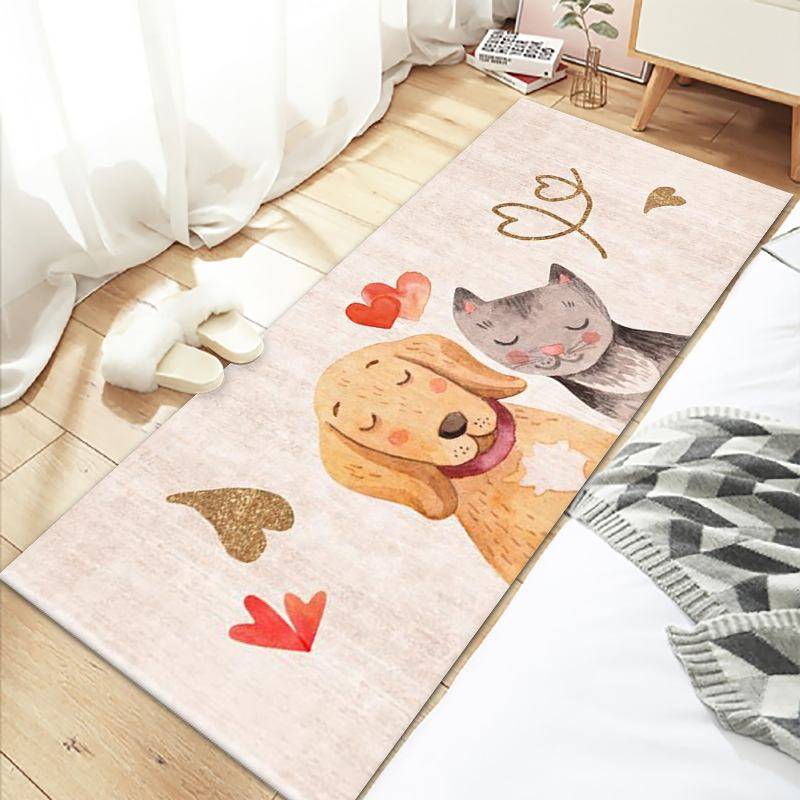
Beyond the simple shag, the 2026 market is characterized by a fascination with complex and varied textures. Designers and homeowners are moving away from monolithic, uniform floors and embracing carpets that offer a rich tactile landscape.
One of the most popular techniques for achieving this is the use of a cut-and-loop pile. In this construction method, some of the yarn tufts are cut to create a plush, velvety surface, while others are left as loops. This combination can be used to create subtle, tone-on-tone patterns, often in geometric or scrolling vine motifs. The interplay between the light-reflecting cut pile and the light-absorbing looped pile creates a visual depth and a varied texture underfoot that is both elegant and interesting.
Another approach is the high-low pile, where tufts are cut at different heights to create a sculpted, three-dimensional effect. This can be used to create bold geometric patterns or designs that mimic the contours of a topographical map. The effect is a carpet that is as much a piece of sculpture as it is a floor covering.
Mixing materials is another way to create textural interest. A carpet might combine the soft sheen of viscose with the matte finish of wool, or weave in strands of metallic yarn to add a touch of glamour. Flat-woven rugs, like kilims or dhurries, are also being layered over larger, low-pile carpets to add a pop of color and a different textural element. This layering of textures helps to create a space that feels curated, collected, and full of personality.
In an age of mass production, there is a growing appreciation for the unique and imperfect beauty of handcrafted items. This has led to a renewed interest in hand-woven and hand-knotted carpets. These are not just floor coverings; they are works of art, each one bearing the mark of its maker.
Hand-knotted rugs, the most labor-intensive and prized type of carpet, are created on a loom by tying individual knots of yarn onto the warp threads. The density of these knots—measured in knots per square inch (KPI)—determines the resolution and durability of the rug. A high-KPI rug can have incredibly intricate patterns and will last for generations. Hand-tufted rugs are made with a tufting gun that punches yarn through a backing cloth, a faster process that still allows for a high degree of artistry.
Flat-woven rugs, which have no pile, are also celebrated for their handcrafted quality. Techniques like soumak, which creates a herringbone-like texture, or the slit-weave of a kilim, result in rugs that are lightweight, reversible, and full of character. These artisan-made rugs, whether a plush Moroccan Beni Ourain or a colorful Turkish kilim, bring a sense of authenticity and global connection to a home. They are a celebration of traditional craftsmanship in a modern world, and their unique textures and stories are a key part of the rich, sensory tapestry of the 2026 interior.
For overall durability in a high-traffic family environment, nylon remains a top contender. Specifically, look for a dense, low-to-medium pile carpet made from Type 6,6 nylon with a high yarn twist level. An excellent alternative is Triexta, which offers comparable durability with the added benefit of permanent, built-in stain resistance, making it ideal for homes with children and pets.
This is a common concern. While a fluffy carpet, or shag carpet, has a deeper pile that can potentially trap more allergens, its ability to hold onto dust and pollen prevents them from becoming airborne where they are easily inhaled. The key is maintenance. For allergy sufferers, a fluffy carpet can work well if it is vacuumed regularly (2-3 times per week) with a high-quality vacuum cleaner equipped with a HEPA filter. Choosing a carpet made from hypoallergenic synthetic fibers can also help.
A washable carpet typically uses a two-part system: a decorative, lightweight top layer and a separate non-slip pad. The top layer is designed to be easily removed and is sized to fit in a standard home washing machine. This system is highly effective for dealing with spills, pet accidents, and general dirt, as it allows for a thorough cleaning rather than just surface-level spot treatment. It's an excellent, practical solution for modern homes.
The primary difference is the material and construction. Home outdoor carpets are made from synthetic fibers like solution-dyed polypropylene that are resistant to UV fading, moisture, mold, and mildew. Regular indoor carpets, especially those made from natural fibers like wool, would quickly degrade and rot if exposed to the elements. Outdoor carpets are also often flat-woven to prevent them from trapping dirt and to allow them to dry quickly.
Yes, a high-quality printed carpet can be just as durable. The durability of a carpet is primarily determined by the fiber type (e.g., nylon, polyester), the pile density, and the yarn twist—not the dyeing method. Modern digital jet printing technology uses high-quality dyes that penetrate the fiber deeply, offering excellent colorfastness and wear resistance that is comparable to traditional methods, with the added benefit of unlimited design possibilities.
A Christmas carpet is an area rug featuring a festive or seasonal design. Thanks to digital printing, these are no longer limited to novelty motifs but can include elegant and sophisticated patterns. As a practical investment, their value depends on usage. Many are designed as indoor/outdoor rugs, making them durable enough for entryway use during winter months. For those who enjoy seasonal decorating, they offer a high-impact way to transform a room's atmosphere and can be a cherished part of holiday traditions for years.
Look for independent, third-party certifications. In the United States, look for the CRI Green Label Plus certification for low VOC emissions. For recycled content, especially nylon, look for products made with ECONYL®. In Europe, certifications like the EU Ecolabel or Germany's Blue Angel are reliable indicators. For natural fibers, certifications like the GoodWeave label ensure ethical production without child labor. Always ask your supplier for documentation on these certifications.
The landscape of the carpet industry in 2026 is one of dynamic convergence. The threads of technology, ethics, wellness, and aesthetics are weaving together to create a market that is more complex, yet more responsive to human needs than ever before. For those navigating this market—be it designers specifying for a new project, retailers curating their collection, or importers seeking the next leading product—the path forward requires a holistic understanding. It is about recognizing that a carpet's story, from its material origins to its end-of-life potential, is now inseparable from its beauty. It is about seeing the floor not as a passive surface, but as an active contributor to a home's health and psychological comfort. The most successful ventures will be those that embrace this multifaceted reality, sourcing and championing products that deliver not just on a single metric, but on the integrated promise of style, performance, well-being, and responsibility. The opportunities are vast for those who can read the patterns taking shape on the floor.