
The global market for automobiles and motorcycles has entered a period of profound transformation, catalysed by the ascendancy of Chinese manufacturing in the new energy vehicle (NEV) sector. As of 2026, Chinese brands command a significant portion of worldwide electric vehicle production, leveraging advanced battery technologies, rapid development cycles, and aggressive pricing strategies that challenge established Western automakers. For business-to-business importers in the United States and United Kingdom, this presents a substantial opportunity for margin growth and fleet modernization. However, navigating this landscape requires a sophisticated understanding of a complex and evolving regulatory environment. China's Ministry of Commerce has implemented a stringent export control framework, including licensing requirements and the "180-Day Rule," which dictates the conditions under which vehicles can be exported. This guide examines the technical, financial, and logistical pathways for successfully sourcing Chinese automobiles and motorcycles, providing a detailed analysis of brand ecosystems, homologation requirements for Western markets, and strategies for calculating true landed costs to ensure sustainable profitability.
To engage with the market for Chinese automobiles and motorcycles in 2026 is to witness a tectonic shift in the global industrial order. It is not merely a story of one country producing more cars; it is a narrative of technological disruption, supply chain realignment, and the redefinition of value in personal and commercial mobility. For decades, the automotive world revolved around established hubs in Germany, Japan, and the United States. That world is rapidly receding in the rearview mirror.
The narrative of 2026 is written in the language of New Energy Vehicles (NEVs), a category encompassing Battery Electric Vehicles (BEVs), Plug-in Hybrid Electric Vehicles (PHEVs), and Extended-Range Electric Vehicles (EREVs). While the global transition to electric mobility has been underway for some time, its acceleration and geographical focus have caught many legacy automakers by surprise. China concluded 2025 with a staggering 7.1 million vehicle exports, and NEVs constituted over a third of that volume (Electric Auto China, 2026). This is not opportunistic dumping of excess inventory. It signifies a structural reorientation where export has become a primary engine of growth, built on a foundation of domestic market dominance.
Consider the domestic figures. In 2025, while sales of traditional internal combustion engine (ICE) vehicles in China contracted, NEV shipments surged by over 28%, reaching 16.5 million units (Electric Auto China, 2026). For the first time, NEV sales began to consistently outpace their ICE counterparts, a historic inflection point (mandarintimeschool.com, 2025). This domestic scale provides Chinese manufacturers with unparalleled advantages in production cost, supply chain control, and data acquisition for autonomous driving systems. When a manufacturer like BYD can achieve a domestic market share of nearly 28% and produce millions of vehicles, its ability to negotiate with suppliers, invest in research, and absorb the costs of new factory tooling dwarfs that of competitors producing in the tens or hundreds of thousands.
One must ask: what are the underlying currents driving this monumental change? The phenomenon is not accidental but the result of a confluence of strategic industrial policy, technological breakthroughs, and a unique market structure.
First, the role of government policy cannot be overstated. For over a decade, the Chinese government has cultivated its NEV industry through a combination of subsidies for consumers, incentives for manufacturers, and massive investment in charging infrastructure. While some direct subsidies are being phased out, the policy framework has already achieved its primary goal: creating a self-sustaining ecosystem with immense momentum. This long-term vision stands in contrast to the more fluctuating, market-reactive policies seen in some Western nations.
Second is the mastery of the battery supply chain. The battery is the heart of an electric vehicle, often accounting for 30-40% of its total cost. Chinese companies, led by giants like CATL and BYD itself, dominate global battery production. This vertical integration is a formidable strategic asset. While a Western automaker might be negotiating with third-party suppliers for battery cells, a company like BYD manufactures its own, from the raw material processing to the final pack assembly. This control over the most expensive component of automobiles and motorcycles allows for greater cost stability, faster innovation, and a supply chain resilient to global shocks. BYD’s Blade Battery, for instance, is not just a component; it is a core technological platform that offers enhanced safety and energy density, giving its vehicles a competitive edge (mandarintimeschool.com, 2025).
Third, the speed of innovation is fundamentally different. The development cycle for a new vehicle model at a traditional Western or Japanese automaker has historically been around 40-48 months. In China, that cycle has been compressed to as little as 20 months (mandarintimeschool.com, 2025). This agility allows Chinese brands to respond to market trends, integrate new technologies, and release updated models at a pace their rivals find difficult to match. In the year leading up to late 2025, BYD received approval for 38 new models, while a major global competitor like Tesla received approval for just three in the same market. This is not just faster work; it is a different philosophy of product development, one more akin to the consumer electronics industry than to traditional automaking.
For a fleet manager in Manchester or a dealership group owner in Ohio, these macro-level statistics translate into a direct and compelling business case. The value proposition is no longer simply about a lower purchase price. It is about accessing technology and features in a £30,000 vehicle that might be found only in a £50,000 vehicle from a European brand. It is about offering commercial clients a delivery van with a total cost of ownership that significantly undercuts legacy diesel models.
The market has moved beyond producing mere "equivalents" to Western cars. Chinese brands are now setting benchmarks. A NIO ET7 sedan offers a CLTC-rated range of up to 1,000 kilometers with its 150 kWh semi-solid-state battery, a figure that was purely theoretical for mass-production cars just a few years ago (ts2.tech, 2025). The Xiaomi SU7, from a company previously known only for smartphones, enters the market with performance specifications that challenge established premium sports sedans, but at a fraction of the price.
Therefore, the first step for any prospective importer is a deep and empathetic understanding of this new reality. To view Chinese automobiles and motorcycles as simply "cheaper alternatives" is a fundamental misreading of the 2026 landscape. The task is to appreciate them as products of a different, and in many ways more dynamic, industrial ecosystem. The opportunity is not in arbitraging a simple cost difference but in strategically leveraging this new center of automotive innovation to deliver superior value to your own customers. The challenge, which we will explore in the subsequent steps, lies in navigating the intricate pathways required to bring that value to your home market.
Understanding the opportunity is one thing; accessing it is another. The pathway for importing Chinese automobiles and motorcycles is not an unregulated free-for-all. As of January 1, 2026, the Chinese government, through its Ministry of Commerce (MOFCOM), has implemented a more structured and rigorous export control framework. This is a rational move for a government seeking to manage the quality, reputation, and economic impact of one of its most important export industries. For an importer, failing to understand these rules is not just a risk; it is a guarantee of costly delays, confiscated goods, and potential legal trouble.
The core of the 2026 framework revolves around two concepts: the Export License Management system for new BEVs and the now-famous "180-Day Rule". These two regulations effectively create two distinct channels for exporting vehicles, and the choice between them will define your entire sourcing strategy.
The most direct, and in many ways most transparent, method is to procure vehicles through the official "new vehicle" export channel. This path is intended for brand-new automobiles and motorcycles that have never been registered for road use.
To use this channel, the vehicle must be sourced from a manufacturer or a trading company that holds a specific export license from MOFCOM for new battery electric vehicles. This license is not granted lightly. It is a mark of a government-vetted, legitimate exporter. When you engage with a supplier who holds this license, you are participating in a formalized process. The vehicles are designated for export from the moment they leave the factory. They are accompanied by a clear set of documentation, including the manufacturer's certificate of origin and papers explicitly stating their export status.
The primary advantage of this channel is clarity and compliance. The vehicles are unambiguously "new." They have zero mileage, have never been titled, and their provenance is impeccable. When the shipment arrives in Southampton or Long Beach, the customs paperwork is straightforward. There is no ambiguity about the vehicle's history or status. This is the preferred channel for large-scale dealership operations and official brand distributors who need to provide customers with a factory-fresh vehicle and a full manufacturer's warranty. The main challenge, however, can be access. Manufacturers often reserve this channel for their largest, most established overseas partners, and it may be difficult for a small or medium-sized enterprise (SME) to meet the minimum order quantities (MOQs).
This is where the situation becomes more nuanced and requires careful consideration. The "180-Day Rule" is a regulation that stipulates a vehicle must be registered domestically in China for a minimum of 180 days before it can be classified and exported as a "used" vehicle (Electric Auto China, 2026).
Let's break down what this means in practice. A company in China can buy a brand-new Zeekr 001, register it with a local license plate, and hold it for 181 days. At that point, even if the vehicle has only delivery mileage on the odometer, it is legally considered a "used" car. It can then be de-registered and exported under the regulations governing used vehicle exports, which are different and, in some ways, less restrictive than the new BEV export license system.
Why does this channel exist? It provides a crucial layer of flexibility in the market. It allows a wider range of trading companies to participate in the export business without needing the official new BEV license. For importers, it can open up access to a wider variety of models and potentially more flexible order sizes. You might be able to source a handful of units of various models from a single "used" exporter, which would be impossible through the official new channel of a single manufacturer.
However, this path is fraught with potential pitfalls that demand due diligence.
The choice between these two channels is a foundational strategic decision. It is a trade-off between the ironclad security and higher barrier to entry of the "new" channel versus the flexibility and higher risk of the "used" channel. A large, well-capitalized distributor setting up an official brand presence will almost certainly use the new vehicle channel. A smaller, more agile importer looking to test the market with a diverse range of automobiles and motorcycles might find the used channel, despite its risks, to be the only viable entry point. Your choice will influence your supplier selection, your legal agreements, your budget for inspections, and your entire risk management strategy.
The sheer diversity and dynamism of the Chinese EV market can be overwhelming. It is an ecosystem teeming with established giants, ambitious challengers, and disruptive newcomers. To make informed purchasing decisions, an importer must look beyond the badge and understand the core technologies, market positioning, and strategic vision of the key players. These are not just car companies; they are technology companies that happen to build automobiles and motorcycles.
Let's examine some of the most significant brands shaping the 2026 landscape.
To speak of the Chinese EV market is to speak of BYD. Founded as a battery manufacturer, BYD’s DNA is rooted in electrochemistry, giving it a profound advantage (mandarintimeschool.com, 2025). As of early 2026, BYD stands as the world's largest EV producer, consistently dominating sales charts with a market share in China that hovers around 20% or more in the NEV space (basenor.com, 2026).
Core Technologies:
Key Models for Importers:
NIO has positioned itself as a premium lifestyle brand, competing directly with the likes of Audi, BMW, and Mercedes-Benz. Its focus is on user experience, cutting-edge technology, and a unique solution to range anxiety.
Core Technologies:
For Importers: NIO's premium pricing means it targets a different segment. The key selling point is the battery-swapping ecosystem. An importer considering NIO would need to evaluate the feasibility of establishing a similar battery-swapping infrastructure, or market the cars with conventional charging as the primary method, which would negate one of the brand's main advantages.
The entry of smartphone giant Xiaomi into the automotive world was met with intense anticipation, and the launch of their SU7 sedan did not disappoint. Xiaomi's strategy is to leverage its vast expertise in consumer electronics, software development, and supply chain management to create a "smart electric vehicle."
Core Technologies:
For Importers: Xiaomi's rapid ascent to become a top-five player in the NEV market in early 2026 is a testament to its brand power and product execution (xiaomiforall.com, 2026). The SU7 is a highly desirable product. The challenge for importers will be securing supply, as domestic demand is immense. The brand's appeal to a younger, tech-savvy demographic is a significant asset.
The market is rich with other compelling brands that importers should monitor.
The table below provides a comparative overview of flagship models from some of these key brands, illustrating the competitive landscape an importer is entering.
| Model | Brand | Type | Approx. Price (CNY) | Key Feature | Target Competitor |
|---|---|---|---|---|---|
| Seal | BYD | Sedan | ¥200,000 - ¥280,000 | Blade Battery (Safety & Cost) | Tesla Model 3 |
| SU7 Max | Xiaomi | Sedan | ¥299,900 | HyperOS Ecosystem, Performance | Porsche Taycan, Tesla Model S |
| ET7 | NIO | Sedan | ¥428,000+ (w/o battery) | Battery Swapping, 150kWh Battery | Mercedes EQE/EQS, BMW i5/i7 |
| 001 | Zeekr | Shooting Brake | ¥269,000 - ¥329,000 | Geely SEA Platform, Luxury Design | Porsche Panamera Sport Turismo |
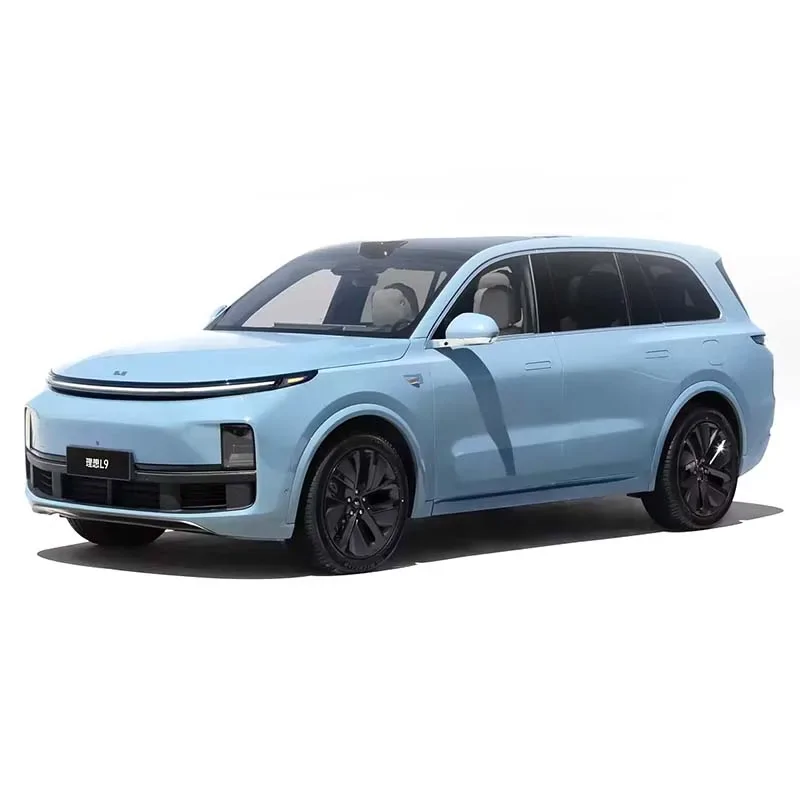
| L9 | Li Auto | SUV | ¥459,800 | EREV (No Range Anxiety) | BMW X7, Mercedes GLS |
Understanding these brands is to understand the different philosophies competing for the future of automobiles and motorcycles. It is a choice between BYD’s vertically integrated industrial might, NIO’s premium service ecosystem, Xiaomi’s consumer tech integration, and Li Auto’s pragmatic solution to range anxiety. Your choice of which brand or models to import should be aligned not just with a target price point, but with a specific customer profile and a clear vision of the value you intend to deliver.
You have identified the perfect vehicle—a technologically advanced, competitively priced EV that you know will resonate with your market. The contract is signed, the payment is wired. But the most intellectually and technically demanding part of the journey is just beginning: homologation.
Homologation is the process of certifying that a vehicle conforms to the specific technical standards and regulations of the country where it will be sold and operated. A car that is perfectly legal and safe on the roads of Shanghai is not, by default, legal or safe on a motorway in the UK or an interstate in the US. Each jurisdiction has its own thick book of rules, born from decades of unique legal precedents, safety priorities, and consumer expectations. Ignoring this step is impossible; the vehicle simply will not be allowed to be registered.
To grasp the complexity, think of it like translating a masterpiece of literature. A simple, word-for-word translation will be clunky, miss all the cultural nuance, and may even be nonsensical. A proper translation requires a deep understanding of both the source and target languages and cultures to adapt idioms, metaphors, and references so the work's original intent and emotional power are preserved. Homologation is the engineering equivalent of that deep, nuanced translation.
While both the US and UK have rigorous safety standards, their philosophical approaches to regulation are different, leading to distinct technical requirements.
While there is some overlap, many standards are unique. A vehicle homologated for the UK is not automatically legal in the US, and vice versa. An importer must choose their target market and focus exclusively on its specific requirements.
What are the actual, physical changes that need to be made to Chinese-market automobiles and motorcycles? The list can be extensive.
Lighting Systems: This is one of the most common and visible areas of modification.
Charging Inlet and On-Board Charger: China uses the GB/T charging standard for both AC and DC fast charging.
Glazing and Mirrors: The safety markings etched onto the windshield, side windows, and mirrors must comply with either US DOT (Department of Transportation) or UK/EU E-mark standards. The glass itself may need to be replaced if the original does not carry the correct markings. The curvature and "objects in mirror are closer than they appear" warning on the passenger side mirror are also regulated differently.
Software and On-Board Diagnostics (OBD): This is a vast and growing area of homologation.
Advanced Driver-Assistance Systems (ADAS): The cameras, radar, and software that control features like adaptive cruise control, lane-keeping assist, and automatic emergency braking are calibrated for Chinese road markings, traffic patterns, and signage. These systems must be extensively tested and recalibrated for the different visual environment of UK or US roads. A system trained to recognize Chinese characters on a road sign will not recognize a US "STOP" sign without modification.
The process of homologation is a project in itself. It requires deep engineering expertise, partnerships with specialized testing labs and component suppliers, and a meticulous approach to documentation. For a B2B importer, this is not a DIY task. It necessitates partnering with a company that specializes in vehicle homologation or a sourcing partner that provides these services as part of a turnkey solution. The costs and timeline for homologation must be factored into your business plan from day one.
Perhaps the most common and costly mistake a first-time importer can make is to equate the "factory price" with the "final cost." The price quoted by the exporter in Shanghai or Shenzhen is merely the starting point of a long and complex financial equation. To build a sustainable and profitable business importing automobiles and motorcycles, you must develop a rigorous methodology for calculating the True Landed Cost. This is the total, all-in cost to get the vehicle from the factory floor in China to your showroom or fleet depot in the US or UK, ready for sale.
Failing to account for every line item in this equation can erode or completely eliminate your projected profit margin, turning a promising venture into a financial loss. Let's break down the components of the True Landed Cost, piece by piece.
Imagine you are importing a mid-range Chinese electric sedan with a factory (Ex-Works or EXW) price of $25,000 USD.
Ex-Works (EXW) Price or Free on Board (FOB) Price:
Ocean Freight: The cost to ship the vehicle across the ocean. This varies dramatically based on the route, carrier, container type (20ft, 40ft), and current market rates. For a single vehicle in a shared container, this could be $1,500 - $3,000. For a full container of 3-4 cars, the per-vehicle cost is lower.
Marine Insurance: You must insure the vehicle against damage or loss during transit. This is typically calculated as a percentage of the vehicle's value plus freight. A common rate is around 0.5% of 110% of the CIF value (Cost, Insurance, Freight).
Import Tariffs and Duties: This is a major variable and differs significantly between the US and UK.
Value Added Tax (VAT) or Sales Tax:
Port Fees, Customs Brokerage, and Handling: When the ship arrives, there are numerous fees: port handling charges (THC), customs clearance fees paid to a broker, inspection fees, and charges for moving the container. These can easily add up.
Homologation and Conversion Costs: As discussed in Step 4, this is a significant and often underestimated expense. It includes the engineering work, the cost of new parts (lights, charging inlet), software reprogramming, and testing fees. This can range from a few thousand dollars for minor changes to over $15,000 for a complex conversion.
Inland Transportation: The cost to transport the vehicle from the port of arrival (e.g., Felixstowe or Los Angeles) to your facility.
Let's build a table to see the stark difference in the True Landed Cost for our hypothetical $25,000 EV in the UK versus the US.
| Cost Component | UK Market Calculation | US Market Calculation | Notes |
|---|---|---|---|
| FOB Price | $25,500 | $25,500 | Price at Chinese port. |
| Ocean Freight & Insurance | $2,150 | $2,150 | CIF Value = $27,650 |
| Import Duty / Tariff | $2,765 | $26,137 | 10% (UK) vs. ~102.5% (US) |
| Port & Brokerage Fees | $800 | $800 | |
| Homologation Cost | $7,000 | $7,000 | Assumes similar technical work. |
| Inland Transport | $500 | $500 | |
| Sub-Total Landed Cost | $38,715 | $62,087 | Pre-VAT cost. |
| VAT (UK Only) | $6,083 | N/A | 20% on (CIF + Duty). Reclaimable for businesses. |
| True Landed Cost | $38,715 (+VAT) | $62,087 | The final cost to have the car at your door. |
This table powerfully illustrates a critical lesson. The very same vehicle that lands in the UK for under $39,000 (before VAT) costs over $62,000 to land in the US. The punitive Section 301 tariffs in the US fundamentally alter the business case, making it nearly impossible to compete on price. This is why many importers focus on the UK and EU markets. For the US market, the strategy would have to shift from volume sales to niche, high-end, or specialty vehicles where the high tariff can be absorbed by a larger margin.
This rigorous, line-item approach to calculating landed cost is non-negotiable. It must be done for every model you consider importing from the vast catalog of Chinese automobiles and motorcycles. It transforms your decision-making from hopeful guesswork into a data-driven business strategy.
With a clear understanding of the market, the regulations, the technology, and the costs, you can now address the operational heart of the matter: how will you actually procure the vehicles? Your sourcing strategy is the bridge between your business plan and the physical reality of cars arriving at your facility. The right strategy can streamline your operations, mitigate risk, and unlock better pricing. The wrong one can lead to financial loss, legal entanglements, and logistical nightmares.
There are several primary channels for sourcing automobiles and motorcycles from China, each with its own distinct profile of advantages, disadvantages, and suitability for different types of importers.
This is the most direct route: establishing a relationship and purchasing directly from the Original Equipment Manufacturer (OEM) like BYD, Geely (for Zeekr), or NIO.
Who is this for? This channel is exclusively for large, highly capitalized corporations seeking to become the official, exclusive importer and distributor for a specific brand in an entire country or large region. It is not a viable option for SMEs or businesses looking to import a mix of different brands.
The Chinese export market is filled with thousands of trading companies that specialize in sourcing products. Many of these have expanded into the lucrative business of vehicle exports.
Who is this for? This channel can be used by experienced importers who have a trusted agent on the ground in China to perform rigorous inspections and who have a separate, robust process for handling homologation and after-sales support themselves. It is a high-risk, high-reward strategy that requires significant expertise to manage.
A third model has emerged to address the gap between the inaccessible OEM channel and the risky trading company channel. These are specialized B2B platforms or full-service exporters that focus exclusively on vehicles and offer an integrated suite of services. Platforms like EasyGo Global are designed to act as a comprehensive partner for overseas buyers.
Pros:
Cons:
Who is this for? This is the ideal channel for the vast majority of B2B importers, particularly those in the SME category or those new to importing vehicles from China. It is for the business that wants to focus on selling cars in its home market, not on becoming an expert in Chinese export law and automotive engineering. It provides a structured, lower-risk pathway to access the market for Chinese automobiles and motorcycles.
Your choice of sourcing strategy is a reflection of your company's scale, risk tolerance, and in-house expertise. For most, the complexity and stakes are too high to go it alone. Partnering with a specialist who can manage the process from end to end is not an admission of weakness, but a sign of a sound and prudent business strategy.
The vehicle has landed at the port, cleared customs, and been transported to your facility. For many importers, this feels like the finish line. In reality, it is the start of the most critical phase for long-term success: the ownership experience. A business built on importing automobiles and motorcycles will not survive on one-time sales. It will thrive or fail based on its ability to support those vehicles over their entire lifecycle.
A customer who buys a car and then cannot get it serviced or repaired is not just a dissatisfied customer; they are a vocal anti-ambassador for your business. For fleet operators, a vehicle that is off the road due to a lack of spare parts is a direct hit to their revenue. Therefore, a robust strategy for post-purchase logistics and after-sales support is not an "add-on"; it is a core pillar of your business model.
This is the Achilles' heel of many "grey import" operations. A main dealer for a brand like Ford or Toyota can order any part and typically have it within 24-48 hours from a national distribution center. You do not have this luxury. You are operating outside the OEM's official network. You must build your own parts supply chain from scratch.
Key Considerations:
You cannot sell cars if you cannot fix them. You have two primary options for providing service.
Whichever model you choose, training is paramount. Technicians trained on traditional ICE vehicles or even Western EVs will not be familiar with the specific architecture of a BYD e-Platform 3.0 or the intricacies of a Li Auto EREV powertrain. You must invest in creating detailed service manuals (often by translating and adapting OEM materials) and hands-on training programs.
A manufacturer's warranty is a promise. When you operate outside the official channel, that promise is often broken. You must fill the void.
You cannot realistically sell a new or near-new vehicle without a warranty. It is a fundamental customer expectation. Since you likely will not have the backing of the OEM, you must provide one yourself. This can be done in two ways:
Ultimately, your reputation will be defined by what happens after the sale. A thoughtful, well-funded, and customer-centric approach to parts, service, and warranty is what separates a fleeting, opportunistic importer from a lasting, respected player in the market for automobiles and motorcycles.
1. Is it legal to import and sell new Chinese EVs in the US and UK? Yes, it is legal, but it is a complex process that requires strict adherence to national regulations. In both the US and UK, any vehicle must be "homologated," meaning it must be tested and certified to meet all local safety and environmental standards (FMVSS in the US, WVTA in the UK). This often involves physical modifications to lighting, charging systems, and software. Simply buying a car in China and shipping it does not make it legal for road use or resale.
2. What is the "180-Day Rule" in China and how does it affect importers? The "180-Day Rule" is a Chinese regulation stating that a vehicle must be registered domestically for at least 180 days to be classified as "used" for export purposes. This creates two distinct export channels. "New" vehicles are exported under a specific license, are factory-fresh, and typically sourced directly from manufacturers. "Used" vehicles (even those with very low mileage) are sourced through a different channel after this 180-day period. This second channel offers more flexibility but requires greater due diligence from the importer regarding vehicle condition and documentation.
3. How do I handle repairs and find spare parts for an imported Chinese vehicle? This is a critical challenge that must be addressed before you import your first vehicle. Since you are operating outside the manufacturer's official dealer network, you are responsible for creating your own after-sales support system. This involves proactively stocking common service parts (brakes, filters), establishing a reliable supply line from China for less common components, and either setting up your own service center or partnering with independent workshops that you train and equip. Offering a warranty, often through a third-party provider, is also essential to build customer trust.
4. Are Chinese automobiles and motorcycles as safe as their Western counterparts? Leading Chinese brands are producing vehicles that meet high safety standards. Many models from brands like NIO, BYD, and Zeekr have achieved 5-star safety ratings in European NCAP crash tests, which are among the most stringent in the world. Key safety innovations, like BYD's Blade Battery, are specifically designed to be more resistant to fire in the event of a crash. However, the final safety of an imported vehicle also depends on the quality of the homologation work performed to make it compliant with local US or UK regulations.
5. What are the biggest hidden costs when importing cars from China? The biggest hidden costs are often import tariffs and homologation. In the UK, the tariff is currently 10%, but in the US, punitive Section 301 tariffs can exceed 100% of the vehicle's value, dramatically increasing the landed cost. Homologation—the process of modifying the vehicle to meet local standards—can also be very expensive, potentially costing thousands of dollars per vehicle for parts, labor, and certification testing. A failure to accurately budget for these two items can completely erase any potential profit.
The rise of China's automotive industry is the single most significant story in the global market for automobiles and motorcycles in 2026. It presents a generational opportunity for savvy importers in the United States and the United Kingdom to introduce highly advanced, feature-rich, and competitively priced vehicles to their customers. The technological prowess demonstrated by brands like BYD, NIO, and Xiaomi is no longer a matter of catching up; in many areas, from battery safety to in-car connectivity, they are setting the new global standard.
However, this opportunity is paired with commensurate complexity. Success is not a matter of simple arbitrage. It demands a scholarly diligence and a deeply strategic approach. It requires a nuanced understanding of China's evolving export regulations, a meticulous engineering plan for homologation, a rigorous financial model for calculating true landed costs, and an unwavering commitment to building a robust after-sales support network. The path is laden with regulatory hurdles, logistical challenges, and significant financial risks.
For those willing to navigate this intricate landscape with foresight and professionalism, the rewards are substantial. The ability to offer a commercial fleet a 30% lower total cost of ownership, or to provide a retail customer with a level of technology previously reserved for six-figure luxury cars, is a powerful competitive advantage. The future of mobility is being actively reshaped, and for those equipped with the right knowledge and the right partners, the road ahead, while challenging, is rich with possibility.