
The enduring appeal of floral decoration confronts the ephemeral nature of living blossoms, a tension resolved by the modern silk flower. This article examines the multifaceted world of high-quality artificial botanicals from a buyer's perspective in 2026. It traces their historical evolution from simple crafts to sophisticated replicas, detailing the materials and manufacturing processes that define contemporary standards. The discourse is structured around identifying common purchasing errors, such as neglecting material composition, overlooking color and textural nuances, and misevaluating long-term value against initial cost. It provides a systematic framework for quality assessment, focusing on the verisimilitude of petals, stems, and overall form. The objective is to equip both enthusiasts and professional decorators with the critical knowledge to differentiate between inferior products and investment-worthy permanent botanicals. By analyzing the interplay of material science, artisanal craftsmanship, and design principles, this guide facilitates informed decisions, ensuring the selected silk flower contributes lasting aesthetic and emotional value to interior spaces.
The human desire to capture the fleeting beauty of a flower is a narrative as old as civilization itself. Long before the advent of modern polymers and manufacturing, cultures across the globe sought to create lasting effigies of their favorite blooms. The ancient Egyptians fashioned delicate floral wreaths from painted linen and slivers of horn, while the Romans, with their mastery of wax, created remarkably lifelike blossoms for their homes and temples. Yet, it was the Chinese, over 1,500 years ago, who pioneered the use of a material that would lend its name to the craft for centuries: silk (Artificial Eden, 2021). The delicate threads of the silkworm cocoon were spun, dyed, and meticulously shaped into petals, creating floral adornments of unparalleled grace for the imperial court.
This craft traveled along the Silk Road, finding fertile ground in Europe. By the 12th century, Italian artisans were renowned for their own versions, and the art soon flourished in France, where it became a staple of haute couture. The Victorian era, with its penchant for ornate decoration, saw an explosion in the popularity of the artificial flower. Every parlor and drawing-room seemed to overflow with arrangements made not just of silk, but also velvet, porcelain, and even finely wrought metal. These were not mere decorations; they were statements of status, artistry, and a deep appreciation for nature's forms, preserved against the ravages of time. Today, this rich history informs the creation of the modern silk flower, transforming it from a simple craft into a sophisticated art form that blends tradition with technological innovation.
To truly appreciate a high-quality silk flower in 2026, one must look beyond its initial aesthetic appeal and understand the symphony of materials and techniques that bring it to life. The term "silk flower" itself has become something of a misnomer, a nostalgic holdover from its origins. While genuine silk is still used in the most exclusive, high-end creations, the vast majority of today's premium artificial flowers utilize advanced synthetic fabrics and polymers chosen for their superior durability, realism, and ability to hold shape and color.
The petals and leaves are often the first point of contact, and their composition is paramount. High-grade polyester has become a favored material due to its strength and exceptional ability to absorb and retain complex dyes (Artificial Eden, 2021). This allows for the subtle color variations—the gentle blush on a rose petal, the variegated greens on a ficus leaf—that are hallmarks of a living plant. In more advanced applications, a thin coating of latex or polymer is applied to the fabric, giving the petal a "real touch" or "fresh touch" feel that is cool and slightly waxy, uncannily mimicking the texture of a live bloom.
The stems and branches provide the structural backbone. Inside, a flexible metal wire allows for shaping and arranging, enabling the user to create a natural, asymmetrical droop or a proud, upright stance. This wire is typically encased in polyethylene (PE) or polyvinyl chloride (PVC), plastics that are molded with incredible detail to replicate the texture of a real stem, complete with nodes, thorns, and bark-like striations. For larger artificial trees and plants, manufacturers often use real, treated wood for the trunks, seamlessly blending the natural with the artificial to create an almost indistinguishable replica. The selection and combination of these materials are what separates a cheap imitation from a true permanent botanical—a piece of art that honors its living counterpart.
The most frequent and consequential error a buyer can make is to judge a silk flower solely on its appearance from a distance. A cursory glance might reveal a pleasing shape and color, but it is the underlying material composition that dictates the item's longevity, realism, and ultimate value. Falling for a visually appealing but poorly made product is the quickest path to disappointment, as its beauty will inevitably fade, droop, or fray in a remarkably short time. A discerning eye, educated in the language of materials, is the first line of defense against a poor investment.
Imagine two artificial hydrangeas side-by-side. One is crafted with thin, papery fabric and a brittle plastic stem. The other uses a multi-layered, coated polyester for its petals and a wire-core, PE-molded stem. Initially, they might look similar, but the first will likely fade under ambient light, collect dust in its porous fibers, and its petals may fray at the edges. The second, a product of superior material science, will resist fading, be easier to clean, and maintain its structural integrity for years. Understanding this distinction is not just for connoisseurs; it is a practical necessity for anyone seeking to purchase a lasting piece of decor.
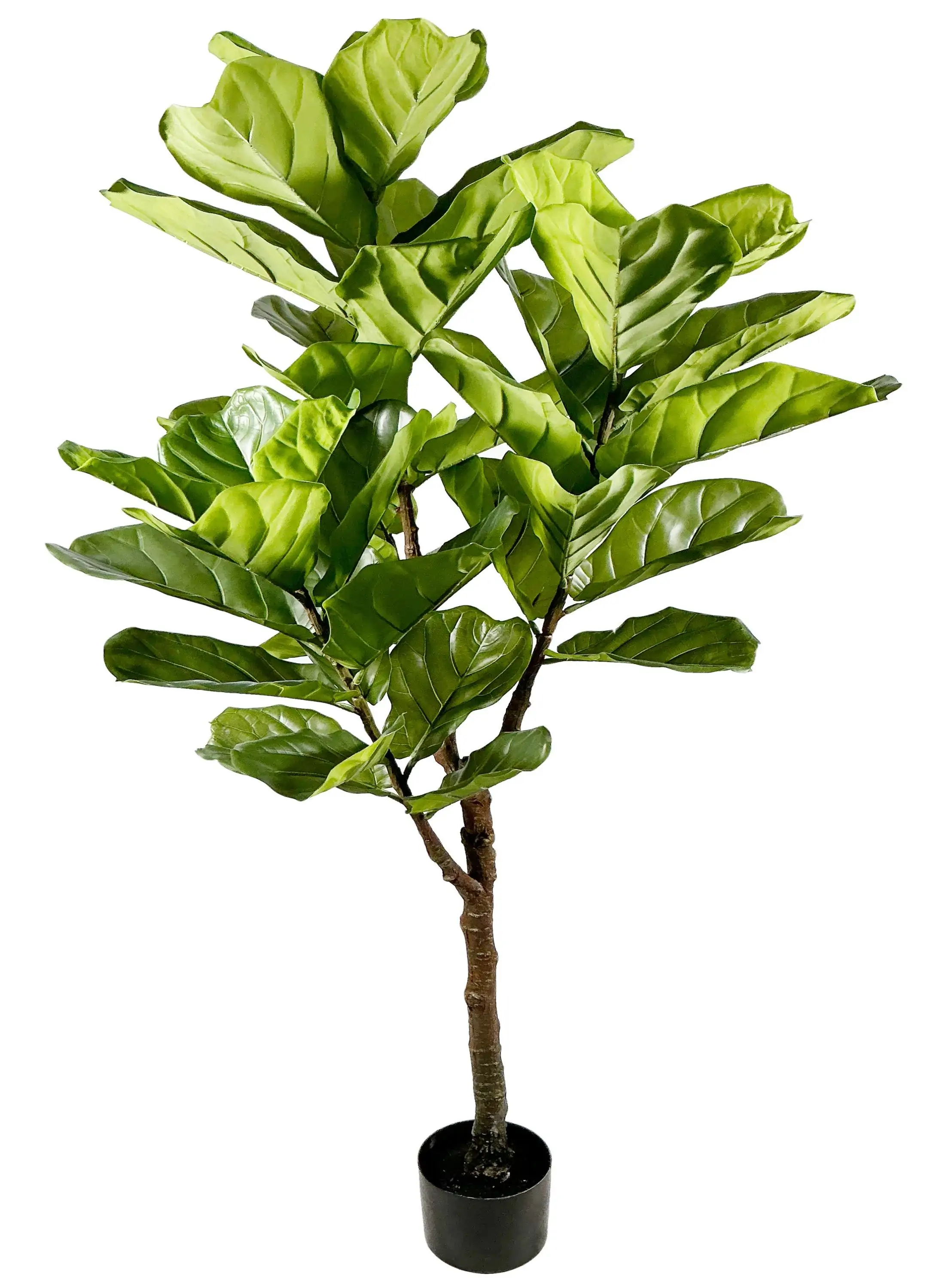
The market is saturated with inexpensive artificial flowers, and their low price point is almost always a direct result of using substandard materials. Low-grade plastics, often identifiable by a glossy, unnatural sheen and a rigid, brittle feel, are prone to cracking and discoloration. They lack the subtle flexibility of real stems and can snap easily during arrangement. Similarly, cheap fabrics like thin, single-ply nylon or untreated, low-thread-count polyester create petals that are dimensionally flat and lifeless. They lack the weight and substance to mimic a real petal's gentle curl and are highly susceptible to fraying and tearing. These materials are chosen for one reason: to minimize production costs. The consequence for the consumer is a product with a very short aesthetic lifespan, quickly becoming an eyesore rather than an enhancement to their space.
To make an informed choice, it helps to have a basic familiarity with the materials used by reputable manufacturers. As we've touched upon, high-grade polyester is the workhorse of the industry for petals and leaves. Its fibers are strong and non-porous, which makes them resistant to moisture and less likely to harbor dust. Furthermore, polyester can be treated to be UV resistant, a feature we will explore later.
Polyethylene (PE) is a versatile thermoplastic polymer used extensively for stems, leaves, and smaller details like buds or berries. Its key advantage is its moldability. When heated, it can be injected into intricate molds taken from real plants, capturing every minute detail of a stem's texture (Ulandgreen.com, n.d.). High-quality PE is also durable and flexible, allowing the internal wire to be bent and repositioned without the plastic casing cracking. Some premium products use PEVA, a copolymer of polyethylene and vinyl acetate. PEVA is even softer and more flexible than standard PE, often used for leaves like those on succulents to give them a fleshy, realistic feel. It is also chlorine-free, which is an important consideration for environmentally conscious consumers.
| Material | Common Use | Key Characteristics for Realism | Durability | Typical Cost |
|---|---|---|---|---|
| High-Grade Polyester | Petals, Leaves | Excellent dye retention for color depth; can be coated for "real touch" texture. | High; resists fraying and moisture. | Moderate to High |
| Genuine Silk | High-End Petals | Unmatched natural sheen and drape; very delicate. | Low; susceptible to fading and water damage. | Very High |
| Polyethylene (PE) | Stems, Greenery | Excellent moldability for detailed textures; flexible. | High; resistant to cracking when bent. | Moderate |
| Latex (Coating) | Petal/Leaf Surface | Provides a waxy, cool "real touch" feel; adds weight and realistic droop. | Moderate; can degrade over time with sun exposure. | Adds to cost |
| Real Wood (Treated) | Trunks of Trees/Large Plants | The most authentic texture and appearance possible. | High; properly treated to resist pests and decay. | High |
| Low-Grade Plastic/Fabric | Inexpensive Flowers | Flat color; shiny, unnatural texture; brittle feel. | Very Low; fades, cracks, and frays easily. | Low |
The unseen components of a silk flower are just as vital as the visible ones. The internal wire is the skeleton that gives the flower life. In a quality product, this wire is sufficiently strong to hold a shape but pliable enough to be manipulated without excessive force. A wire that is too thin will cause the flower head to sag, while one that is too thick and rigid makes arranging a frustrating, if not impossible, task. When examining a silk flower, gently bend the stem. It should offer some resistance and then hold the new position gracefully.
For larger arrangements, such as an artificial olive tree or a flowering dogwood branch, the use of real, kiln-dried wood for the main trunk is the ultimate mark of quality. Companies like specialize in this technique, grafting the artificial branches onto a natural wood base. This fusion eliminates the biggest giveaway of a fake tree—a perfectly symmetrical, unnaturally smooth plastic trunk. The organic texture, color variations, and unique shape of a real wood trunk ground the entire piece in reality, making it a convincing and sophisticated addition to any interior.
After material, the second most revealing aspect of a silk flower's quality lies in its coloration and texture. Nature is a master of subtlety; a real rose is never a single, flat shade of red, nor is a leaf a uniform sheet of green. It is a complex tapestry of gradients, undertones, veins, and minute imperfections. Inexpensive artificial flowers betray their fakeness by ignoring this complexity, opting for a simple, one-dimensional color application. A discerning buyer learns to look for the artistic nuances that mimic a plant's true character, for it is in these details that realism is truly found.
Think of it as the difference between a child's crayon drawing of a flower and a botanical illustration by a master artist. Both depict a flower, but only the latter captures its essence. The cheap silk flower is the crayon drawing: a block of color in a recognizable shape. The high-quality silk flower is the botanical illustration: a study in light, shadow, texture, and the delicate transitions of hue that signal life. Training your eye to see this difference is a skill that elevates you from a mere shopper to an informed collector.
The dyeing process is where craftsmanship truly shines. In mass-produced, low-cost flowers, entire sheets of fabric are often dip-dyed in a single color before being cut into petal shapes. The result is a flat, lifeless bloom. In contrast, premium manufacturing involves a multi-step, often hand-finished process. White or off-white fabric is cut into petal shapes first. Then, artists apply color in layers. They may use airbrushing techniques to create a soft gradient, starting with a lighter shade at the center and deepening the color toward the petal's edge. They might hand-paint delicate touches of a complementary color—a hint of yellow at the base of a pink peony petal, or a touch of burgundy on the tip of a cream-colored rose—to replicate the natural variations caused by sunlight and maturity (Artificial Eden, 2021). This multi-tonal approach creates a visual depth that makes the flower look vibrant and alive from any angle.
Texture is the silent partner to color. After dyeing, the individual petals and leaves of a high-quality silk flower are placed into heated molds. These molds are not smooth; they are etched with the intricate patterns of real leaves and petals. When pressed, the fabric takes on these details, creating the delicate network of veins that characterizes a real leaf. On close inspection of a superior artificial leaf, you should be able to see and feel this veining.
Beyond veining, manufacturers employ other techniques to enhance texture. Some leaves are given a matte finish to replicate a waxy cuticle, while others might have a slightly fuzzy texture, like the leaves of a Lamb's Ear plant. For flowers like poppies, the fabric is intentionally creased and crinkled to mimic their paper-thin, delicate structure. This commitment to tactile realism is a hallmark of a product designed to be appreciated up close, not just from across a room. This is a level of detail you can expect to find among dedicated artificial flower suppliers who pride themselves on quality.
A beautiful color is worthless if it does not last. One of the biggest long-term issues with artificial plants, especially those placed near windows, is fading caused by ultraviolet (UV) radiation. Sunlight breaks down the chemical bonds in dyes, causing colors to dull and wash out over time. Reputable manufacturers address this by incorporating UV-resistant chemicals directly into the materials during production.
This process, known as inherent UV protection, is far superior to a simple post-production spray. The UV stabilizers are mixed with the plastic pellets or fabric dyes, ensuring every part of the plant is protected from the inside out (dyartificial.com, n.d.). When shopping, look for products explicitly labeled as "UV-resistant" or "inherently UV protected." While these may come at a higher initial price, they represent a far better long-term value, ensuring your silk flower arrangement retains its vibrant colors for years, not just a single season. This is particularly important for commercial spaces like hotels or offices, where consistent appearance is key.
Armed with an understanding of materials and coloration, you can now approach the selection of a silk flower with a systematic, critical eye. Instead of being swayed by first impressions, you can perform a series of simple but effective checks that will reveal the true quality of the product. These four checks, focusing on petals, stems, form, and feel, constitute a comprehensive evaluation process. Think of it as a pre-purchase inspection that empowers you to invest with confidence, ensuring that what you bring into your home is a masterpiece of botanical art, not a fleeting fancy.
This methodical approach demystifies the selection process. It allows you to move beyond subjective preference ("I like the color") to objective assessment ("The color has depth, the texture is realistic, and the construction is durable"). By internalizing these four steps, you can confidently navigate any showroom or online catalog, quickly identifying the products that meet a high standard of excellence.
This is the most intuitive but also the most detailed check.
The stem is the foundation of the flower, and its quality is indicative of the entire product's durability.
Step back and look at the plant as a whole. Its overall shape and posture are crucial for a convincing appearance.
Your sense of touch can often confirm what your eyes suspect.
A botanically perfect silk flower can still look out of place if its context is disregarded. The third costly mistake is selecting an arrangement without considering the environment in which it will live. This involves a failure to harmonize the plant's style with the room's decor, a misjudgment of scale, and a lack of awareness of how lighting will affect its appearance. Interior design is a holistic discipline; every element should contribute to a cohesive whole. Introducing a silk flower is no different from choosing a piece of furniture or a work of art. Its success depends on its relationship with the surrounding space.
Imagine placing a large, dramatic spray of tropical orchids in a rustic farmhouse kitchen, or a small, delicate pot of lavender on a grand, oversized mantelpiece. In both cases, the inherent quality of the artificial plant is undermined by a poor contextual fit. The orchids clash with the rustic aesthetic, and the lavender is visually lost in the grand space. Avoiding this mistake requires a moment of reflection and planning before purchase, asking not just "Is this a beautiful flower?" but "Is this the right flower for this specific place?"
Every room has a design language, whether it's modern minimalist, traditional, bohemian, or coastal. The chosen silk flower should speak the same language.
Scale is one of the most fundamental principles of interior design. The size of the silk flower arrangement must be proportional to the space it occupies and the furniture it sits on or near.
The type and amount of light in a room can dramatically alter the appearance of a silk flower.
One of the most appealing attributes of a silk flower is its promise of low maintenance compared to its living counterpart. However, a common and costly mistake is to interpret "low maintenance" as "no maintenance." While they require no water, fertilizer, or pruning, artificial plants are not immune to the effects of their environment. Dust, grime, and improper handling can diminish their beauty and shorten their lifespan. Neglecting a simple, regular cleaning routine is akin to buying a fine piece of clothing and never laundering it; over time, its quality will inevitably degrade.
Investing in a high-quality silk flower is only the first step. The second is committing to the minimal but necessary care that will preserve that investment. Understanding the correct techniques for cleaning and storage ensures that your botanical replica remains as vibrant and realistic as the day you bought it. This proactive approach prevents the gradual decline that turns a beautiful decorative object into a dusty relic.
| Problem | Common Cause(s) | Preventative & Corrective Action |
|---|---|---|
| Dust Accumulation | Airborne particles settling on surfaces over time. | Prevention: Weekly light dusting with a feather duster or soft paintbrush. Correction: Use a hairdryer on a cool, low setting. For heavier dust, wipe leaves with a slightly damp microfiber cloth. |
| Fading Colors | Prolonged exposure to direct UV radiation from sunlight. | Prevention: Place arrangements away from windows with intense, direct sun. Choose inherently UV-protected products. Rotate the arrangement periodically. |
| Bent/Broken Stems | Improper handling, storage, or aggressive "fluffing." | Prevention: Handle stems gently from the base. Correction: Most stems have a wire core and can be gently bent back into shape. For a snap, floral tape or a small dab of hot glue at the break can provide a repair. |
| Grease/Grime Buildup | Placement in kitchens or high-traffic areas. | Correction: Mix a small amount of mild dish soap in cool water. Lightly dampen a cloth, wring it out well, and gently wipe each leaf and petal. Immediately dry with a clean, soft cloth. Avoid soaking. |
| Flattened/Crushed Shape | Improper long-term storage in a compressed space. | Prevention: Store in a sturdy box with enough room, using tissue paper to support delicate parts. Correction: Gently "fluff" and reshape by hand. A steamer (used from a safe distance) can help relax crushed petals. |
The primary adversary of a silk flower is dust. A fine layer of dust dulls the colors, obscures the texture, and instantly signals that the plant is artificial.
The idea that artificial plants require zero attention is a pervasive myth that leads to their eventual neglect. The reality is that they require a different kind of maintenance. You are trading the daily tasks of watering and care for the periodic task of cleaning. This is a significant net gain in terms of time and effort, but it is not a complete abdication of responsibility. A helpful mental shift is to think of your silk flower arrangements as you would any other valuable home decor item, like a sculpture, a vase, or a framed picture. You would not let those items become caked in dust, and your permanent botanicals deserve the same level of care to remain at their best.
Many people enjoy rotating their decor with the seasons, swapping bright summer blooms for the rich tones of autumn foliage or festive holiday arrangements. Proper storage is key to ensuring these seasonal pieces last for many years.
In a market with a vast spectrum of quality and cost, it can be tempting to be guided by the price tag alone. The fifth and final costly mistake is choosing a silk flower based on its low initial price rather than its long-term value. This is a false economy. An inexpensive artificial flower that needs to be replaced every year or two is ultimately more expensive than a premium one that lasts for a decade or more. The value of a high-quality silk flower is not just in its initial purchase price, but in its durability, its timeless aesthetic, and the sustained enjoyment it provides.
This mistake stems from viewing artificial plants as disposable decor rather than as a lasting component of your home's interior design. A premium silk flower arrangement should be considered in the same category as a quality rug, a piece of art, or a well-made lamp. It is an investment in the long-term beauty and atmosphere of your space. Shifting this perspective from "How much does it cost now?" to "What is the value over time?" is the final key to making a truly wise and satisfying purchase. This is a principle that underpins a global marketplace for decor, where durability and quality are prized.
Let's consider a simple cost analysis. Suppose you purchase a cheap, mass-produced orchid arrangement for $25. Due to its poor materials and dyes, it begins to look dusty and faded after one year, and by the end of the second year, it is unsightly enough that you decide to replace it. Over ten years, you have spent $125 on a series of disappointing, disposable items.
Now, consider an alternative. You invest in a high-quality, "real touch" orchid arrangement from a reputable manufacturer for $100. It is made with UV-resistant materials and superior craftsmanship. With minimal annual cleaning, it looks just as vibrant and realistic in year ten as it did in year one. Your cost per year of enjoyment is a mere $10, compared to the $62.50 per year for the "cheaper" option. The initial investment, while higher, delivers far greater value and a decade of uninterrupted beauty instead of a cycle of purchase and disposal. This calculation does not even account for the environmental cost of disposable goods or the personal satisfaction derived from owning a beautiful, well-crafted object.
The benefits of investing in a quality silk flower extend beyond simple economics.
How do you ensure you are making a quality investment? The answer lies in your source. Reputable suppliers, whether they are specialized local boutiques or established online manufacturers, are curators of quality. They have already done much of the vetting for you.
1. Are silk flowers completely out of style in 2026? Quite the contrary. While the perception of "fake flowers" as tacky persists from past decades, the modern, high-quality silk flower has seen a major resurgence. Driven by advancements in materials and a focus on hyper-realism, they are now a staple in high-end interior design, event planning, and commercial spaces. They are valued for their longevity, lack of allergens, and ability to provide biophilic (nature-inspired) design elements in spaces where live plants cannot thrive (Pennisi, 2022).
2. What is the difference between "silk," "real touch," and regular artificial flowers? "Silk flower" is now a general term for any high-quality artificial flower, even though most are made of polyester or other synthetic fabrics. A standard artificial flower is typically made of a basic polyester fabric. A "real touch" flower has an additional coating, often a latex or polymer blend, applied to the fabric petals. This coating gives them a cool, slightly waxy, and more substantial feel that uncannily mimics the texture of a live petal.
3. How do I clean my silk flower arrangements without damaging them? The best method is regular, light dusting with a feather duster or a soft paintbrush to prevent buildup. For a deeper clean, use a hairdryer on a cool, low setting held several inches away. For grime, you can wipe smooth leaves with a microfiber cloth very lightly dampened with water. Never submerge the arrangement, as it can damage glues and rust the internal wires.
4. Can I put silk flowers outside? You can, but only if they are specifically designed for outdoor use. Outdoor artificial flowers are made with inherent UV protection to prevent their colors from fading quickly in the sun. They also use more robust, water-resistant materials. A standard indoor silk flower will degrade very rapidly if exposed to sun, wind, and rain. Always check the product description for "outdoor rated" or "UV protected."
5. Is it worth paying more for a UV-protected silk flower? Absolutely, especially if the arrangement will be placed in a room that receives any amount of natural sunlight. UV radiation from the sun is the primary cause of fading. A non-protected flower placed near a window can show significant color loss in less than a year. A product with inherent UV protection has stabilizers mixed into the material itself, offering long-lasting defense against fading and representing a much better long-term investment.
6. How can I make my silk flower arrangement look more realistic? First, invest in a quality product using the checks outlined in this guide. Second, always "fluff" or shape your arrangement after unboxing; bend the wired stems and leaves to create a more natural, asymmetrical shape. Third, place it in an appropriate container—a beautiful vase or pot elevates the entire look. Finally, ensure the scale and style of the arrangement fit the room's decor.
The journey into the world of the silk flower reveals a rich intersection of history, art, and science. What began as a delicate craft has evolved into a sophisticated industry capable of producing botanical replicas of astonishing realism. By moving beyond a superficial assessment and embracing a more critical, informed perspective, the modern buyer can navigate this landscape with confidence. The key is to shift one's mindset from seeking a cheap imitation to investing in a permanent botanical—a lasting piece of decor that offers the beauty of nature without its ephemeral limitations.
By understanding the language of materials, appreciating the artistry of color and texture, and systematically evaluating quality, you arm yourself against the common pitfalls that lead to buyer's remorse. Context, scale, and a commitment to minimal maintenance are the final elements that ensure your chosen arrangement will not only look beautiful on the day it arrives but will continue to enhance your space for years to come. Ultimately, a well-chosen silk flower is more than a mere object; it is a durable source of aesthetic pleasure, a testament to craftsmanship, and a wise investment in the enduring beauty of your home.