
The term ‘silk flower’ has evolved from a literal descriptor into a legacy category name that now encompasses a vast array of high-fidelity botanical replicas. An examination of the 2026 market reveals that genuine silk is seldom used, having been supplanted by advanced materials like polyester fabrics, polyethylene, and polyurethane polymers that offer superior durability and realism. The global industry, projected to exceed $12 billion, is characterized by sophisticated manufacturing processes, with production centers in China leading technological innovation and craftsmanship (Alibaba.com, 2026). Consumer preferences demonstrate significant regional divergence, influencing design trends from North America to Europe. The contemporary high-end artificial flower is best understood not as a mere imitation, but as a ‘permanent botanical’—a durable design element valued for its aesthetic consistency and long-term economic and environmental advantages over perishable floriculture. This shift in perception and material science defines the modern buyer's landscape.
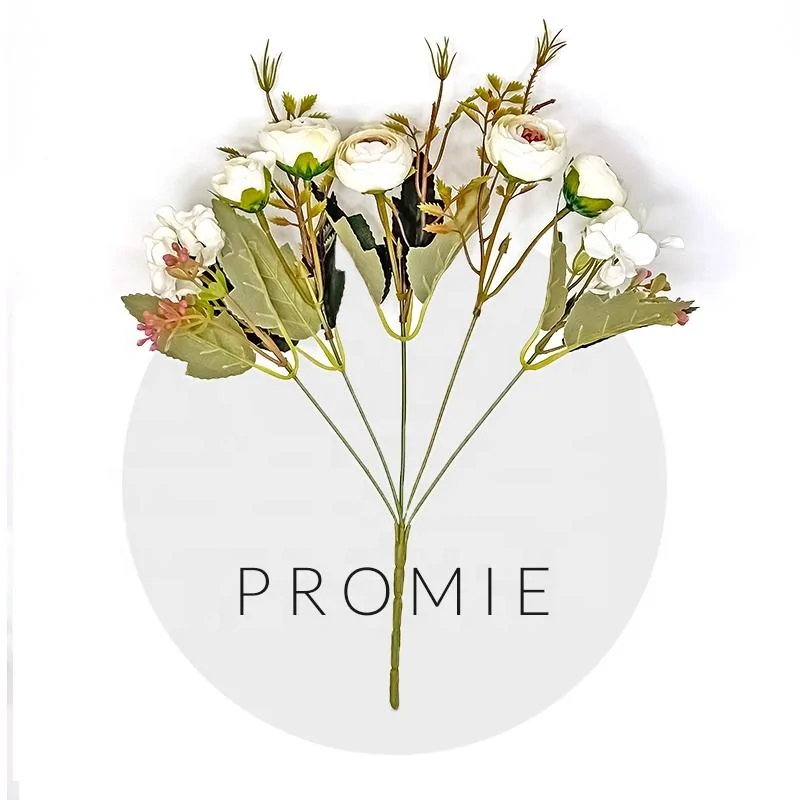
One of the most persistent points of confusion in the world of decor revolves around a simple question: is a silk flower actually made of silk? In 2026, the answer is almost universally no. The term has become a kind of beautiful fiction, a holdover from a previous era that now functions as a generic, yet elegant, category name. To truly understand the quality and value of a modern artificial flower, we must first deconstruct this linguistic artifact and explore the remarkable journey of materials that has led us to the present day.
The practice of creating artificial flora is ancient, but the specific association with silk gained prominence in past centuries. Artisans, particularly in France and Italy, would use fine silk fabric to craft delicate, beautiful blossoms. Silk, with its natural luster and ability to hold dye, was the premier material for replicating the soft texture of petals. These creations were luxury items, painstakingly made by hand for the wealthy elite. However, silk possesses inherent limitations that make it unsuitable for the demands of modern production and use. It is highly susceptible to fraying, moisture damage, and fading from sunlight. Imagine a delicate silk rose; a single splash of water could stain it permanently, and the humidity of a sunlit room could cause it to droop and lose its shape over time. Its cost is also prohibitive for large-scale production.
The 20th century brought with it a revolution in materials science, and polyester emerged as a far more practical and versatile alternative. Early polyester flowers were a far cry from what we see today—they were often stiff, shiny, and obviously artificial. Yet, the material's core advantages were clear: it was durable, resistant to moisture, held color exceptionally well, and could be mass-produced affordably.
Over decades, the technology for processing polyester has become incredibly sophisticated. Modern high-grade polyester fabrics used for flowers can be woven to specific textures—some are light and airy like chiffon to mimic poppy petals, while others have a thicker, velvety finish to replicate a rose. They are treated, cut, and heat-molded to create the intricate shapes of individual petals and leaves, a process that genuine silk cannot withstand with the same precision or resilience.
The most significant leap forward in recent years has been the widespread adoption of polymers like polyethylene (PE) and polyurethane (PU). These materials are not fabrics but plastics, and they have allowed for a level of realism previously unimaginable.
Polyethylene (PE): This is a sturdy plastic commonly used for stems, branches, and the foliage of plants like succulents or pine. Its rigidity is its strength, allowing for the creation of self-supporting structures that can be bent and shaped without breaking. The details are captured through injection molding, where molten plastic is forced into a detailed mold cast from a real plant.
Polyurethane (PU): This is the material often behind the coveted "real touch" or "fresh touch" flower. PU is a type of polymer that can be formulated to have a soft, slightly moist, and cool feel that uncannily mimics the texture of a living petal or leaf. When you touch a real-touch tulip or orchid, your brain receives tactile signals very similar to those it would get from the real thing. This is achieved by creating a foam-like structure at a microscopic level that has a slight give, unlike the hard surface of traditional plastic.
The following table breaks down the characteristics of these primary materials, helping you understand what to look for on a product description or how to identify them by touch and sight.
| Material | Primary Use | Feel & Appearance | Durability & Care | Common Flower Types |
|---|---|---|---|---|
| Polyester Fabric | Petals, some leaves | Soft, fabric-like texture. Can range from matte to a slight sheen. | High durability, fade-resistant. Requires dusting; can be spot cleaned. | Roses, Peonies, Hydrangeas, Poppies |
| Polyethylene (PE) | Stems, branches, foliage | Firm, waxy, or textured plastic feel. Best for structural elements. | Very high durability, waterproof. Can be wiped clean. | Greenery, Succulents, Pine, Berries |
| Polyurethane (PU) | Petals, leaves | Soft, supple, often cool to the touch. Highly realistic matte finish. | Good durability but can be sensitive to direct sun over long periods. Wipe with a damp cloth. | Tulips, Calla Lilies, Orchids |
| Genuine Silk | Historical/Niche Craft | Very delicate, soft, with a natural sheen. | Low durability. Highly susceptible to water, sun, and fraying. | Antique reproductions, couture fashion |
So, when you are shopping for a "silk flower" today, you are participating in a linguistic tradition. You are not, in fact, looking for silk. You are looking for the culmination of decades of material science—a sophisticated object crafted from polyester, polymers, and artistic ingenuity, designed to capture the spirit of a flower in a form that can endure.
Not all artificial flowers are born equal. Walking through a store or browsing online, you can be confronted with a dizzying array of options, with prices ranging from a few dollars to several hundred for a single stem. What justifies this vast difference? The answer lies not just in the materials discussed previously, but in the invisible artistry and complex manufacturing processes that separate a masterpiece from a mediocre imitation. Understanding this anatomy of quality empowers you to become a more discerning buyer, capable of identifying true value.
Think of it like the difference between a print and an original painting. Both may depict the same subject, but one carries the touch of the artist's hand, a depth and subtlety that the other lacks. High-end artificial flowers are the product of numerous, often manual, artistic decisions.
The journey of a superior artificial flower begins with a real one. The most reputable manufacturers use actual, perfect specimens of flowers at their peak bloom to create their molds. A botanist might select a flawless Phalaenopsis orchid or a David Austin rose. This flower is then painstakingly dissected, and high-resolution 3D scans or delicate plaster casts are made of each component—every petal, the stamen, the calyx, and the leaves.
This initial step is foundational. A poorly shaped or generic mold will result in a lifeless final product, no matter how good the material. A mold cast from a real flower captures the subtle asymmetries, the gentle curl of a petal's edge, and the unique vein patterns that define a species. This is why a high-quality faux hydrangea feels like a collection of hundreds of tiny, unique blossoms, rather than a repetitive, uniform sphere.
Nature is rarely monochromatic. A real rose petal is not just "pink." It is a complex gradient of color—perhaps lighter at the edge, deeper towards the base, with subtle yellow or green undertones near the calyx. Achieving this realism is one ofthe biggest differentiators of quality.
Once all the components are molded and colored, they must be assembled. Here again, the level of care is paramount. On a low-quality stem, you might see blobs of glue, plastic seams, or leaves that are simply stuck on at uniform intervals.
A high-quality artificial flower, however, is assembled with an eye for natural structure. Stems are often internally wired, allowing you to bend and shape them into a natural-looking pose. The wire is then wrapped or coated with textured PE to mimic bark or a smooth stem. Leaves are attached at varied angles and positions. Sometimes, artisans will even add intentional "imperfections"—a tiny spot of brown on a leaf edge, a slightly furled petal, or the subtle fuzz on a rose stem—that sell the illusion of life. These are the details that trick the eye and elevate the object from "fake" to "permanent botanical."
This table contrasts the common characteristics you can look for to assess quality.
| Feature | Low-Quality Flower | High-End Flower |
|---|---|---|
| Petals | Thin, papery or hard plastic. Uniform color. Fraying edges on fabric. | Varied thickness. "Real Touch" feel. Multi-tonal, hand-painted details. Clean, molded edges. |
| Center (Stamen/Pistil) | A simple plastic nub or coarse, bright yellow flocking. | Intricately molded and colored components, often with fine, thread-like details. |
| Leaves | Flat, shiny plastic. Uniform green. Printed veins are often blurry. | Textured, matte finish. Color variation (e.g., lighter new growth). Veins are molded and distinct. |
| Stem | Smooth, shiny plastic tube. Little to no flexibility. | Internally wired for posing. Textured and color-matched to the real plant. Varied thickness. |
| Assembly | Visible glue seams. Repetitive, symmetrical placement of leaves/flowers. | Clean joints. Asymmetrical and naturalistic arrangement of components. |
| Overall Impression | Looks artificial from a distance. Lifeless and static. | Can be mistaken for real upon close inspection. Captures the gesture and "spirit" of the flower. |
When you invest in a product from discerning suppliers of high-end artificial flowers, you are not merely buying a decorative object. You are acquiring a piece of industrial art, a product of careful observation, technological innovation, and skilled handiwork.
The beauty of a flower might seem universal, but the way we choose to display that beauty is deeply rooted in culture, climate, and interior design traditions. The global artificial flower market is not a monolithic entity; it is a collection of distinct regional markets with unique tastes and demands. A 2026 strategic analysis reveals a fascinating divergence in consumer preferences, particularly between major markets like the United States, the United Kingdom, and continental Europe, such as Germany (Alibaba.com, 2026). Understanding these regional personalities can help you refine your own choices and appreciate the cultural narratives woven into these beautiful objects.
American interior design often favors a sense of scale and drama. This is reflected in the demand for large, impactful artificial floral arrangements. US buyers are the largest segment of the market, and they frequently seek out tall, branching stems of cherry blossom or forsythia, oversized "real touch" magnolias, or lush, full arrangements of peonies and hydrangeas designed to be a centerpiece in a grand entryway or on a large dining table.
The aesthetic often leans towards a polished, "transitional" style that blends classic forms with modern cleanness. Think of a large ginger jar filled with perfectly formed white orchids or a dramatic cascade of wisteria for a covered patio. The goal is often an expression of abundance and curated luxury. The flower is not just an accessory; it is a piece of architectural decor, a focal point that commands attention.
In the UK, consumer taste is often influenced by a rich horticultural history and a love for the romantic, slightly untamed English garden. The "cottage-core" aesthetic, which celebrates a nostalgic and cozy rural ideal, has a strong influence on the market. UK consumers often prefer more natural, less formal arrangements.
Instead of a single, dramatic statement piece, the preference might be for a collection of smaller, more delicate arrangements. Think of a ceramic pitcher filled with faux lavender and wildflowers, a small pot of realistic-looking English roses on a windowsill, or a "just-picked" look with a mix of faux greenery, delphiniums, and foxgloves. The choice of container is also significant, with a preference for classic materials like ceramic, aged terracotta, or rustic stoneware (Alibaba.com, 2026). The overall feeling is one of understated elegance and a connection to the countryside, even in an urban setting.
In markets like Germany and Scandinavia, consumer decisions are often driven by a combination of minimalist design principles and a strong awareness of sustainability. While they appreciate the beauty of flowers, there is a pronounced interest in the materials and longevity of the product.
The aesthetic leans towards clean lines and simplicity. A single, perfect stem of a calla lily in a sleek glass vase or a sculptural branch of an artificial olive tree in a corner might be preferred over a dense, multi-flowered bouquet. There is a greater demand for products with explicit eco-certifications or those made from recycled or bio-based polymers. Durability is not just a feature but a core value; German shoppers want to know that the product is well-made and will last for many years, making it a responsible purchase (Alibaba.com, 2026). The color palette is often more subdued and natural, reflecting a Nordic design sensibility.
These regional preferences create a dynamic feedback loop with manufacturers. Producers who cater to the US market invest in molds for large, showy blooms. Those targeting the UK develop more delicate and varied wildflower designs. And those selling into Germany focus on material innovation and minimalist forms. As a global consumer in 2026, you are the beneficiary of this diversity. You can choose to embrace your local aesthetic or borrow from others, curating a collection of permanent botanicals that tells your own unique story.
For decades, the label "Made in China" carried a complex and often negative connotation in the minds of Western consumers, suggesting mass-produced goods of questionable quality. To approach the 2026 artificial flower market with this outdated lens is to fundamentally misunderstand where the most exciting innovations and highest levels of craftsmanship are now located. China has transformed from being the world's factory into the world's premier artisan workshop for permanent botanicals, a hub of specialized knowledge and technological prowess (Sinofloral, 2023).
The production of high-end artificial flowers is not a simple assembly line process. It is a craft that requires a deep, almost generational, well of tacit knowledge. Much like Switzerland is to watchmaking or Italy is to luxury leather goods, specific regions in China, particularly in Guangdong province, have become global centers of excellence for this industry.
Over decades, these areas have developed a complete ecosystem dedicated to the art of the faux flower. This includes:
This concentration of every part of the supply chain and knowledge base in one place creates a powerful engine for innovation. A designer can have an idea for a new type of finish on a leaf, and within a short distance, they can find the polymer expert, the mold maker, and the skilled painter to bring it to life. This synergy is nearly impossible to replicate elsewhere.
The narrative is no longer about China imitating Western designs. Increasingly, Chinese manufacturers are the ones driving trends and pushing the boundaries of what is possible. They are not just fulfilling orders; they are active partners in the design process for major global brands (Blush-Rose, 2025).
A brand in New York or London might provide a mood board or a concept, and the technical teams in China will then engage in a collaborative process of research and development. They might experiment with new flocking techniques to create a "fuzzy" stem or develop a new molding process to capture the intricate, waxy texture of a Hoya plant's leaves. They are the ones solving the complex engineering problems that turn an artistic vision into a tangible, high-quality product. This level of partnership is a far cry from the old model of simply producing a pre-designed item as cheaply as possible. It is a sophisticated, technology-driven collaboration, often managed through a seamless cross-border cooperation platform that connects global buyers with these centers of excellence.
What is perhaps most difficult to grasp from the outside is the sheer scale at which this artistry operates. A single factory might employ hundreds of workers, each specializing in one part of a flower's creation. There might be a whole department dedicated solely to creating the realistic, browning edges on autumn leaves, or another focused entirely on airbrushing the subtle blush onto the cheek of a peony petal.
This is not mass production in the traditional sense; it is the mass application of artisanal techniques. It allows for the creation of millions of beautiful, high-quality flowers, each of which has passed through numerous skilled hands. By embracing this specialized, scaled-up craftsmanship, Chinese producers have made a level of quality that was once reserved for the ultra-wealthy accessible to a global audience.
Therefore, when you admire a stunningly realistic artificial orchid in 2026, the "Made in China" label on its stem should not be a cause for concern. Instead, it should be seen as a mark of origin, a sign that this object likely comes from the global heartland of its craft, where the history, technology, and human skill required to create such beauty are most deeply concentrated.
In a world of fleeting trends and disposable goods, the decision to bring a high-quality artificial flower into your home is a quiet vote for permanence. At first glance, the initial cost of a single, well-crafted faux stem can seem high when compared to a fresh flower. A premium real-touch rose might cost as much as a small bouquet. This simple comparison, however, is misleading. It fails to account for the most critical variable: time. To truly understand the value proposition of a permanent botanical, one must adopt a different economic and ecological framework, one that measures cost over years, not days.
The fresh flower industry is a marvel of global logistics. A rose sold in London may have been grown in Kenya, flown to the Dutch auctions in Aalsmeer, and then trucked to the UK, all within a matter of days (Economy Insights, 2026). This complex journey has a significant, though often invisible, cost.
The beauty of a fresh flower is real but tragically brief. Its value is consumed within a week, leaving you back where you started.
Now, consider the alternative. A curated collection of high-quality artificial flowers is a one-time investment. An initial outlay of a few hundred dollars can provide you with a foundational collection of stems and greenery that can be rearranged, repurposed, and enjoyed for years, if not decades.
Choosing a high-quality silk flower is not about finding a "fake" substitute. It is about making a conscious choice for a different kind of beauty—one that is stable, reliable, and economically rational. It is an investment in a lasting aesthetic, a commitment to a form of beauty that endures.
The term "silk flower" is a legacy name that has persisted for historical reasons. Originally, the finest artificial flowers were crafted from silk. As manufacturing evolved and more durable and realistic materials like polyester and polymers were introduced, the name stuck as a familiar and elegant category descriptor for high-quality artificial blooms, much like "tin foil" is still used for aluminum foil.
Look closely at three things: material, color, and construction. A high-quality flower often uses "real touch" materials that feel supple and slightly cool. The coloration will be varied and nuanced, with gradients and hand-painted details, not a flat, single color. Examine the stem and leaves—they should be textured, detailed, and securely attached without visible glue.
For regular maintenance, a gentle weekly dusting with a soft feather duster or a hairdryer on a cool, low setting is sufficient. For a deeper clean, you can gently wipe the petals and leaves with a damp microfiber cloth. For fabric flowers, avoid harsh chemicals. For plastic or polymer-based plants, a mild soap and water solution can be used, followed by a thorough rinse and air drying.
This is a complex question with a nuanced answer. While the production of plastics has an environmental impact, the extreme longevity of a high-quality artificial flower can make it a more sustainable option over the long term compared to the constant cycle of purchasing fresh-cut flowers, which have significant water, pesticide, and transportation footprints. The key is to invest in quality and use the item for many years, avoiding a "disposable" mindset.
Absolutely. In 2026, using high-end artificial flowers for weddings is a very popular and practical choice. They guarantee that your bouquets and arrangements will look perfect all day, regardless of heat or handling. They are also non-allergenic. A major benefit is that you can purchase them well in advance, and the bouquets can be kept as beautiful mementos for years after the event.
Most high-quality artificial flower stems contain a sturdy but flexible wire. Don't be afraid to gently bend the main stem into a slight curve rather than leaving it perfectly straight. You can also bend the individual leaf stems and smaller flower heads to face different directions. The goal is to break up the symmetry and mimic the natural, slightly imperfect way plants grow.
For arrangements that will be seen up close or touched, "real touch" flowers offer an unparalleled level of realism. The polyurethane (PU) material mimics the texture and coolness of real petals to an astonishing degree. While they are more expensive, they are the best option for achieving a truly convincing and luxurious look, especially for flowers like orchids, tulips, and calla lilies.
The journey into the world of the modern silk flower reveals an object far more complex, artistic, and valuable than its common name might suggest. We have seen that the term itself is a poetic holdover for a category now dominated by advanced polymers and fabrics, meticulously engineered for beauty and longevity. The distinction between a mere plastic flower and a high-fidelity permanent botanical lies in a deep commitment to artistry—from molds cast from living specimens to the hand-painted nuances that give each petal a unique soul.
Appreciating these objects in 2026 requires a shift in perspective. It means moving beyond outdated stigmas about their origin, recognizing the specialized hubs of innovation that produce them. It involves understanding the subtle language of regional aesthetics, from the grand statements favored in America to the rustic charm preferred in the UK. Most profoundly, it asks us to reconsider our relationship with value, encouraging an economic and ecological calculus that prioritizes enduring quality over ephemeral consumption. The high-end artificial flower is not a compromise; it is a deliberate choice for a resilient, practical, and lasting form of beauty in our daily lives.